What Should I Put In Our Class Calm Down Area?
All behavior is communication. A child who is hitting, biting, or throwing toys is communicating. Their bodies react to big feelings before they can verbally express their feelings and until their sensory system is regulated, no amount of asking “What’s wrong?” or saying, “Calm down.” will help.
Think about yourself- when you’ve had a stressful day, do you immediately come home, sit down with your partner at the table, and calmly communicate your feelings? No, you are likely not doing that! Instead you get home and take a walk, hit the gym, squeeze a stress ball, or take some deep breaths. These are all sensory supports you have learned help you calm down. Children need this exact same kind of sensory support!
That’s why adding sensory tools to your calm down area is one of the most important pieces of a truly effective calm down corner.
My Favorite Sensory Supports
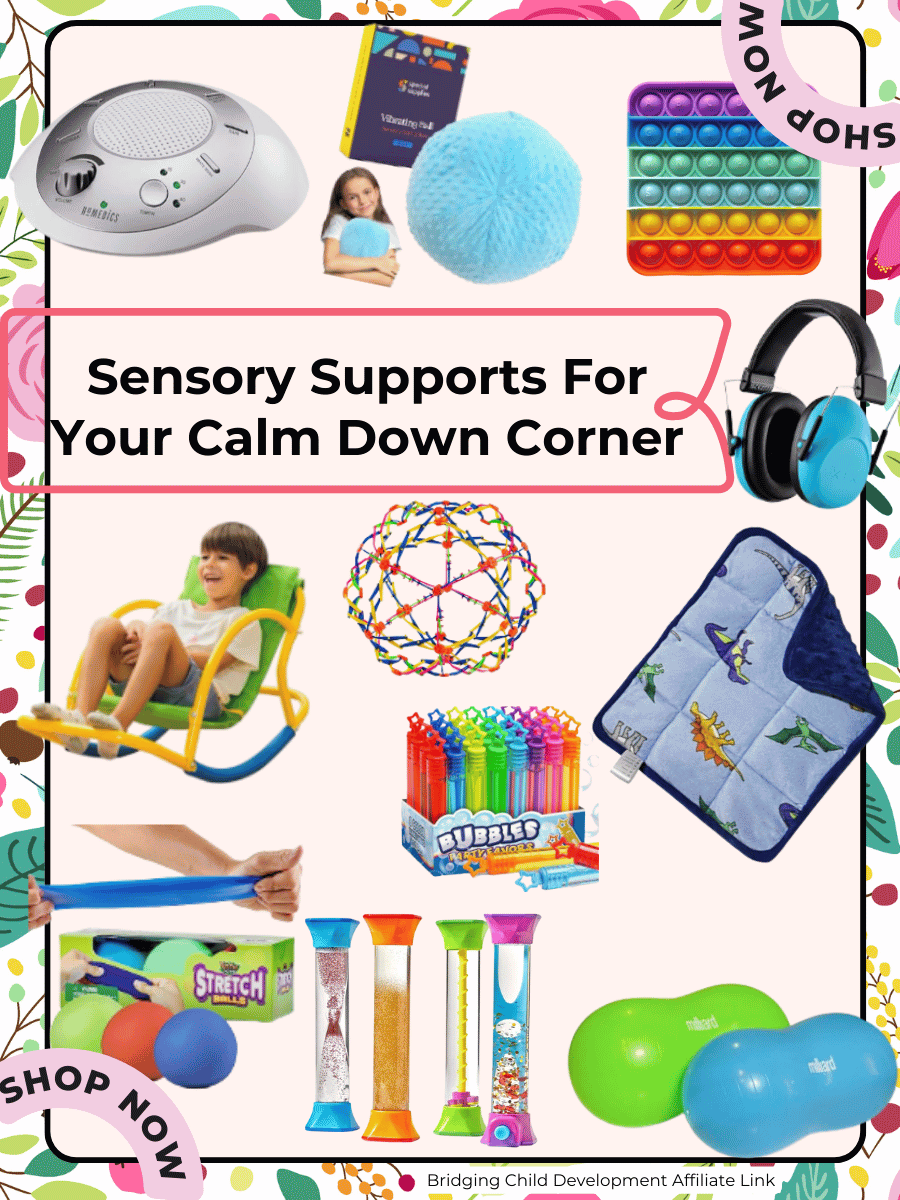
Click on the image to start shopping and add sensory tools to your class clam down area!
How To Use
1. Get some sensory tools. You can order from the list above, use what you already have, or even make some! (e.g., DIY sensory bottle, DIY stress ball, DIY sensory bins, etc.)
Tip: The key is choice. Every child’s sensory system is different so what works for one child may not work for another. Some kids may need to bounce while others may want to get under a weighted blanket.
2. Go through the tools with the kids. Talk about how to use them. Model using them. Give them to the children to explore and talk about which tools feel good for their body.
Tip: Too many things can feel overwhelming. Start small and swap out tools that do not get used with different tools to see what works best for your group.
3. Include the kids. Have the kids put the tools in a basket and pick where they want to keep those tools in your sensory area.
Tip: Having the kids be a part of setting up the calm down corner increases the likelihood that they will use it!
4. Have a visual of your sensory tools available. When emotions are high, words are low. This can help kids make choices about what they need.
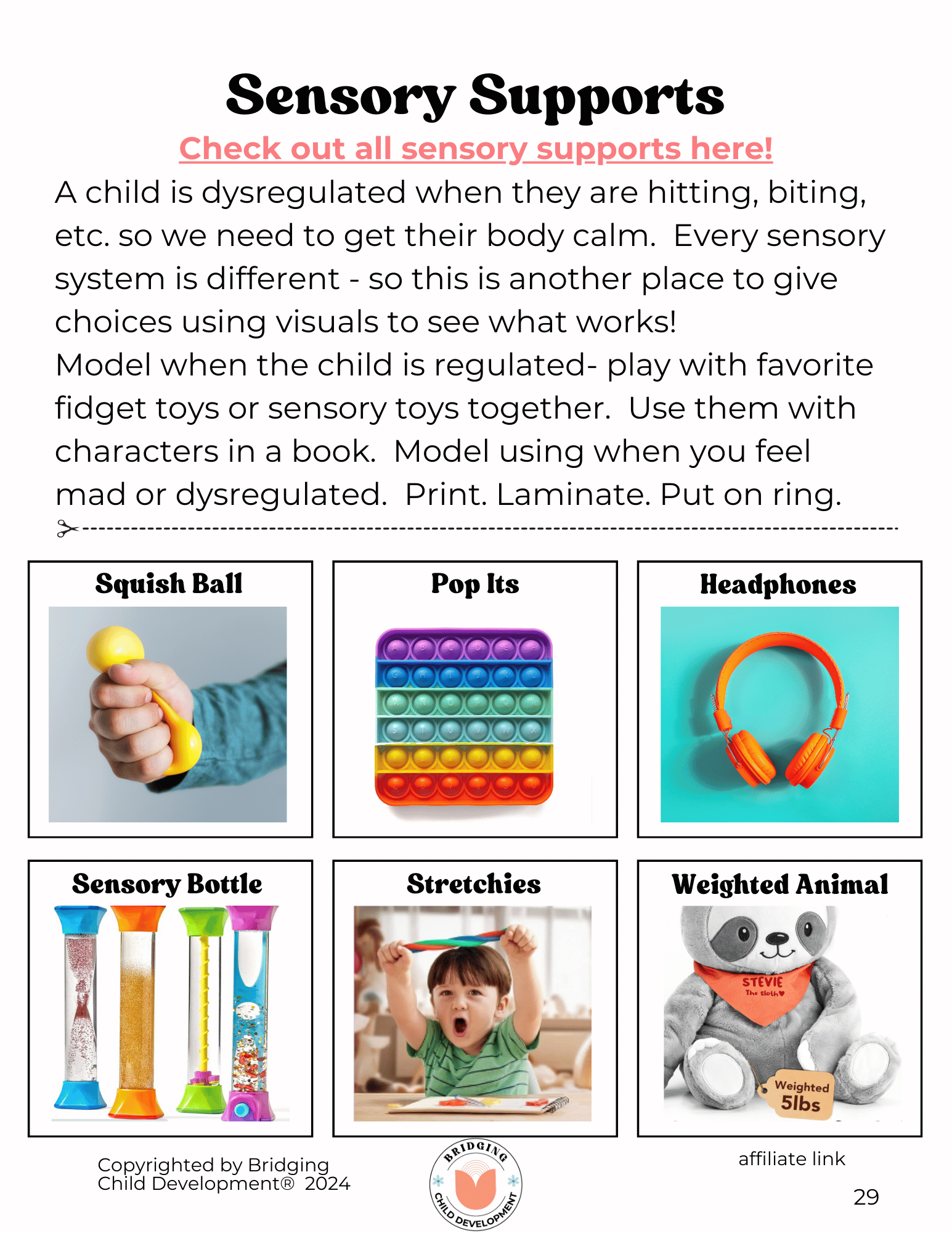
Page 29 of the Goodbye Getting Even: Tips for positive behavior handbook included with your purchase of the training
5. Model using the tools yourself and have the children practice using them during calm moments. This is probably the MOST missed step (and we have a whole blog in it coming soon!). Just because the tools are there does not mean they know how to use them. We have to model and they have to practice!
Sensory supports are just one of the 3 must-haves in an effective calm down area. Grab your free guide and start building a calm down corner that your toddlers and preschoolers will actually use!
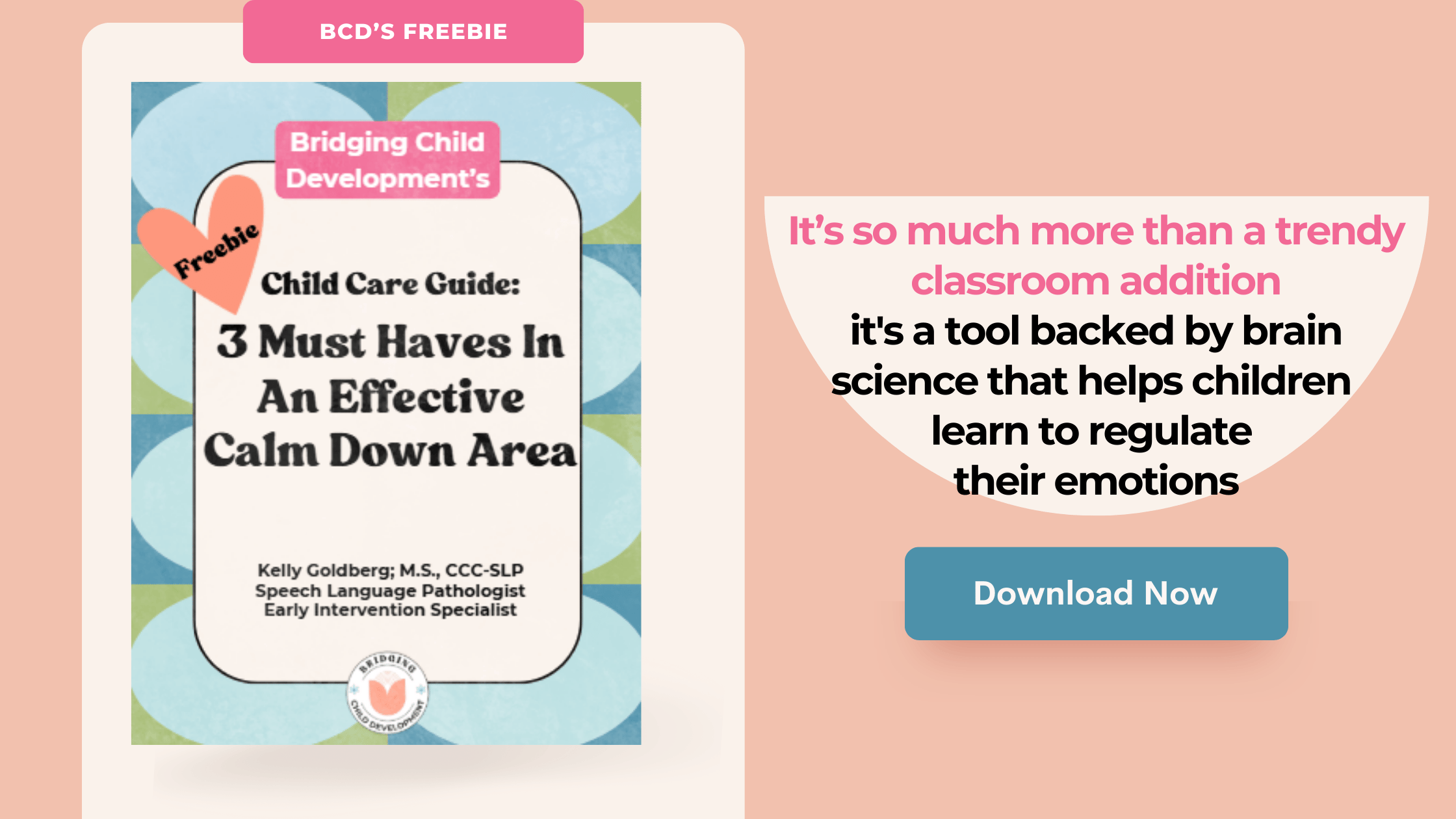
Click the image to download your freebie!
This page contains affiliate links. We will receive a commission on qualifying purchases using these links.