This training is approved in Alabama, D.C., Delaware (DEEDS), Florida, Georgia, Maine, Maryland (MSDE), North Carolina, Pennsylvania (PQAS and ACT-48), South Carolina, Vermont, Virginia, and Wyoming.
0.3 CEU’s (3 hours)
Gain practical tools to support autistic children in their unique communication journeys.
First you will have a clear understanding of what autism is and how autistic children develop language. Then you will learn 10 tips to understand what a child may be communicating and how to respond in ways that supports language development.
The research has changed when it comes to best practices for supporting an autistic child’s communication. Learn the most up to date information right from a speech therapist and feel empowered understanding and fostering communication with autistic children.
NOTE: Research has also changed how we write about autism. The Autism community prefers identity first language (i.e., autistic child) and is considered best neurodiversity affirming practice.
*If you have taken the “Supporting Children with Autism Using A Neurodiversity Affirming Approach” training, this is a great follow up and goes into much more detail about how to specifically support communication needs!
This training is approved in Alabama, D.C., Delaware (DEEDS), Florida, Georgia, Maine, Maryland (MSDE), North Carolina, Pennsylvania (PQAS and ACT-48), South Carolina, Vermont, Virginia, and Wyoming.
0.3 CEU’s (3 hours)
Gain practical tools to support autistic children in their unique communication journeys.
First you will have a clear understanding of what autism is and how autistic children develop language. Then you will learn 10 tips to understand what a child may be communicating and how to respond in ways that supports language development.
The research has changed when it comes to best practices for supporting an autistic child’s communication. Learn the most up to date information right from a speech therapist and feel empowered understanding and fostering communication with autistic children.
NOTE: Research has also changed how we write about autism. The Autism community prefers identity first language (i.e., autistic child) and is considered best neurodiversity affirming practice.
*If you have taken the “Supporting Children with Autism Using A Neurodiversity Affirming Approach” training, this is a great follow up and goes into much more detail about how to specifically support communication needs!


 Image 1 of 3
 Image 2 of 3
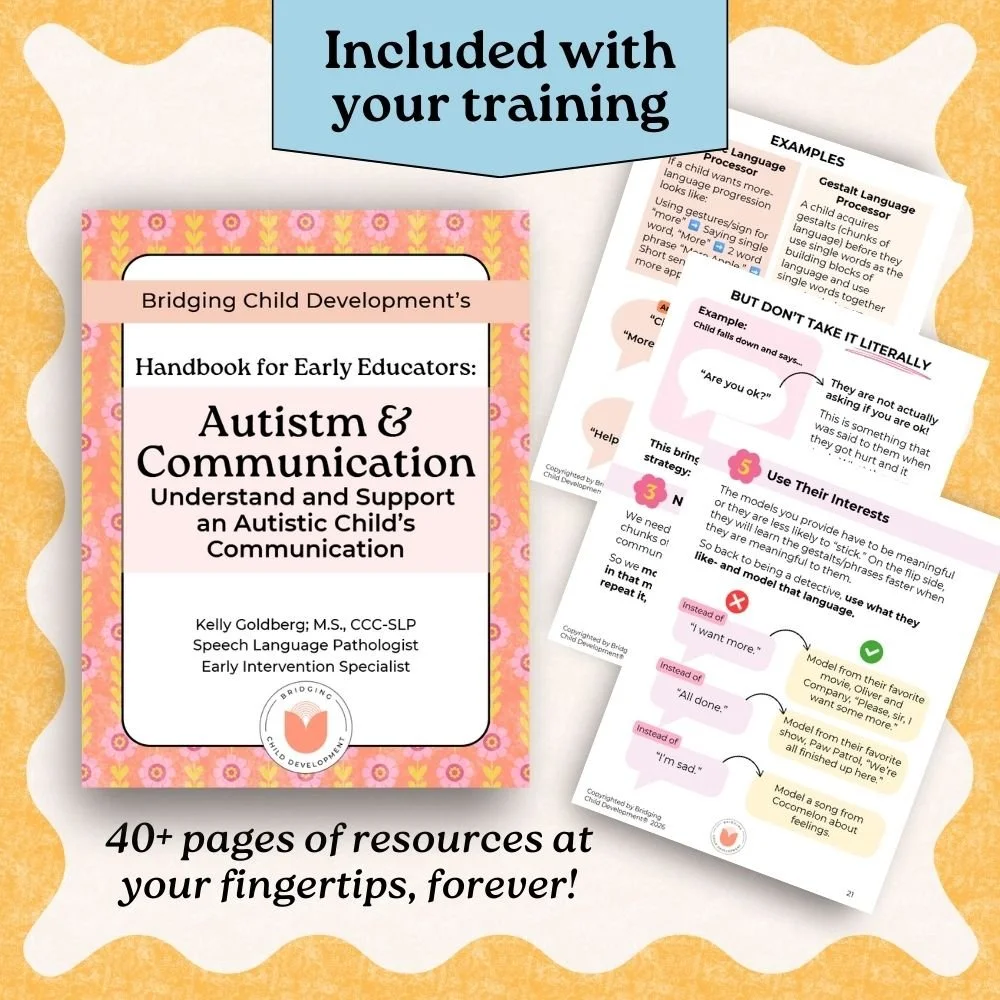 Image 3 of 3