As a former owner and provider in a family home child care, my "staff meetings" looked something like this:
Me: "Mom, do you want to do the meal plan and grocery shopping this week while you plan our book, craft, and rotate some toys?"
My Mom: "Sure, honey."
For context, my mom and I ran a home child care together. It was so much fun! But as you can tell, I'm not much help writing this particular blog, so Samm, a former director of a large child care center, jumped in and said, "Oh, I love staff meetings, I got this one!"
In this blog, Samm breaks down why staff meetings are an essential leadership tool for communication, training, and building a strong team culture, plus how to make sure they don't turn into long checklists that leave teachers feeling drained instead of supported.
Directors of early childhood settings juggle regulations, parent communication, teacher dynamics, and tracking children's progress with the curriculum. It's a lot. But good
staff meetings give us a chance to:- Communicate policies, classroom expectations, and program updates
- Build community and morale by celebrating wins and supporting challenges
- Offer a safe space for staff to ask questions and share concerns
- Provide professional development in practical, bite-sized ways
Done well, staff meetings are also a retention tool, they're where teachers feel connected, heard, and invested in your program.

Every meeting should have a clear purpose. Set an agenda and send it out ahead of time, then stick to three or four key topics instead of trying to cover everything. There's nothing worse than a meeting that runs over and leaves teachers feeling like their time isn't respected.
Your team is the pulse of your center, so bring them into the planning. Send the draft agenda early and ask if anyone has items to add, or invite a teacher to co-lead a section. When staff help shape the meeting, they show up more engaged and more invested in the decisions that come out of it. (It's also your best defense against the dreaded "this could've been an email.")
Staff meetings should be treated as essential, not optional. When the schedule is shared well in advance, staff can plan around it. Occasional extenuating circumstances happen, but these meetings are an important opportunity for collaboration, learning, and connection, so protect them.
No one enjoys being talked at. Build in discussion, small-group problem-solving, or short role-play scenarios, like practicing a tough parent conversation or brainstorming rainy-day indoor play. (I share several easy, low-prep ideas below, so keep reading!)
I always start meetings with team shout-outs. Recognizing effort, big or small, goes a long way toward boosting morale and reducing burnout.
A little appreciation makes a big difference. (Looking for more ways to celebrate your team?
Check out this blog and freebie.)Before wrapping up, summarize the decisions made and outline next steps, who's doing what, by when. Jot these down as quick meeting notes and revisit them at the next meeting so concerns don't fall through the cracks. When staff leave knowing what's expected and that their input is actually followed up on, there's less confusion and more trust.
Dedicating even 10–15 minutes to training keeps growth consistent without feeling overwhelming. Topics might include classroom management strategies, updated safety practices, or creative ways to bring STEM into early learning.
Share information about upcoming training sessions too. We offer
live virtual trainings twice a month, and
self-paced trainings are always available. If you want
something tailored to just your program, we have that too!
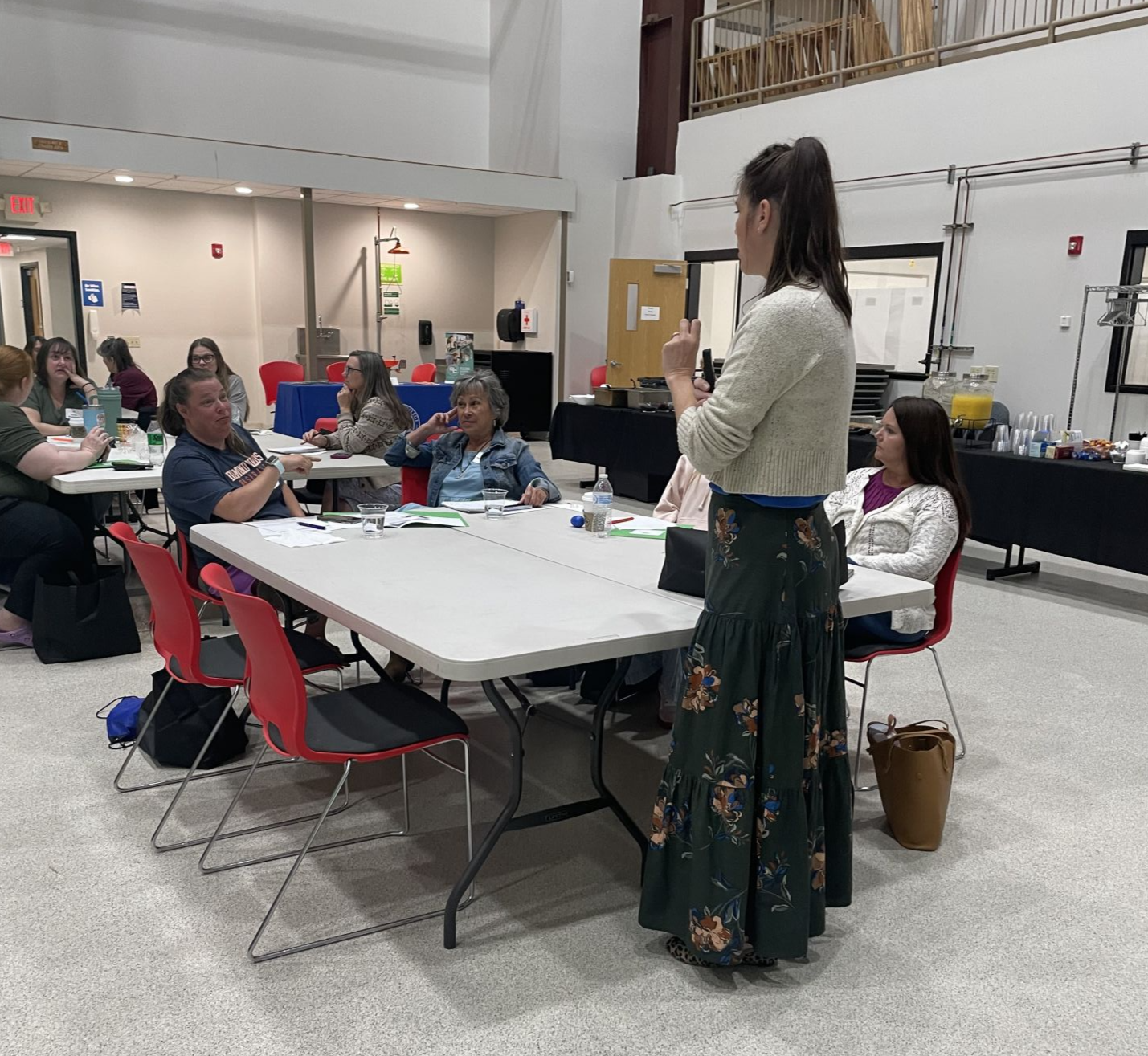
Keeping teachers engaged is the key to an effective staff meeting. You don't need an activity for every agenda item, one intentional interactive element per meeting is enough to increase participation, build trust, and strengthen connection across your team.
Below are easy, low-prep ideas you can adapt for any meeting and any size team.
- Classroom Bingo: Create cards with common daycare moments (spilled milk, surprise fire drill, toddler meltdown, parent question at pickup). Call them out and let staff mark their cards. Instant solidarity!
- Show & Tell (Teacher Edition): Ask staff to bring one item from their classroom or teaching bag and explain why it helps them succeed.
- Licensing or Accreditation Jeopardy: Review policies, ratios, or procedures in a game-style format to reinforce important information.
- "What Would You Do?" Cards: Provide real classroom or parent scenarios for staff to discuss in pairs or small groups before sharing out.
- Appreciation Notes: Hand out sticky notes and ask staff to write an anonymous thank-you to a coworker. Read a few aloud, then post the rest in the staff lounge.
- Win of the Week: Have staff share one recent classroom win, big or small.
Stretch & Reset: Lead a quick stretch or movement break, perfect after a long discussion.
Would You Rather (Child Care Edition): "Would you rather clean paint cups or snack tables?" "Diapers all day or nap-time coverage?"
Choose activities that align with your meeting goal. Interactive moments should support learning and connection, not act as filler, no one has time for that.
There's no one-size-fits-all answer; it depends on your center's staffing and structure.
Some options that may work:- Midday or nap-time meetings: If staffing allows, brief meetings during nap or breaks work well for urgent topics.
- Evening meetings (after the center closes): Offering snacks, dinner, and beverages makes these feel more inviting, and who doesn't like snacking while learning?
- Whole-group training days: Often scheduled when the center is closed, typically at the end of the year (June) or before a new one begins (August/September). These are great for resetting expectations and strengthening team alignment, and they're ideal for training or CEUs.
One important note: In most cases, required staff meetings outside of an employee's regular hours are paid time for non-exempt staff. Build that into your budget and schedule, and check your state's labor rules so you stay compliant.
- Meetings that run too long (aim for 45–60 minutes when possible)
- Not acknowledging staff input or following up on concerns
- Failing to schedule meetings in advance or communicate changes clearly
- Arriving unprepared, which makes staff feel their time is being wasted
- Meetings without a clear purpose, the kind that leave staff thinking "this could've been an email"
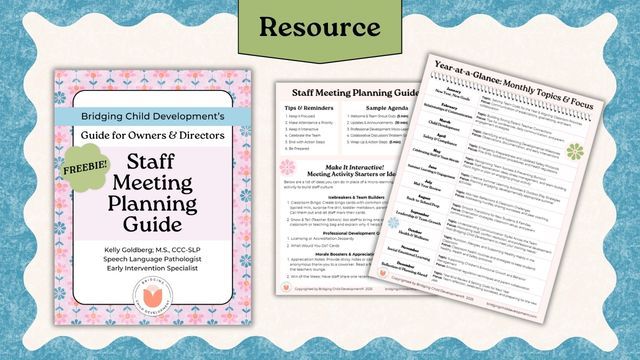
Never want to stare at a blank agenda again?
We created an entire year of done-for-you staff meeting topics, so you always have a meaningful, ready-to-go plan that keeps your team learning, connected, and supported.
Twelve months of purposeful meetings, zero scrambling, and it's completely free.
A full team meeting once a month is a common, sustainable rhythm, often paired with quick daily or weekly huddles for time-sensitive updates. The right cadence depends on your center's size and needs, but consistency matters more than frequency.
Aim for 45–60 minutes for a full meeting. Anything longer and engagement drops fast. Keeping a tight agenda of three or four topics is the best way to respect everyone's time.
A strong agenda usually includes program updates and policies, a short professional development segment, team celebrations or shout-outs, time for staff questions and problem-solving, and clear action steps at the end. Send it out in advance and invite staff to add items.
Yes. Required meetings held outside an employee's scheduled hours are typically paid time for non-exempt staff. Always check your state's labor laws and build meeting time into your budget so you stay compliant.
Share the agenda, notes, and any key decisions afterward (a quick recording works too) so no one feels out of the loop. Make it clear that missing a meeting doesn't mean missing the information, or the chance to weigh in.