Your child care tour is one of the single biggest opportunities you have to turn an inquiry into an enrollment. When a new family walks through your doors, they're searching for safety, connection, and a place that feels like a true extension of home. The decision is deeply emotional. They're navigating big changes, returning to work, and trusting you with their baby.
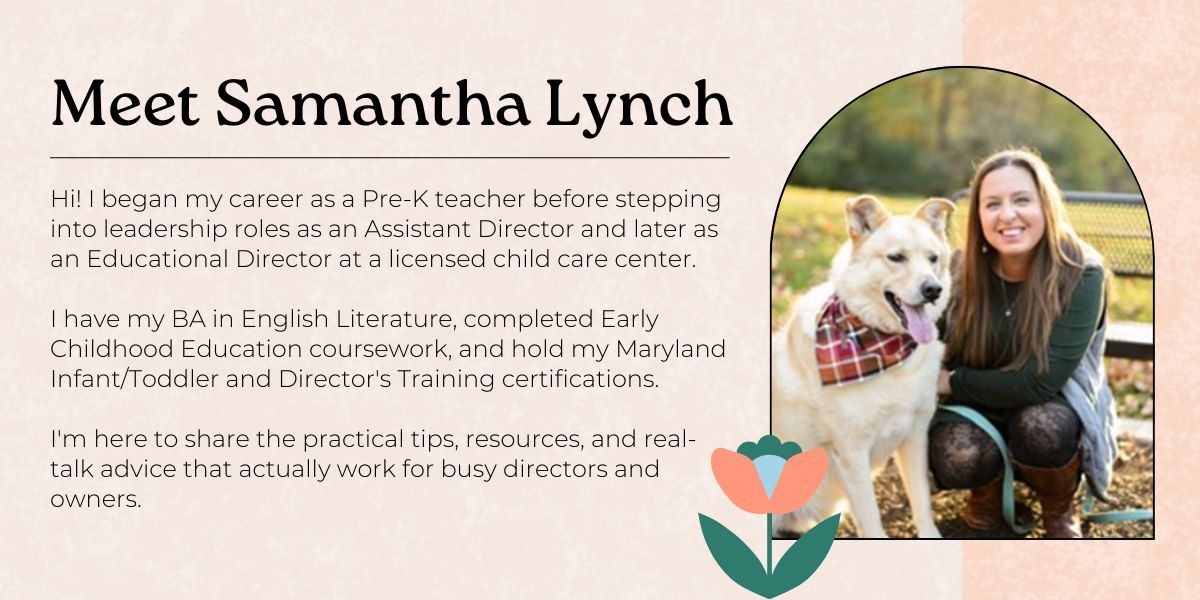
As a former family child care owner, pediatric speech therapist, and early intervention specialist, I (Kelly) have supported many families through the child care decision-making process. And Samantha (our lead creator of director blogs) is a former director of a large child care center who has given hundreds of daycare tours over the years. We both agree on one thing: parents remember how you made them feel on the tour more than almost anything else.
This guide breaks down what families are really looking for on a tour and what you, as a director or owner, can highlight to make a strong first impression, build trust, and help families feel ready to say "yes." Make sure to read to the end for a free resource to share with prospective families!
Parents notice the vibe of a classroom within seconds. They're looking for spaces that feel safe, nurturing, and purposeful.
During your tour, highlight:
- Why the classroom is arranged the way it is
- How materials support exploration and early development
- What teachers are doing (narrating play, offering sensory exploration, and so on)
- Signs of responsive caregiving
Director Tip: Invite families to observe a few minutes of a real teacher-and-child interaction. Nothing sells your environment better than seeing it in action
Families want to understand how their baby will grow in your program, without feeling like their child is being rushed through different classes.
Share:- How many infants are in each classroom
- How your ratios support safety and bonding (and if you keep ratios below state requirements, say so proudly!)
- Your transition process and how you prepare families ahead of time
- Your focus on developmental readiness, not just age
Director Tip: Use simple language. Parents don't want our jargon.
Families want to understand how their baby will grow in your program, without feeling like their child is being rushed through different classes.
Share:
- How many infants are in each classroom
- How your ratios support safety and bonding (and if you keep ratios below state requirements, say so proudly!)
- Your transition process and how you prepare families ahead of time
- Your focus on developmental readiness, not just age
Director Tip: Use simple language. Parents don't want our jargon.
Parents don’t just choose a center,
they choose the people caring for their child. This is your moment to proudly showcase the expertise, commitment, and ongoing learning your teachers bring to the classroom.
Be sure to highlight:
- Teacher education, credentials, and specialized training
- Any courses your team has taken with Bridging Child Development. Parents love hearing that their child’s teachers are trained by specialists.
You can share: “Our team participates in ongoing trainings created by developmental specialists and taught by a pediatric speech-language pathologist. These courses help us better support early communication, behavior, sensory development, meeting milestones through play, and more!”
This signals to families that: Your staff is learning current, evidence-informed strategies from specialists, not outdated or generic information. - CPR/First Aid certifications
- Staff longevity and retention
Families feel reassured when they know teachers stay long-term.
Director Tip:
Celebrate your teachers in front of families. Confidence in your staff = confidence in your center.
Parents want to picture their baby's day. A detailed routine helps them feel prepared.
Include:
- Feeding, sleeping, and diapering
- Sensory and motor activities
- Outdoor time
- How you support developmental milestones through play
- Any curriculum or frameworks you follow
Director Tip: Connect everything back to child development. If your center is more play-based with fewer transitions, explain why that's your philosophy and the science behind it.
Communication is one of the top deciding factors for parents choosing child care.
Show or explain:
- How you share updates during the day
- Your daily notes home or the app you use
- How you notify parents about celebrations and concerns
- How families can reach you or the teachers
Director Tip: Open the app during the tour. A quick demo helps parents envision their day-to-day connection with you and their child's teacher. Don't use an app? Hand them a copy of your notes-home sheet, and be ready to discuss your photo policy!
Parents want transparency and reassurance. Be clear and confident when sharing your safety procedures.
Point out:- Entry and exit protocols
- Camera systems- This may lead to more questions, so just be ready to explain why you do or do not have cameras, where cameras are located, and who has access to the video footage
- Cleaning schedules
- Illness policies
- Emergency procedures
Director Tip: Safety is emotional for families. The more specific you are, the more trust you build.
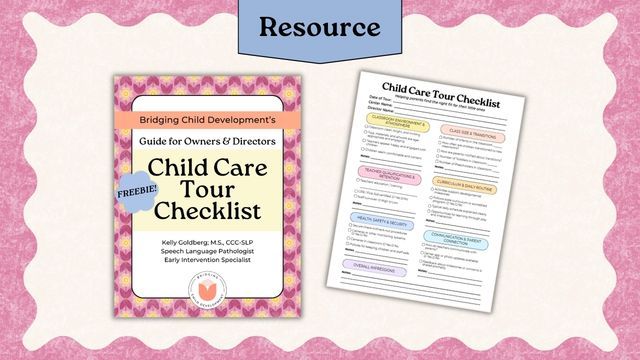
Before or at the start of your tour, hand families our
FREE Child Care Tour Checklist. It sends a powerful message:
"We want you to feel supported, informed, and confident, not overwhelmed."
It shows families that you're organized, transparent, and truly invested in helping them make the best decision for their child, and it keeps your center top of mind long after they've walked out the door.
Lead with how you make families feel, not just the facts. Personalize the tour (use the child's name and age), let families observe a real classroom moment, connect everything back to child development, end with a clear next step, and always follow up. Tours are where general interest turns into a serious decision, so a warm, intentional tour and a prompt follow-up are your two biggest levers.
Plan for about 30–45 minutes. That's enough to walk families through the classrooms, let them observe an interaction or two, and answer questions without rushing, while still respecting a busy parent's schedule. If a family is highly engaged, let the conversation run; interest is a buying signal.
Aim for a window when classrooms are active and engaging, like mid-morning during play, sensory, or circle time, so families see your program at its best. Avoid nap time and the rush of drop-off and pickup when children are tired or the room feels chaotic. If a working parent can only come at an off time, give the tour anyway and narrate what they'd normally see.
Follow up within a day or two with a warm, personal message that references something specific from their visit and offers a clear next step. This is non-negotiable: it's your job to follow up, not the parent's and if you really need kids, you may want to follow up several times if you do not hear back. Most decisions happen after the tour, so consistent, caring follow-up (not pushy pressure) is often what wins the family.
Honestly, I have mixed feelings on this one. If they ask up front, I feel like it should be answered right away. People know their budget and it's only going to waist theirs and your time if you are out of their budget. However, if it does not come up, then lead with value before price. Walk families through your environment, your teachers, and your communication first, so that by the time cost comes up, they understand what they're investing in. No matter what, be transparent about rates and what's included, and send it home in writing.