Fall sensory bins are an easy way to bring the sights, textures, and colors of the season into your child care classroom.
A simple sensory bin can give infants, toddlers, and preschoolers a chance to scoop, pour, touch, explore, and talk (Hello fine motor and language development)! If you’re looking for sensory play ideas for your child care classroom, this blog has five easy fall sensory bins you can try this season. They’re simple to set up, budget-friendly, and can be adapted for different ages and stages of early childhood.
This page contains affiliate links. We will receive a commission on qualifying purchases using these links.
Sensory play might look like a big mess, especially when we have 6 to 20 kids playing in a rice table at one time, but it is so much more than making a mess.
Sensory play supports every area of a child's development. Sensory play fosters the development of:
- Cognitive skills- Children have opportunities to explore, experiment, problem-solve, and figure out how things work. As children scoop, pour, dump, sort, fill, compare, and make predictions, they are building early math and science concepts while learning through hands-on exploration.
- Language development- Children can learn words for what they see, feel, hear, and do while also practicing following directions, commenting, and asking questions. Basically, sensory play gives children something interesting to talk about while building vocabulary and communication skills.
- Feeding development- Gives children opportunities to explore different textures, smells, and sensations without the pressure to eat.
- Sensory processing
- Social skills and emotional development- Creates natural opportunities for children to play alongside others, share materials, take turns, communicate ideas, and work together.
- Fine and gross motor skills- Sensory play naturally gets children moving and using their hands. Scooping, pinching, squeezing, pouring, stirring, and manipulating materials strengthen hand and finger skills, while activities such as carrying, digging, reaching, squatting, and moving around a sensory environment can involve larger muscle groups.
- Creativity and imagination- Sensory materials are open-ended, which means there isn't always one “right” way to play. Children can turn sand into a pretend meal, make a mud pie, create pictures with food, or invent their own ways to use the materials. Open-ended play gives children opportunities to experiment, pretend, make choices, and express their ideas.
Many children gravitate toward sensory play but it is not uncommon to have a child that is not comfortable during sensory play. Here are a couple tips to support them:
Join when invited
Follow the child's lead: This means pausing and just taking a few minutes to observe what the child is interested in- What are they looking at? What are they talking about? Then you join in and imitate what they are doing. The biggest thing with following their lead is we don't want to join their play and then try to change what they are doing to something we think would be more "fun" or a "more expected" way to use the materials. When we follow a child's lead we naturally add more words and children learn the words of what they are interested in and focused on (Remember, sensory play supports language development!). If you are not sure how to play in that moment you can always imitate what they are doing. If they are letting slime go through their fingers, do that too!
Keep you thoughts to yourself: We all have our own sensory profile. For example, I love playing with clay but I literally can not stand the feeling of slime. But if you don't like the way it feels (or tastes, smells, etc)- don't say it! No "ewwww" or "Ugh this is awful" or "This is so disgusting." We want kids making their own opinions about their sensory experience and not let your opinions influence their response!
This bin is a beautiful way to introduce the textures and colors of the season while encouraging curiosity about nature.
Fill with: Real
or fake fall leaves, real or fake
small pumpkins, pinecones, and acorns (real or plastic). Make sure to
add scoops and tongs too! If you find the children are not staying at the bin long, add some additional toys like
farm animals or trucks! Typically when kids lose interest in a sensory bin, it's not because of the sensory base but the manipulatives within the sensory bin.
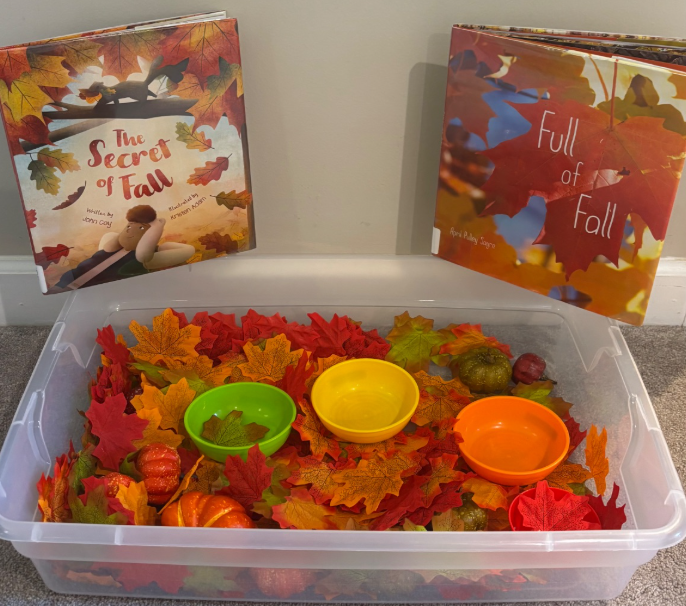
This bin is perfect for just a general fall theme and it’s an easy way to introduce math and measurement concepts through pretend play.
Fill with: Dried corn kernels or feed corn. Then add
toy farm animals or tractors. You can also add just anything fall- leaves, pinecones, pumpkins, etc.
Books to Pair With:
Fall by Roger Priddy
The Secret of Fall by John Coy
Adapt for the age you teach:
Infants: Replace kernels with large chunky items like
soft corn cobs or blocks.
Toddlers: Scoop and pour using spoons and cups.
Preschoolers: Create a “farmers market” theme where kids can weigh, measure, and “sell” the corn.
This bin pairs perfectly with apple themed crafts, taste tests, or science lessons about how apples grow.
Fill with: Colored rice, r
ed, green, and yellow toy apples , baskets, pouch tops, and tongs.
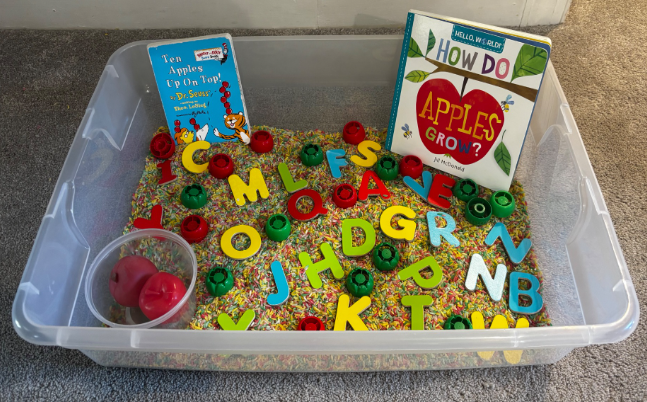
Books to Pair With:
Adapt for the age you teach:
Infants: Use
red, yellow, and/or green ball pit balls.
Toddlers: Use scoops or tongs to collect apples into a smaller container within the sensory bin.
Preschoolers: Add
letters, offer opportunities for children to sort by color, count apples, or match them to number or letter cards.
This bin offers a great opportunity to practice counting, sorting, and hand-eye coordination. Plus, who doesn’t love a mini pumpkin patch indoors?
Fill with: Mini pumpkins, gourds, orange and yellow pom-poms, scoops, and baskets. (Note: Know your state regulations! Some states (and programs) do NOT allow pom-poms as they are a choking risk)
Books to Pair With:
The Pumpkin Thief by Alice Hemming
Pumpkins by Brenna Maloney
Pumpkin Day, Mouse! by Laura Numeroff
Adapt for the age you teach:
Infants: Use
plush pumpkins or large soft balls in fall colors.
Toddlers: Add cups for “picking” and transferring pumpkins.
Preschoolers: Include number cards on a little basket. Have children match or count pumpkins (For example, “Put 3 pumpkins in the basket”).
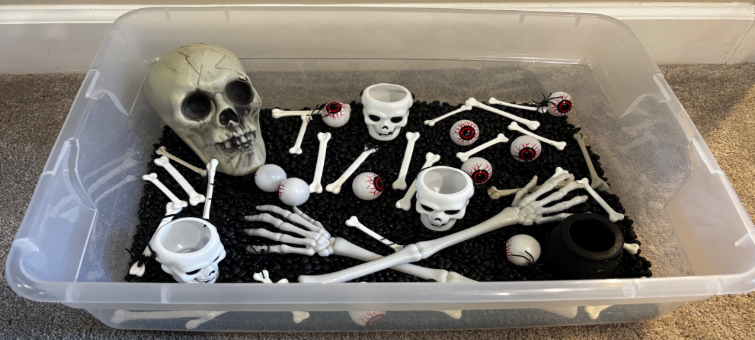
If you think your class will enjoy something a little spooky, this bin is for you!
Fill with: Black beans, plastic spiders,
plastic bones, pom-poms, and
small cauldrons.
Books to Pair With:
Adapt for the age you teach:
Infants: Explore black beans safely inside a sealed sensory bag with pom-poms (Again, know your regulations!)
Toddlers: Add scoops, spoons, or even trucks to the bin.
Preschoolers: Add letter or number cards and have children count spiders into the cauldrons.
Everything organized here for you to start making easy fall sensory bins for your infant, toddler, or preschool classroom.
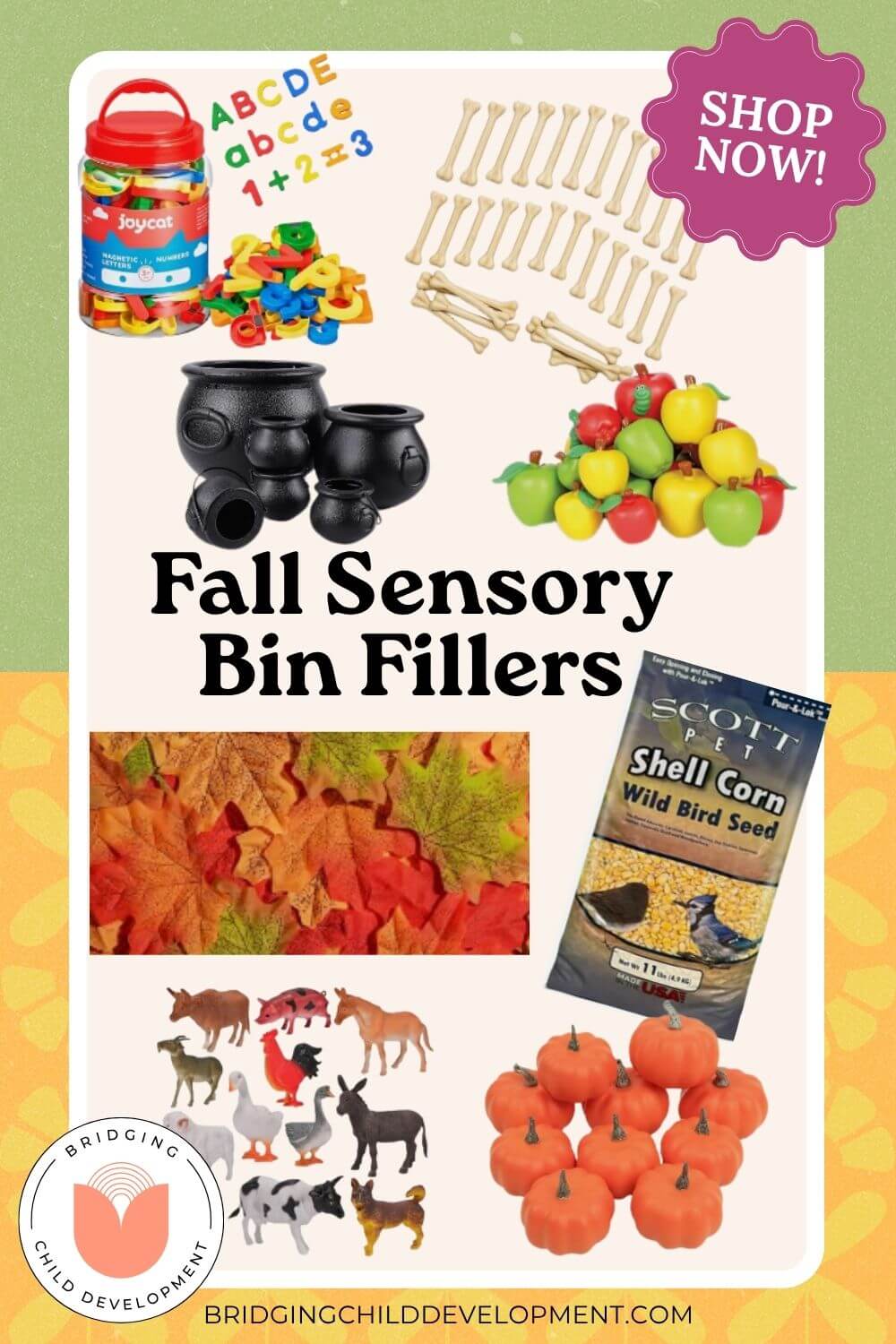
Click the image to shop! Affiliate link.
Need hours to meet your state required professional development hours? We got you! Join the IACET approved self paced training and learn over 50 sensory play ideas you can do with kids ages birth through 3.
I love sensory bins for encourage open-ended play. They are a great way to let kids lead with their curiosity! It is very important to make sure the materials you offer are safe, age appropriate, taste safe (depending on the age), and the materials are allowed by your state licensure.
Sensory bins are perfect for also working on early math and literacy outcomes. Try pairing the sensory bin theme with a book that has a similar theme
. You can see our top fall book suggestions here. Then you can model the vocabulary used in the book while the children play! Of course adding letters and numbers to the sensory bin is great too.