You're feeding a 7-month-old and she gags- her little face turns red, she makes a cough sound, and you feel that spike of panic, ‘Is she choking?’ Every infant teacher knows this feeling. As a pediatric speech language pathologist that provides feeding therapy, a prior child care owner and provider, and a mom of 2, I know this feeling!
If you don't have clarity on the difference between gagging and choking, that panic can lead you to react in ways that actually increase the danger.
Understanding gagging vs. choking is one of the most powerful tools you can have as an infant teacher.
Gagging is protective, not dangerous. A baby's gag reflex is located much farther forward in the mouth than an adult's gag reflex. When a baby is born, the gag reflex is in the first third of the mouth. But around 6 months of age, it naturally migrates backward where it settles in the back third of the mouth (This is where an adult gag reflex is).
This is important to know because it means babies (6-12 months) will likely gag when using teethers, mouthing objects, starting solids, or trying new textures. This is completely normal development.
Gagging vs. Choking: The Key Differences
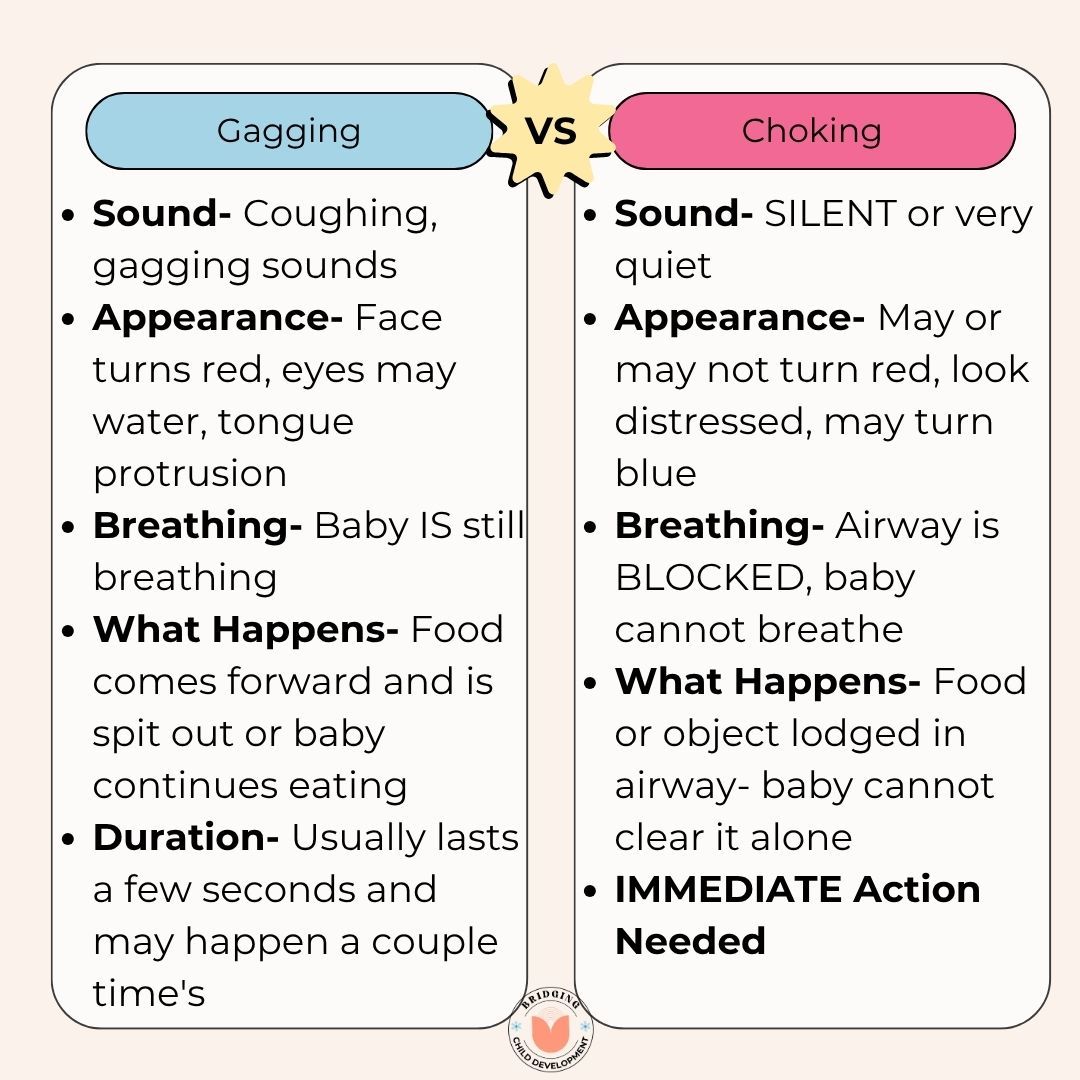
A simple way to hold it in your mind:
gagging is loud, choking is quiet. A noisy baby is moving air. A silent, panicked baby needs help now.
This chart is a tool, not a substitute for hands-on training. Every infant teacher should be current on infant CPR and choking response (more on that below).
The most important thing you can do during gagging is... usually nothing. But I know you are like, NOTHING?! I need something! Here are a few what to do and what not to do’s to keep baby safe and mealtime positive.
- Stay calm and observe. A baby's gag reflex is doing its job. Watch without intervening.
- Give it a moment. Within a few seconds, the food will either come forward and be spit out, or baby will continue trying to manage it.
- Respond warmly. During and after the gag, offer comfort and reassurance. “You got it. Push it out.”
Your calm face is part of the lesson. Babies look to you to decide whether something is scary. When you stay relaxed, you teach them that gagging is just part of learning to eat.
- Don't panic
- Don't intervene immediately.
- NEVER stick your fingers in baby's mouth. I cannot stress this enough. If you put your fingers in baby's mouth during gagging, you risk pushing food farther back and potentially causing choking.
- Don't slap baby on the back while they're actively gagging.
- Don't assume they don’t like the food. Or that one gag means baby can't handle that texture.
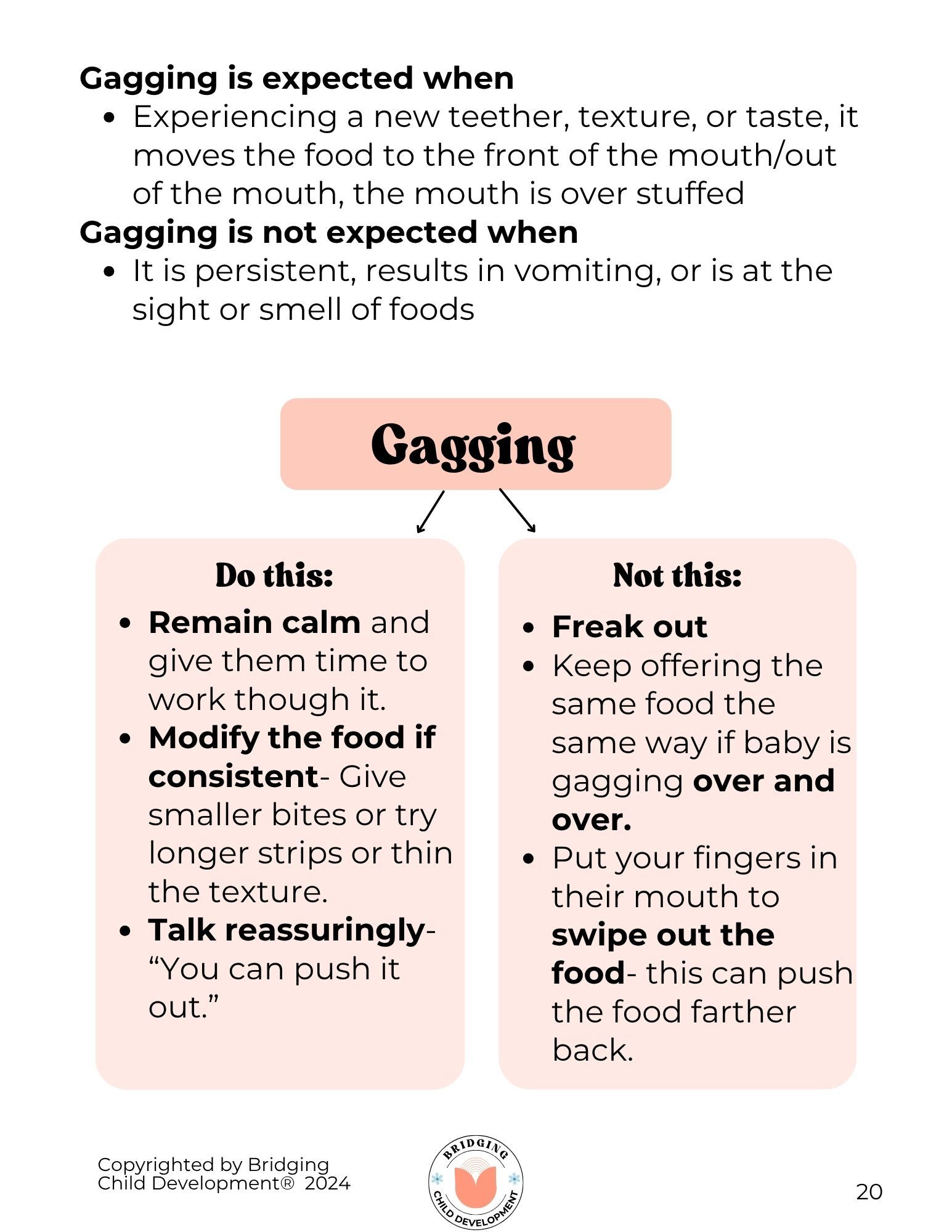
From the handbook that is included with the training!
While gagging is normal and actually protective, true choking prevention requires specific strategies:
1. Get CPR certified. This is non-negotiable for infant teachers. You should take CPR training annually.
2. Let baby self-feed when possible. When baby sees, smells, and touches food before it goes in their mouth, their brain has time to prepare.
3. Feed baby when they are sitting. They should be well supported in their high chair or booster.
4. Do the squish test. If you can easily squish it between your two fingers, it’s likely safe
5. Avoid high-risk choking foods.
- Small, round foods: Whole grapes, cherries, grape tomatoes, and hot dogs if not cut properly
- Sticky foods: Large spoonful's of nut butter, marshmallows, and globs of melted cheese
- Chips and popcorn
Gagging is just one of the moments that can make feeding feel stressful in an infant room. When you understand what's happening and know exactly how to respond, those tense moments turn into calm, confident, connected mealtimes, for you and the babies in your care. That's why I created this training, so you feel confident during mealtime struggles. This training has been approved through the International Accreditors for Continuing Education and Training (IACET) and accepted in most states.
Yes, and it's expected. Between about 6 and 12 months, the gag reflex is still moving toward the back of the mouth, so the babies in your care will gag often as they learn to manage new textures. Frequent gagging in this window is usually a sign of a baby practicing, not a sign that something is wrong, so it doesn't need to derail your mealtime routine.
Usually, the safest response is to stay calm and watch. Give it a few seconds for the food to come forward, keep your face and voice reassuring for that baby and the others watching you, and resist the urge to reach in. Most gags resolve on their own within seconds. Your calm sets the tone for the whole table.
A normal, self-resolving gag isn't an incident and generally doesn't require documentation, though you should always follow your center's specific policies. A true choking event or any time you had to intervene is a different story and should be documented and communicated to your director and the family per your licensing and program requirements. When in doubt, check your handbook and ask your director.
One gag doesn't mean a texture is too advanced or that the baby dislikes it, and pulling a food after a single gag can actually slow their progress. Keep offering safe, age-appropriate textures. That said, looping families in about how mealtimes are going (including new foods and textures) builds trust and keeps everyone on the same page, especially before introducing anything new.
Set up for supervision before the food comes out. Make sure every baby is seated upright and well supported, keep your whole group in your line of sight, offer only foods that pass the squish test, and avoid high-risk choking foods entirely. Feeding a group calmly is far easier when your environment and food prep are doing some of the safety work for you.