7 Infant Sensory Activities That Actually Work in Your Classroom
Jan 16
/
Kelly Goldberg
We all know sensory play is essential for infant development
but let’s be honest, most of what you see online isn’t made for you (an early childhood educator). Those Pinterest perfect ideas don’t mention that you're caring for multiple infants at different developmental stages, you need activities that fit within licensing requirements, and everything needs to be set up, supervised, and cleaned up within your already-packed day.
So let's talk about sensory play that actually work in a child care setting. No fancy materials. No one-on-one activities that only work in theory. Just real, practical ideas you can set up tomorrow.
Must haves for any infant sensory play setup
Everything needs to be taste-safe. Period. Infants explore with their mouths and you can't have eyes everywhere at once.
Close supervision is required. Even when materials are safe, most sensory play activities are not independent play activities. These moments are perfect for supporting language too so we need to be close by so we can model words.
Check your licensing rules.Some centers have specific guidelines about water play, food-based activities, or certain materials (I work with a child care now that is not allowed to have beads of any sort!). Know your rules before you plan.
Consider allergies and sensitivities. Always touch base with families before introducing new materials, especially anything food-based.
Once these basics are covered, It’s time to plan some infant sensory play ideas. It doesn’t have to be complicated to be meaningful.
Here are 7 infant sensory activities for your classroom:
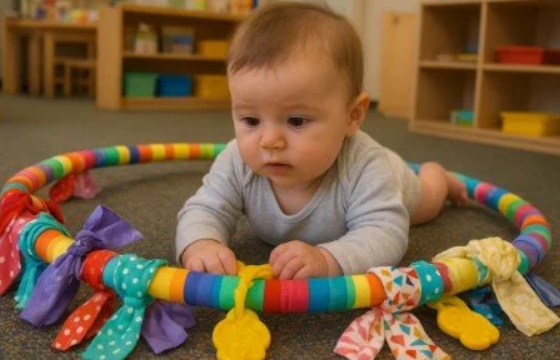
1. Tummy Time Texture Hoop
Get a hula hoop (you can crab them at the dollar store or here). Tie different textures around the hoop. Think silky scarf, felt strips, fabric scraps, crinkle books, ribbons, teethers that can be wiped between babies. Lay baby on tummy time in the center of the hoop where their little hands can explore the fabric textures.
Why it works in childcare:Once you make a few hoops, you’re done. Babies can explore while in tummy time and they have a little barrier of the hoop around them to help your older kiddos give them space.
Say while you play:"Wow.” “Soft!” “So fuzzy.” “Oooooooo, I hear that!” “Crinkle crinkle” “It’s scratchy. Pat pat pat.”
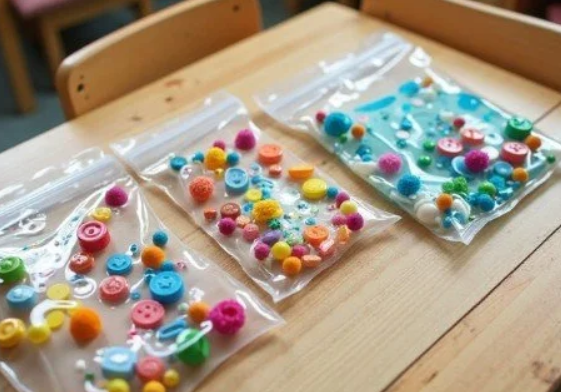
2. Sensory Bags (The Mess-Free MVP)
Fill heavy-duty ziplock bags with canola oil, water, or non-toxic hair gel and add items like buttons, beads, or pompoms. Tape all edges with strong packing tape (don’t skip this step!). Lay them flat on the floor or tape them to a low table.
Why it works in childcare:Zero mess, you can make several at once, and great for mixed ages. Infants can push, squish, and watch items move on the floor or high chair and cruising babies can stand at a low table to play without anything ending up in mouths or smeared on your walls.
Say while you play: “Weeee.” “Woah” "Push, push, push!" "Squish it!" "So squishy!" "I see it move!" "Where'd it go?" "There it is!" "Cold!" "Pat, pat, pat!" "Poke!”
3. Water Play That Won't Flood Your Room
Put an inch of water in a large, shallow baking sheet or small bin. Add a few floating items. Think measuring cups, small plastic containers, rubber ducks, or bath toys. Lay down a towel under the baking sheet and sit on the floor with your babies while they explore.
Why it works in childcare: You can do this with a small group while other infants play nearby. It's engaging enough to hold attention but simple enough to supervise closely. The shallow amount of water minimizes both mess and safety concerns.
Say while you play:"You're splashing!” “Splash, splash!” “Water." "Pouring.” “Wow!" ”I see water. Drip. drip, drip!" “Scoop”
Pro tip: Do this activity right before diaper changes so if you have to change clothes it’s not the end of the world.
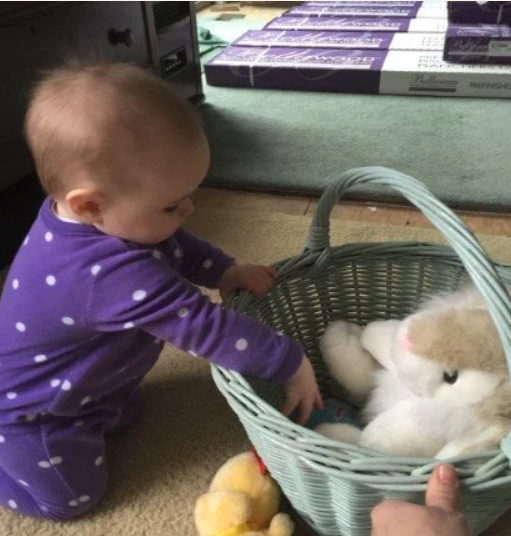
4. Discovery Baskets for Sitting Babies
Fill a low basket with safe items you have around your room or home that offer different sensory experiences. Think wooden blocks, silicone spatulas, metal measuring cups, or natural items like large pinecones or stones (nothing small enough to be a choking hazard).
Why it works in childcare:Babies can explore independently while you're nearby managing the room. You can create multiple baskets with different themes and rotate them throughout the week to maintain interest.
Say while you play:"Wow!” “Bang bang bang” “So bumpy.” “It’s soft.” “Dump out.”
5. Blow Edible or Scented Bubbles
Blow bubbles during playtime and let babies reach or crawl toward them. I love the edible bubbles for an added sensory experience.
Why it works in childcare:This supports multiple developmental skills at once (reaching, tracking, cause and effect. Gross motor development), works for various ages, and you can play this inside or outside!
What to say:"Bubbles." "Weee” “Wow!” “Pop” “Open” “More” “Reach, reach... you got it!" “Up!” “Down!”
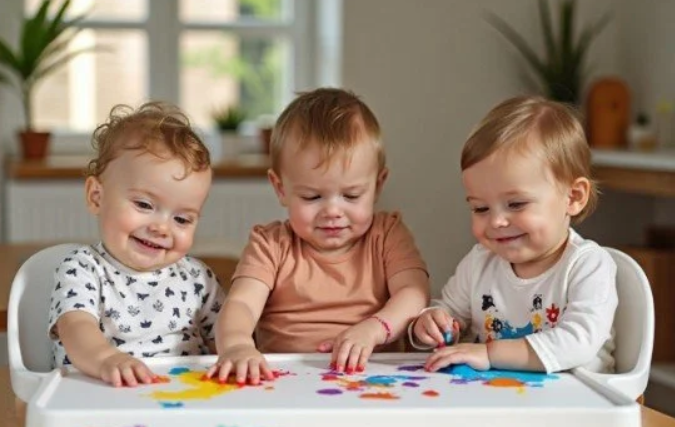
6. Edible Finger Paint (For the Brave and 6+ Months)
Mix baby rice or oat cereal with a little water and natural food coloring. Let babies “paint” on a highchair tray. You could also use jelly or jello.
Why it works in childcare:Multiple babies can explore simultaneously, each working at their own developmental level. Some will just touch and smear, others will taste, which is fine because you've chosen safe materials.
Say while you play:"It’s slippery." "Scoop, scoop, scoop!" "You put some in your mouth, that's okay! Yummm." “Mmmm.”
Reality check: This is messier than other options. Save it for days when you have the mental energy. Use a large towel or washable mat underneath to catch any mess.
7. Sensory Crawl Path (My favorite!)
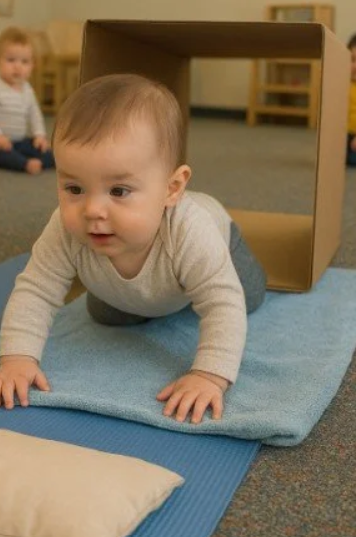
Create a “path” using different surfaces. Think yoga mat, soft blanket, pillow, pop up tunnel, or a cardboard box open on both sides. At the end of the path, have something for the child to do- a ball in a bucket, a token in the piggy bank toy- this will encourage them to crawl along the sensory path from start to finish.
Why it works in childcare:This activity naturally accommodates multiple developmental levels at once. Pre-crawlers can do tummy time on different textures, crawlers get gross motor practice, and cruisers can walk the path.
What to say: "Bumpy!" "Soft!" "You're crawling!" "Keep going!" "Almost there!" "You did it!" "Plop!" "In" “Out” "Uh oh" "I see you!"
Sensory Play Training for Infant and Toddler Teachers
Pick one infant sensory activity from this list. Just one. Set it up tomorrow and see what happens. Watch how the babies in your care respond, and notice what language comes naturally to you as they explore.
The texture hula hoop you make this weekend and use for six months straight is going to be way better than the elaborate sensory bin you think about but never actually set up. Start simple, and build from there. You've got this.
Want to learn more? Join the IACET approved training and earn your professional development hours!
Frequently Asked Questions
At what age can babies start sensory play?
You can start from the very beginning. Even newborns are taking in sensory information through touch, sound, and sight, so simple activities like the tummy time texture hoop work for the youngest infants in your room. As babies grow into sitting, crawling, and cruising, you simply add activities that match what their bodies can do, like discovery baskets for sitters and the sensory crawl path for movers.
How do you do sensory play with a whole group of infants?
The trick is choosing activities that supervise easily and work across developmental stages at the same time. Mess-free options like sensory bags and discovery baskets let several babies explore near you while you manage the room, and open-ended setups like the crawl path naturally meet pre-crawlers, crawlers, and cruisers right where they are. You don't need a one-on-one, Pinterest-perfect station for every child, just a few flexible activities you can rotate.
How long should an infant sensory activity last?
Follow the baby's lead. For young infants, a few minutes of engagement is plenty, and for older babies, you might get ten to fifteen minutes before interest fades. There's no need to stretch it out. Short, positive bursts that end before a meltdown are far more valuable than a long activity that ends in frustration.
Prefer to learn these tips in a training?
Find a format that works for you.
Get your state-approved hours and CEUs, a comprehensive handbook you'll reference forever, and strategies that’ll make a difference in the children you’re caring for.
Live Virtual Trainings
Real-time interaction, community with other providers, and the energy of learning together.
Self-Paced Trainings
Flexibility to learn on your own schedule, pause and rewatch as needed, with opportunities to learn and engage with others.
Private Trainings
A customized training for your entire staff, in-person or virtual, with hands-on activities built around your center's needs.
Hey, I’m kelly
Speech Language Pathologist, Early Intervention Specialist, Child Care Trainer, and Former Family Child Care Owner
I work alongside early childhood educators caring for children with a variety of needs. But these needs look very different than they did twenty years ago and you deserve trainings, resources, and tools that reflect that.
Trainings that are high quality, affordable, and worth coming back to.
That's why I built Bridging Child Development. Every training hour you earn here gives you strategies you can use the very next day in your classroom.
Login or sign up to start learningLogin to start learning