Every child care director wants a team that's motivated, dependable, and excited to come to work each day. But between licensing requirements, staffing shortages, parent communication, and the unexpected challenges that pop up daily, building a positive workplace culture can easily slip to the bottom of the to-do list.
The good news is that
building positive culture doesn’t take a big budget or elaborate programs to make a meaningful impact. It just takes intention, consistency, and small actions that communicate:
“I see you. You matter. I’ve got your back.”
Creating a positive workplace culture in child care isn't just "nice to have." It's the foundation that keeps classrooms running smoothly and teachers motivated to come to work every day.
And the research backs it up. Educators who feel very valued are more than three times as likely to stay in their current role than those who feel poorly valued, according to the Australian Education Research Organization. With early childhood turnover hovering around 44% (per the Buffett Early Childhood Institute), culture is one of the few retention levers directors fully control, and it often outweighs a slightly higher paycheck somewhere else.
In other words
, hiring great teachers is only half the job. Keeping them is the other half, and it starts with how they feel every day.
Here's how to build a supportive, positive culture that helps teachers feel appreciated without breaking the bank or adding more stress to your plate.
Open communication builds trust. When staff feel heard, they feel empowered.
- Hold consistent team meetings that are productive, not overwhelming.
- Mix in celebrations like birthdays, work anniversaries, and classroom wins—not just reminders and logistics.
- Keep communication simple. Whether it's email, a staff chat, or a bulletin board, choose one reliable system so everyone stays informed.
- Don't let your only conversations happen when something goes wrong. Make time for regular check-ins, encouragement, and listening.
Sometimes a 10-minute conversation where a teacher feels genuinely heard is all it takes to strengthen trust and your entire team culture.
Child care is full of quiet wins. You don't need expensive gifts or elaborate appreciation events, your staff simply want to know their hard work is noticed.
No-cost ideas
- Write a handwritten thank-you note.
- Give a shoutout during a staff meeting.
- Offer specific praise like, "I noticed how calmly you handled that transition today. Thank you." Specific recognition always means more than a generic "good job."
Small-budget ideas
Choose things that make your teachers' day a little easier.
- Create a coffee or tea station.
- Keep snacks stocked in the break room.
- Provide occasional classroom coverage so teachers can enjoy extra planning time.
If your center has a little flexibility, consider traditions like:
- "Boo a Classroom" in October.
- Optional Secret Santa.
- "You've Been Mugged" winter surprises.
Twelve small, meaningful gestures throughout the year often have a greater impact than one big Teacher Appreciation Week celebration.
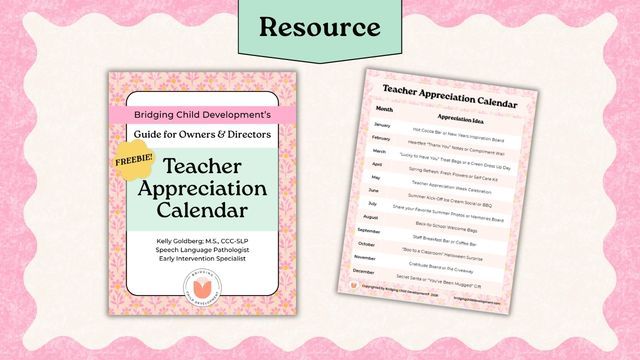
(Grab the free Teacher Appreciation Calendar at the end of this post to help you plan them.)
Not everyone loves icebreakers, but
everyone wants to feel like they belong.
Culture isn't built through mandatory fun. It's built through genuine moments of connection.
Try ideas like:
- Host a potluck lunch or coffee morning.
- Plan simple spirit days.
- Create a staff bulletin board filled with appreciation notes and photos.
- Encourage teachers to partner with another classroom for activities.
- Pair new teachers with experienced mentors.
The goal isn't to add more to anyone's plate. It's to create opportunities for your team to genuinely enjoy working together.
Professional development shouldn't just check a licensing box! It should help teachers solve the real challenges they're facing every day.
Teachers who stay in early childhood programs consistently place a higher value on professional growth than those who leave, making it one of your best long-term retention strategies.
Consider ways to support growth by:
- Offering trainings, workshops, and conferences in the format each teacher learns best. We offer 3 different options: whether it's live virtual sessions or self-paced learning, flexibility matters. You can also host trainings for just your center!
- Encouraging continuing education and supporting teachers working toward credentials or degrees.
- Letting teachers help choose professional development topics that relate to their classrooms.
- Giving teachers leadership opportunities, such as mentoring new staff or sharing an area of expertise during meetings.
When teachers continue growing, they're more likely to see a future with your program.
Your leadership sets the tone for your entire center.
When you're calm, approachable, and supportive, your staff are more likely to model those same qualities.
You don't need to be perfect, you just need to be present.
Lead alongside your team whenever possible:
- Jump into classrooms during difficult moments when an extra set of hands is genuinely helpful.
- Support teachers during staffing shortages.
- Ask, "How can I help?"
- Spend time in classrooms reading stories, joining centers, or eating lunch with the children and teachers.
Empathetic leadership transforms management into mentorship.
Working with young children is meaningful work. It's also joyful work, and your culture should protect that joy.
Simple ways to keep it alive include:
- Creating a positive atmosphere.
- Playing music during appropriate parts of the day.
- Decorating classrooms seasonally.
- Sharing encouraging quotes or affirmations.
- Celebrating the little moments that remind everyone why they chose early childhood education.
When joy becomes part of your center's culture, it spreads to every classroom, every child, and every family you serve.
Keeping appreciation going all year can feel overwhelming but it doesn't have to.
Download our free Teacher Appreciation Calendar for a month-by-month plan of simple, meaningful ways to help your teachers feel seen, valued, and appreciated all year long.
Because twelve small moments of "I see you." often mean far more than one big appreciation event.
Start with how teachers feel day to day. Consistent communication, genuine appreciation, opportunities to grow, and empathetic leadership all make educators significantly more likely to stay, often more than a small pay bump elsewhere. Culture is the retention lever you control most directly.
You don't need money to build culture. Handwritten thank-you notes, specific verbal praise, a staff bulletin board, and simple traditions cost little to nothing but make teachers feel seen. Start with one or two consistent habits rather than trying to do everything at once.
Educators often leave because they feel undervalued, burned out, or stuck without growth. You can counter all three with regular recognition, realistic support, mentorship, and professional development. Teachers who feel genuinely valued and connected to their coworkers are far more likely to stay.