You found great teachers. Their answers to your interview questions were exactly what you were looking for. You made the offer. They said yes. So what's next?
Onboarding.
Onboarding is the powerhouse behind retention, morale, and culture, but sometimes it is treated an afterthought.
A detailed, thoughtful onboarding experience helps new hires feel welcome, prepared, and supported. It sets the tone for how they see your leadership, your program, and their place within it. Thinking back to my own time as a director (Samm here), onboarding was an area I wish I'd given more structure and consistency. A good system doesn't just complete paperwork, it builds connection, confidence, and commitment.
In this blog, we'll take a deep dive into what an intentional onboarding process should look like, and how to build one that makes new staff feel like they've arrived somewhere special.
The onboarding experience starts before your new hire ever walks in. A little prep on the front end makes day one feel calm and welcoming instead of chaotic.
Before their first day:- Send a warm welcome email with their start time, what to bring, and what to expect
- Share the employee handbook and any paperwork to review ahead of time
- Set up their logins, classroom space, and a labeled cubby or mailbox
- Give your team a heads-up so they're ready to welcome a new face
Small touches signal that they were expected, and that they matter.
Before a new hire is ever counted in ratio or left with children, make sure every licensing requirement is complete. This protects the children, your new teacher, and your center during inspections.
Confirm:- Background checks and clearances are submitted and cleared
- CPR and First Aid certifications are current
- Any state-mandated pre-service or orientation training is done
- Safe sleep, mandated reporter, and allergy/medication training (as your state requires)
- Credential and qualification verification for the role
A single gap, like an expired CPR card or a missing background check, can mean a citation, so build these into your checklist and confirm them early.
Try to meet with new hires before they step into the classroom, or on their first official day.
What orientation should cover:
- Essential policies and procedures
- Safety protocols (non-negotiable!)
- Center values, mission, and expectations
- Classroom responsibilities and schedule overview
- Required paperwork, logins, and access setup
- A tour of the whole facility, not just their classroom, so they know their way around
Keep this meeting short, focused, and personal. New hires walk in with a mix of nerves and excitement, and too much information at once is overwhelming. Think of orientation as the foundation they'll build on through hands-on experience and mentorship.
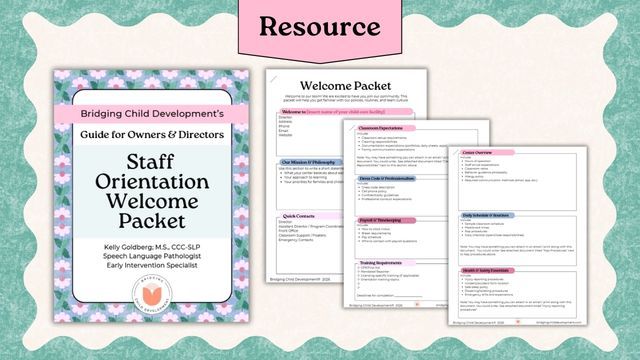
Pro tip: Prepare a simple welcome folder with emergency numbers, a quick guide to ratios, and a sample classroom schedule. Small touches feel big on day one. (Grab the free welcome packet at the end of this blog!)

A mentor is your new hire's first friend, helper, and "safe person" in the building.
Choose someone who:
- Is a seasoned teacher
- Genuinely enjoys helping and supporting others
- Communicates clearly
A mentor can help with:
- Answering day-to-day questions
- Demonstrating classroom routines (snack, nap, potty schedules)
- Navigating the culture of the center
- Modeling communication with families
- Offering reassurance when things feel overwhelming
Mentorship also strengthens team culture. When veteran teachers step into leadership roles, it reinforces their value and builds ownership and pride across your staff.
The first week is everything. How a new hire experiences your center, from their interactions with leadership to how your team welcomes them, shapes their perception of your program and their decision to stay long term.
During this time:
- Be visibly present. Stop by their classroom, check in, and offer support without hovering.
- Check in daily. Even five minutes makes a huge difference.
- Celebrate small wins. Learning names, leading circle time, or navigating a first parent question all deserve recognition.
- Provide a buddy for breaks. No one wants to eat lunch alone during their first week.
New hires often decide in this first week whether your center will be their long-term professional home or just a stepping stone. The goal is to help them feel they've found the right place to grow.
A structured plan ensures consistency and helps new hires build skills without feeling rushed. Onboarding isn't a single day, it's a process that unfolds over the first three months.
- Week 1: Shadowing, observing routines, and easing into participation
- Week 2: Leading center activities, co-leading transitions, and beginning light parent interactions
- Week 3: Taking ownership of parts of the daily schedule, documenting observations, and leading small groups
- Week 4: Increasing independence with planned check-ins, confidence-building feedback, and reviewing goals
Increase ownership of the classroom, deepen family communication, and (if it's part of the role) move toward full lesson planning, usually around week four or five, once routines and culture are firmly established. Hold a 30-day check-in to celebrate progress and set professional growth goals.
Focus on full integration into the team, professional development opportunities, and engagement in the broader center community. Hold check-ins at 60 and 90 days, and use them as a two-way conversation: ask how their onboarding felt and what would make it better. This kind of "stay interview" tells new hires their voice matters, and it makes your next onboarding even stronger.
Every teacher reaches confidence at a different pace. Some are eager to jump in by week two; others need more time. The goal is a gradual, supported transition that helps teachers feel capable and ready to thrive.
To make this easy to put into action, we created a fillable Welcome Packet you can customize with your center's information!
Orientation may take a day or two, but a complete onboarding process should run at least 90 days. Spreading it over the first three months, with check-ins at 30, 60, and 90 days, gives new hires time to build skills and confidence without feeling rushed.
This varies by state, but it typically includes a cleared background check, current CPR and First Aid, and any mandated pre-service or orientation training, often covering safe sleep, mandated reporting, and allergy or medication procedures. Always confirm your state's specific requirements before a new hire is counted in ratio.
It's pairing a new hire with a seasoned teacher who guides them through routines, culture, and family communication, and serves as a friendly "safe person" for questions. It eases the new teacher's transition and strengthens leadership and culture among your veteran staff.