Spring is here and it's the perfect time to bring fresh, fun, hands-on sensory experiences into your classroom. Sensory bins are one of the easiest ways to engage children during center rotations while encouraging exploration and play!
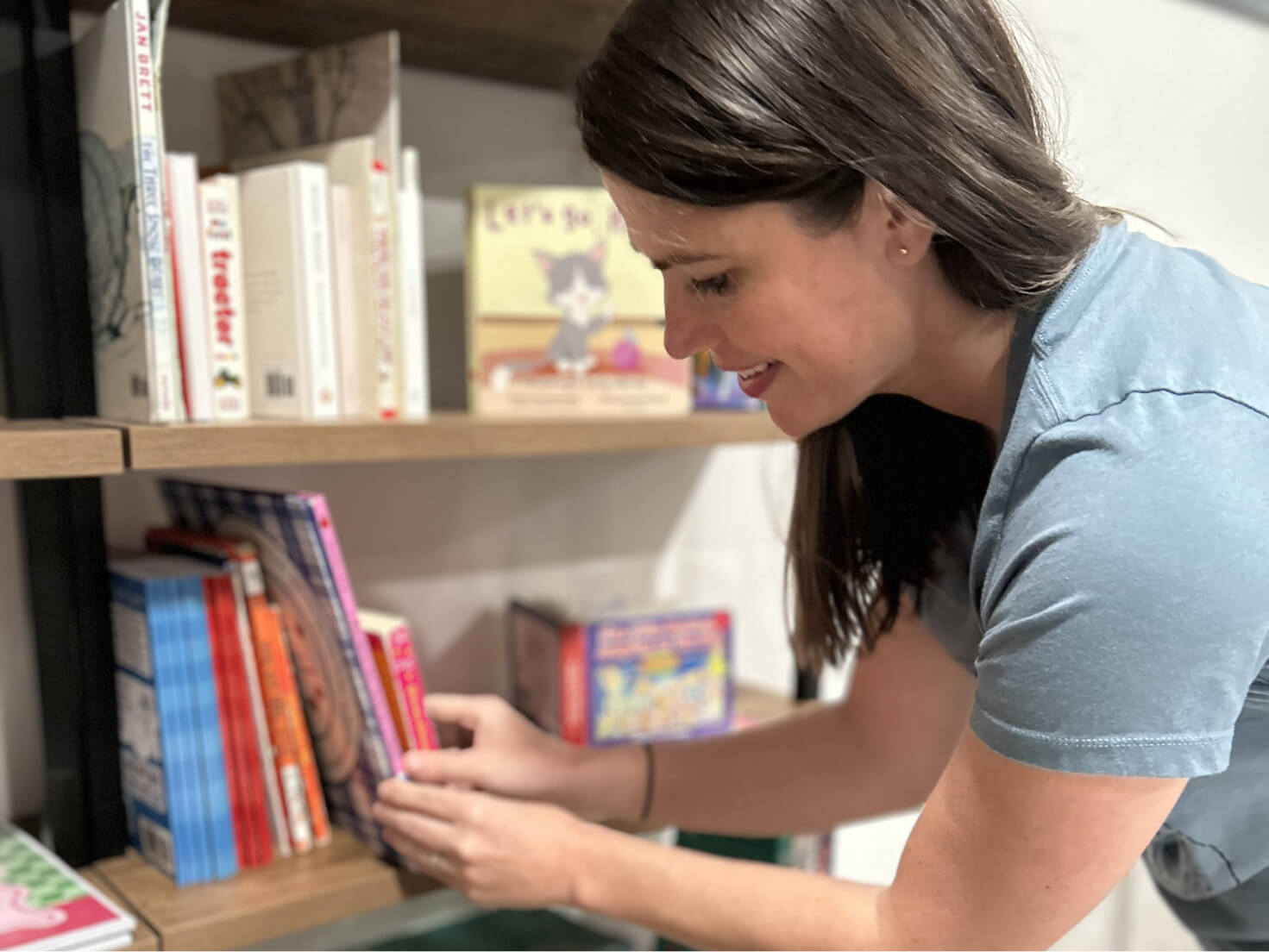
As a pediatric speech-language pathologist, I'm in early childhood classrooms every week and when I see an open sensory bin area, I get so excited! Sensory bins are one of my favorite play activities because children naturally gravitate toward sensory play and they lend themselves to so many different skills that children can work on.
In this blog, I break down 5 sensory bin ideas you can use right away in your child care setting! The bonus is that these bins are quick and easy to assemble and they often use materials you already have on hand. I always recommend keeping a sensory bin active and rotating it often to match your classroom themes. I also love pairing it with a book so they have some background knowledge and vocabulary they can use while playing!
I know
sensory bins are not every ones favorite activity, they often
look messy or
are messy, especially in group care with 6 to 20 kids. But sensory bins are so much more than messy play!
Sensory bins support development is several different areas:
- Language: Sensory play is one of the richest moments of the day for back-and-forth communication, following directions, and growing vocabulary. Label what you see, describe what they do, and leave pauses for them to respond.
- Fine motor: Scooping, pinching, and transferring strengthen the small hand muscles children use for dressing, self-feeding, and eventually writing.
- Cognitive: Filling, dumping, sorting, looking for items, hiding items, measuring, and counting all build cause-and-effect, problem-solving, and early math and science concepts.
- Regulation: Sensory play can be calming and regulating when a child feels overwhelmed. Depending on the classroom set up, sometimes having a second sensory bin in your classroom near your calming corner can be a great tool too!
- Academics: Add letters, numbers, or sorting and your bin can be used as a hands on early literacy and math activity.
A quick safety note for infants and toddlers: Little ones explore with their mouths, so always supervise closely, choose taste-safe or sealed materials, and skip small items like dry beans or tiny bugs that can be choking hazards. Each bin below includes infant and toddler adaptations to keep exploration safe.
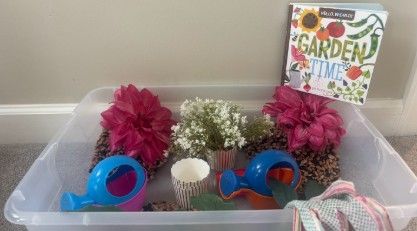
A favorite for all ages! Children create their own miniature gardens while engaging into imaginative play.
Book: Garden Time by Hello World!
Materials: - Pinto beans (3 bags)
- Black beans (1 bag)
- Plastic gardening tools (watering cans, shovels, rake)
- Plastic or paper containers for flowers
- Pretend (or real) flowers
Infant/toddler adaptation: Use cut paper or tissue paper as "dirt" instead of beans. For safe exploration, seal real dirt inside a Ziploc bag for a mess-free sensory experience.
Preschool/Pre-K adaptation: Add letters and numbers for children to "plant" and "dig up," weaving in literacy and math.
Perfect for early spring, this bin introduces children to animals that lay eggs while encouraging fine motor exploration.
Book: Bear Finds Eggs by Karma Wilson
Materials: - Plastic eggs
- Shredded paper or easter grass
- Brown bowls (to represent nests)
- Twigs
Infant/toddler adaptation: Encourage children to hold, open, and close the eggs. Seal crinkle material in a bag for safe sensory exploration.
Preschool/Pre-K adaptation: Hide letters inside the eggs or match uppercase and lowercase letters on each half for an interactive literacy activity.
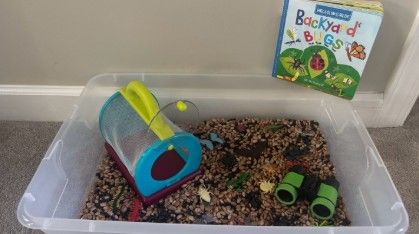
Children tend to either love or avoid bugs, and this bin creates a fun, low-pressure way to explore and learn about them.
Book options: Backyard Bugs by Hello World! or The Grouchy Ladybug by Eric Carle
Materials: - Pinto beans (3 bags)
- Black beans (1 bag)
- Plastic bugs
- Magnifying glasses
- Small containers to "catch" bugs
Infant/toddler adaptation: Use larger plastic bugs and swap beans for larger materials like fabric pieces. Let children explore textures and practice grasping.
Preschool/Pre-K adaptation: Add sorting (by color, shape, or size) or introduce simple science concepts like habitats. Encourage observation with the magnifying glasses.
A meaningful way to teach children how to care for the world around them.
Book options: 10 Things I Can Do to Help My World by Melanie Walsh
Materials: - Blue and green dyed rice or shredded paper
- Small recycling bins or containers
- Clean recyclables (bottle caps, paper rolls, small boxes)
- Toy trucks or tools
- Pictures or labels for sorting (recycle, trash, compost)
Infant/toddler adaptation: Provide large, safe recyclable items to explore, plus sensory bags filled with blue and green materials. Focus on texture and movement.
Preschool/Pre-K adaptation: Turn the bin into a sorting activity, separating items into recycle, trash, and compost, and start simple conversations about helping the Earth.
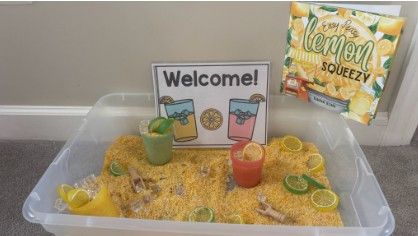
As temperatures rise and summer approaches, this bright, cheerful bin taps into children's love of pretend play.
Book options: It Began with Lemonade by Gideon Sterer or Easy Peasy, Lemon Squeezy by KeriAnne N. Jelinek
Materials: - White and yellow dyed rice
- Acrylic ice cubes (or real ones)
- Acrylic lemon slices (or real ones)
- Cups and straws
- Scoops
Infant/toddler adaptation: Use larger scoops and cups with minimal filler, focusing on pouring and transferring.
Preschool/Pre-K adaptation: Add menus, play money, or pricing for dramatic play. Encourage counting, measuring, and role-playing as customers and sellers
If you're working with the youngest children, the ones who put everything in their mouths, you don't have to skip sensory play. Taste-safe bins let infants and toddlers explore textures freely while you worry less about what ends up in their mouth. (Close supervision is still a must, since taste-safe doesn't mean choke-proof.)
Some of my favorite taste-safe fillers:
- Cooled, cooked pasta (plain or tinted with a little food coloring)
- Plain oats (dry for scooping, or slightly wet for a different texture)
- Cereal, puffs, or crushed crackers
- Chia seed gel or a cornstarch-and-water mix for a wetter, squishier experience
Pair these with chunky scoops, cups, and a few large, safe hide-and-find objects, then narrate away. Taste-safe doesn't just keep babies safe, it invites them to use their mouths to explore, which is exactly how they're wired to learn at this stage.
Sensory play looks different for infants and toddlers, and it can feel tricky to do safely with a busy group. If you want practical, therapist-backed strategies for your youngest learners, check out my training Sensory Play with Infants and Toddlers.
A sensory bin is a container filled with a base material (like rice, beans, or paper) plus themed tools and objects that invite children to scoop, pour, dig, and explore. It's a hands-on, open-ended way for children to engage their senses while building motor, language, and thinking skills.
Start with a base filler (rice, beans, shredded paper), add scoops and containers for pouring and transferring, then layer in theme-specific items and a matching book (the book is not a must, but it is my favorite way to introduce the themed vocabulary). Many of these are things you already have in your classroom.
Rotate them regularly to match your themes and keep interest high, every week or two works well for most classrooms. Fresh materials re-spark engagement and give children new vocabulary and concepts to explore.