Why Won't My Toddler Class Sit Still for Crafts?

Jan 25 / Kelly Goldberg
It's a pretty common theme in trainings: teachers share that children have a hard time sitting and sticking with an activity for longer than a few minutes. The group usually talks about how screens have impacted our little learners, I share developmental expectations around attention span, and we move on from there.

It wasn't until a recent Early Intervention session (I'm a pediatric speech-language pathologist and early intervention specialist) that I had an eye-opening experience about what might actually be causing kids to pop up from the craft table after a few seconds… and it wasn't screens or attention span.

Let me tell you about my session. This was a late 2's, early 3's class. When I arrived, the kids were just finishing breakfast, then transitioned right to the carpet for circle time, and then were told to head to the tables for arts and crafts. (Notice anything yet?)

Well, about 1 minute into the craft, one kid still hadn’t made it to the table and another two were up and walking away. The teacher, who was really trying her best said, “Any suggestions to keep them at the table longer?” 

And I thought, oh my goodness, I wonder if this is the same schedule other teachers are following, and no wonder these kids aren't into the craft.  Did you notice? They went from sitting at breakfast, to sitting at circle, to more…sitting. After looking at it that way, it’s a miracle any of these kids made it to the table to begin with!

I invited the teacher to think about what she noticed about the activities before the craft and after some reflecting, she came to the same conclusion, this was wayyyyy to much sitting for these littles! Plus we talked about what she had planned next and while it was not exactly sitting it also wasn’t any kind of gross motor or sensory motor activity. So from there we came up with a plan!    

In this blog, I’m breaking down the strategies we put in place that totally helped with keeping littles into the craft time activity for longer than a few minutes plus some winter craft ideas!

1. Add a Big Gross Motor Movement Activity Before the Craft

You may be shocked to know a recent research article out of Canada found 3 and 4 year olds are sedentary for 43 minutes of every hour at their child care!! Like, WHAT!?!? Forty-three minutes! (I’ll link the article at the bottom of the blog!) Again, no wonder these littles didn’t want to sit at the table for a craft, their body is likely screaming at them to MOVE!

So we built in movement before arts and crafts. Here's what we did:
  • Set up an obstacle course with lots of climbing, crawling over mats, and through tunnels. We added in lots of animal walks and jumping too.
  • Talked about adding a dance party after circle and before crafts
  • Set up a sensory pathway walk in the hallway where the littles got to do some more animal walks, stomping, and throw a weighted ball!      

2. Offer Alternative Seating Options for Craft Time

We also rethought the whole seating situation. I asked the teacher, "Do they have to sit in a chair, or do you prefer they sit in a chair?" Since there's no rule that crafts must happen in a chair, we came up with options she felt comfortable with that don't require sitting in one:
  • Lying on their bellies on the floor
  • Moving anything that can be taped to a vertical surface (like an easel or wall) so children can stand and craft
  • Having peanut balls, wiggle cushions, rocking chairs, and stools available as alternative seating

3. Rethink the Daily Schedule: Movement, Then Sitting, Then Movement

The tips above are great, but they take some prep, she has to set up the obstacle course and make sure the hallway is clear and babies aren't napping for the sensory motor path. So we also looked at the natural times in the day that already let kids go from moving, to sitting, and back to moving.
We came up with:
  • Doing arts and crafts right after morning play, outside time, or gym time
  • Making one small-group station a craft, then heading right to outside time after stations
  • Offering the craft as a choice right when kids enter the room in the morning

It took a couple of weeks to find the right flow. Some ideas didn't work around other classes' schedules. (If you run a home daycare, you won't have to juggle that!) But once we found the sweet spot, these kiddos stayed at the craft table way longer than before.

Easy Winter Craft Ideas for Toddlers and Preschoolers

Below are simple and developmentally appropriate art ideas with ideas on how to modify for every age so you can use them with your babies, toddlers, and preschoolers!

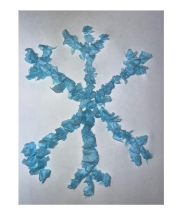
Snowflake

snowflake craft
Materials: snowflake template, glue, tissue paper, glitter (optional)

Infant/toddler adaptations:
  • Infants: Give them a sheet of tissue paper to explore, crumple, rip, etc.
  • Toddlers: Adults place glue dots or use contact paper (sticky side up); provide tissue paper squares.

Open-ended questions for preschoolers:
  • What do you think real snowflakes are made of?
  • I'm wondering what shapes you see.
  • What do you think would happen if a real snowflake got warm? Will that happen to this one?

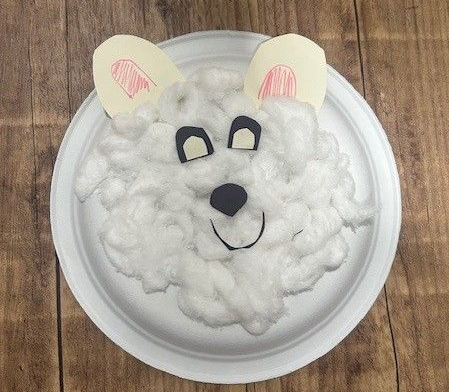
Polar Bear

polar bear craft
Materials: Paper plate, cotton balls, glue, googly eyes, construction paper

Infant/toddler adaptations:
  • Infants: For babies still mouthing everything, skip cotton balls and let them smear whipped cream or plain yogurt on the plate as the "fur." 
  • Toddlers: Adults place glue dots or use contact paper (sticky side up) and let toddlers pick up and place cotton balls.  Replace google eyes with stickers or construction paper if you have a toddler still mouthing everything.

Open-ended questions for preschoolers:
  • What do you think the polar bear feels like?
  • How do polar bears stay warm?
  • Where are the eyes?  I'm wonder where your eyes are.

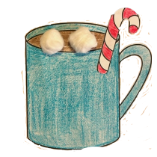
Hot Cocoa

hot cocoa craft
Materials: Mug template, crayons, glue, cotton balls, glitter (optional)

Infant/toddler adaptations:
  • Infants:  Skip crayons and let baby explore a taste-safe option by rubbing pudding on the paper as the "cocoa." 
  • Toddlers: Skip the candy cane and add extra "marshmallows"
Open-ended questions for preschoolers:
  • I'm wondering if we should drink this on a hot day or a cold day.
  • Our hot cocoa has marshmallows and a candy cane.  What else could you have in it?

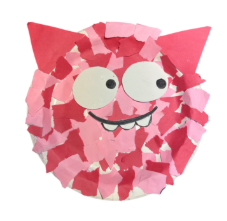
Love Monster

love monster craft
Materials: Paper plate, red and pink construction paper or tissue paper, glue sticks, white and black circle construction paper (for eyes and mouth)

Infant/toddler adaptations:
  • Infants: Give babies construction paper or tissue paper to explore and rip. 
  • Toddlers: Pre-cut the ears and glue to plate. Have toddlers rip paper while you glue or use pink and red dot stickers they can apply to the plate.
Open-ended questions for preschoolers:
  • I wonder what the love monster says.
  • How do you show someone you love them?
  • This is a love monster. I wonder who you love.

Need Quick, Low-Prep Crafts? Grab 15 Crafts in 15 Minutes
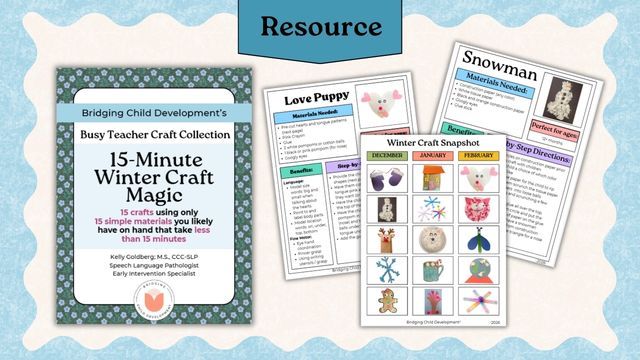
Once you've gotten your littles moving and they're ready to create, the last thing you want is a craft that takes 30 minutes to prep for 5 minutes of activity. That's exactly why I created 15 Crafts in 15 Minutes, a done-for-you resource of simple, developmentally appropriate crafts you can pull together fast.
15 crafts for preschool teachers, winter theme

Prefer to learn these tips in a training?

 Find a format that works for you.

Get your state-approved hours and CEUs, a comprehensive handbook you'll reference forever, and strategies that’ll make a difference in the children you’re caring for.

Live Virtual Trainings

Real-time interaction, community with other providers, and the energy of learning together.

Self-Paced Trainings

Flexibility to learn on your own schedule, pause and rewatch as needed, with opportunities to learn and engage with others.
child care provider taking self paced training on laptop

Private Trainings

A customized training for your entire staff, in-person or virtual, with hands-on activities built around your center's needs.
kelly goldberg speech therapist and child care trainer head shot
Hey, I’m kelly

Speech Language Pathologist, Early Intervention Specialist, Child Care Trainer, and Former Family Child Care Owner

I work alongside early childhood educators caring for children with a variety of needs. But these needs look very different than they did twenty years ago and you deserve trainings, resources, and tools that reflect that. 

Trainings that are high quality, affordable, and worth coming back to.

That's why I built Bridging Child Development. Every training hour you earn here gives you strategies you can use the very next day in your classroom.