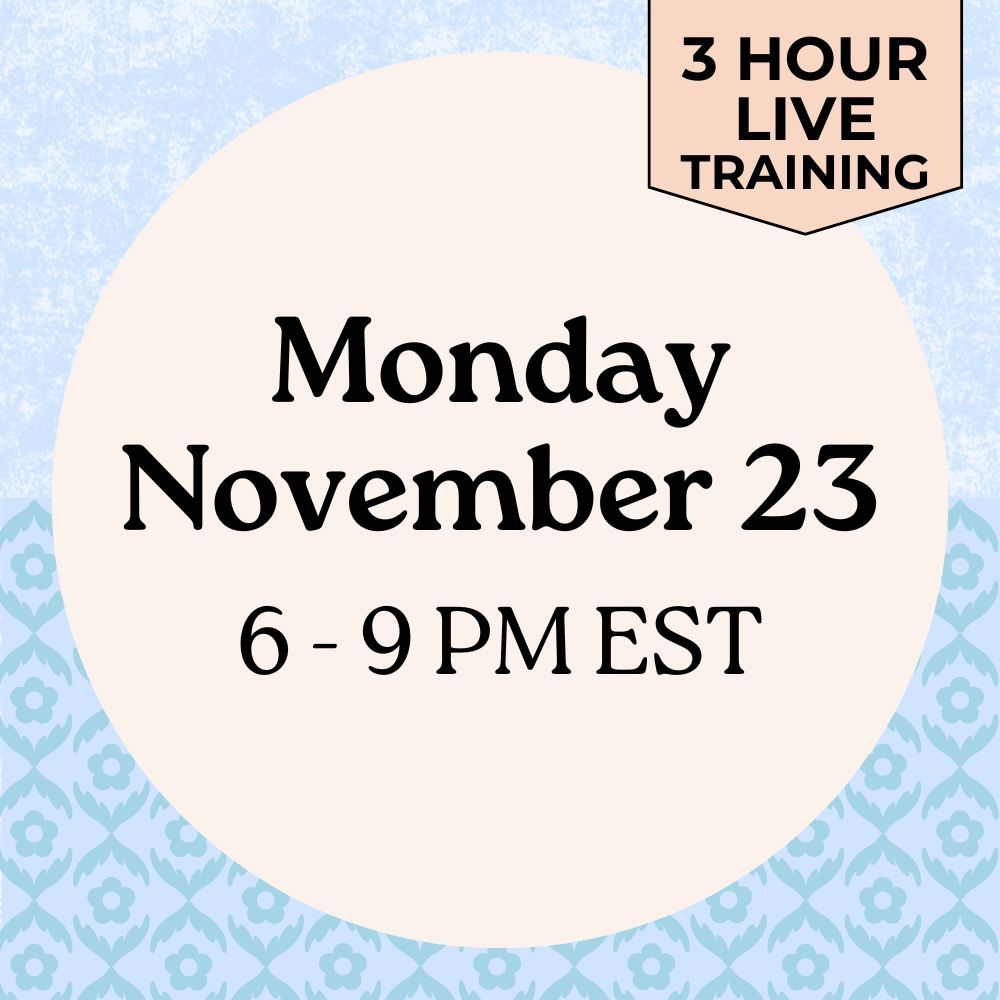
live virtual training on November 23
Join The live zoom 3 hours | 0.3 CEUs

Boost Vocabulary Through Science Play

Most teachers are never shown how to teach science and vocabulary in ways that help children truly understand new concepts and actually use new words.
But science activities are perfect opportunities to build vocabulary that sticks — so children don’t just hear new words, they understand them, use them, and connect them to what they’re learning.
At the end of this live training, taught by a speech language pathologist, you will learn:
  1. Which words to teach (and which ones to skip) so children build a stronger vocabulary 
  2. Six simple rules for teaching new words so vocabulary actually sticks
  3. Ideas for hands-on science activities across 5 domains: Life science, chemistry, physics, environmental science, and earth/space
Stop hoping children pick up new words naturally and start using science activities intentionally to build vocabulary that lasts.
Resource

Your training includes a digital handbook with Science activities and target vocabulary, yours forever!
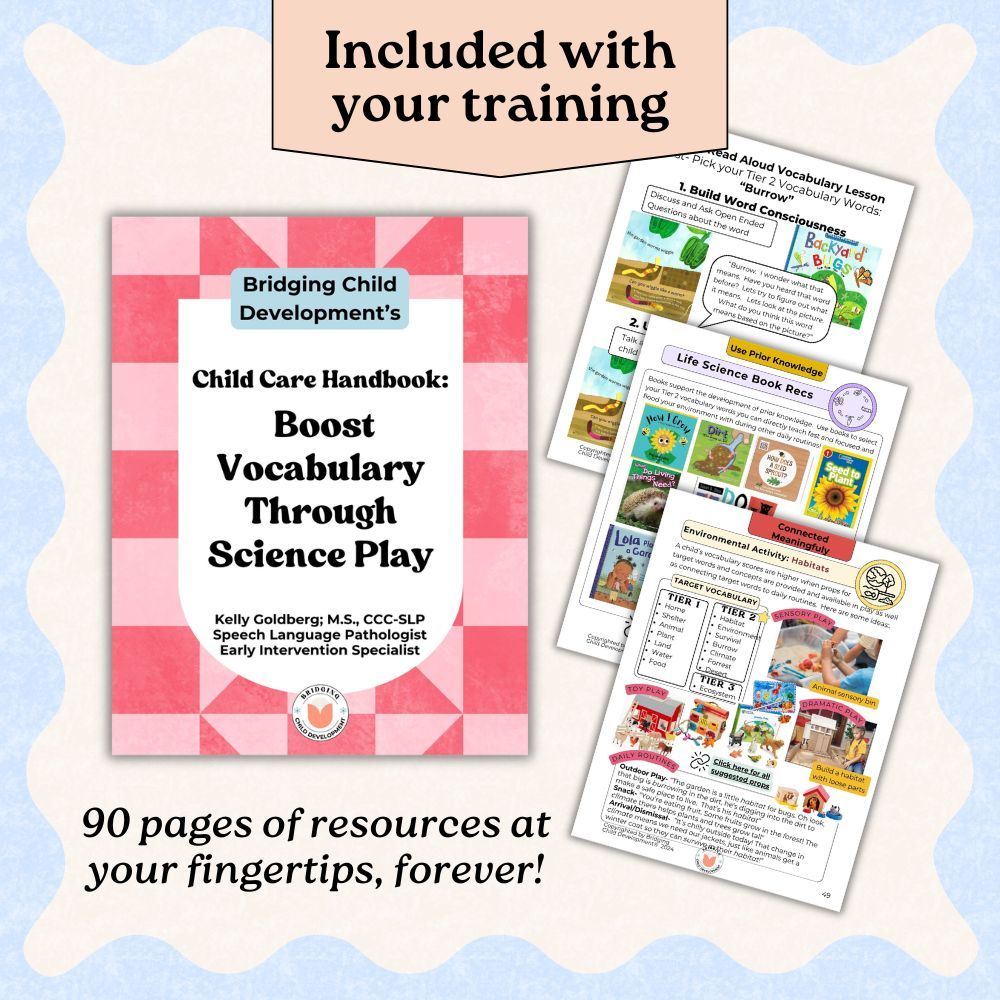
Inside this 90+ page digital handbook you'll find:
  • Research backed vocabulary strategies, examples of what to say and do during activities, and tons of hands-on science activities for toddlers and preschoolers across multiple science domains.
  • Ready-to-use and blank lesson planning templates so you can easily plan your own science and vocabulary activities.
  • Book suggestions, materials lists, and visuals to help you create a vocabulary rich classroom you can actually maintain.

Confidently Teach Science and Vocabulary Together

Make Science Activities And Vocabulary Easy To Plan
Use the lesson planning templates that help you easily pair science activities with your target vocabulary words, aligned with all 5 Science domains.
Add Science And Vocabulary To Your Everyday Play
Get book lists, toy suggestions, and station ideas that make science exploration and vocabulary learning a natural part of your classroom routines.
See What Effective Vocabulary Teaching Looks Like
Watch video examples showing what to do and what to avoid, so you feel more confident teaching vocabulary during hands-on science activities.

See what early childhood educators are saying

"Very easy to follow and understand, Kelly was enthusiastic and knowledgeable.

I can't wait to add more chemistry to my science activities."
"Loved learning the 5 science domains.

Kelly's knowledge and patience is always appreciated.”
"Liked learning how we can connect the science with vocabulary, also having great activities to engage the students.

It was clear and concise!"
Training outcomes

By the end of this 3 hour | 0.3 CEU training, participants will be able to:

  • Identify the importance of science lessons in child care
  • Select science activities to use in their child care
  • Identify a variety of materials that can be used in science activities

Frequently Asked Questions

Meet Your Trainer

Hi, I'm Kelly
A licensed Speech Language Pathologist, Early Intervention Specialist, Child Care Trainer, and Former Family Child Care Owner


I work alongside teachers every day caring for children with developmental delays, feeding challenges, speech and language disorders, and more.

I kept hearing the same thing:
"Our trainings don't teach us this." So I created trainings that do! 

No fluff. Just practical strategies designed to fit naturally into everyday routines with infants, toddlers, and preschoolers
Speech-language pathologist working on professional development resources for early childhood educators

Training requirements so you get your CEU's

Are Bridging Child Development courses accepted in my state?

Bridging Child Development is an IACET-accredited training organization. This means every training meets the highest standards for professional continuing education, and your CEU's are recognized across the US and internationally. We are also an approved Training Organization with the National Workforce Registry Alliance.
Bridging Child Development meets the child care training requirements for many states and is in the process of approval in all 50 states. Review our state training information pages before enrolling to ensure you receive credit.