Top 11 Books to Help With Potty Training In Your Classroom
May 13
/
Kelly Goldberg
Finding a potty training resource that works in a busy classroom with 8, 12, or 20 kids is hard.
You need something that:
Engages kids without overwhelming them with shame or pressure
Works for a wide range of ages and readiness levels
Can be used with the whole group or one-on-one
Doesn't create anxiety or performance pressure
Actually teaches kids what their bodies are doing
As an mom, early intervention specialist supporting child care providers regularly, and a former in-home child care owner, I know firsthand: Potty training at school can be one of the biggest stress points for parents and teachers once a child enters toddlerhood. If you are not sure where to start when it comes to potty training in a classroom setting,read this blog first.
Click to see all books. Affiliate link.
Why Use Books to Teach Potty Training?
One of the best tools for teaching and preparing young children is books. Stories help little ones make sense of new routines, see characters they relate to, and build confidence away from the bathroom, in a safe place. Books take the pressure off, build potty vocabulary, and normalize the parts of potty training that can feel scary, like accidents and flushing.
This page contains affiliate links. We may receive a commission on qualifying purchases made through these links, at no extra cost to you.
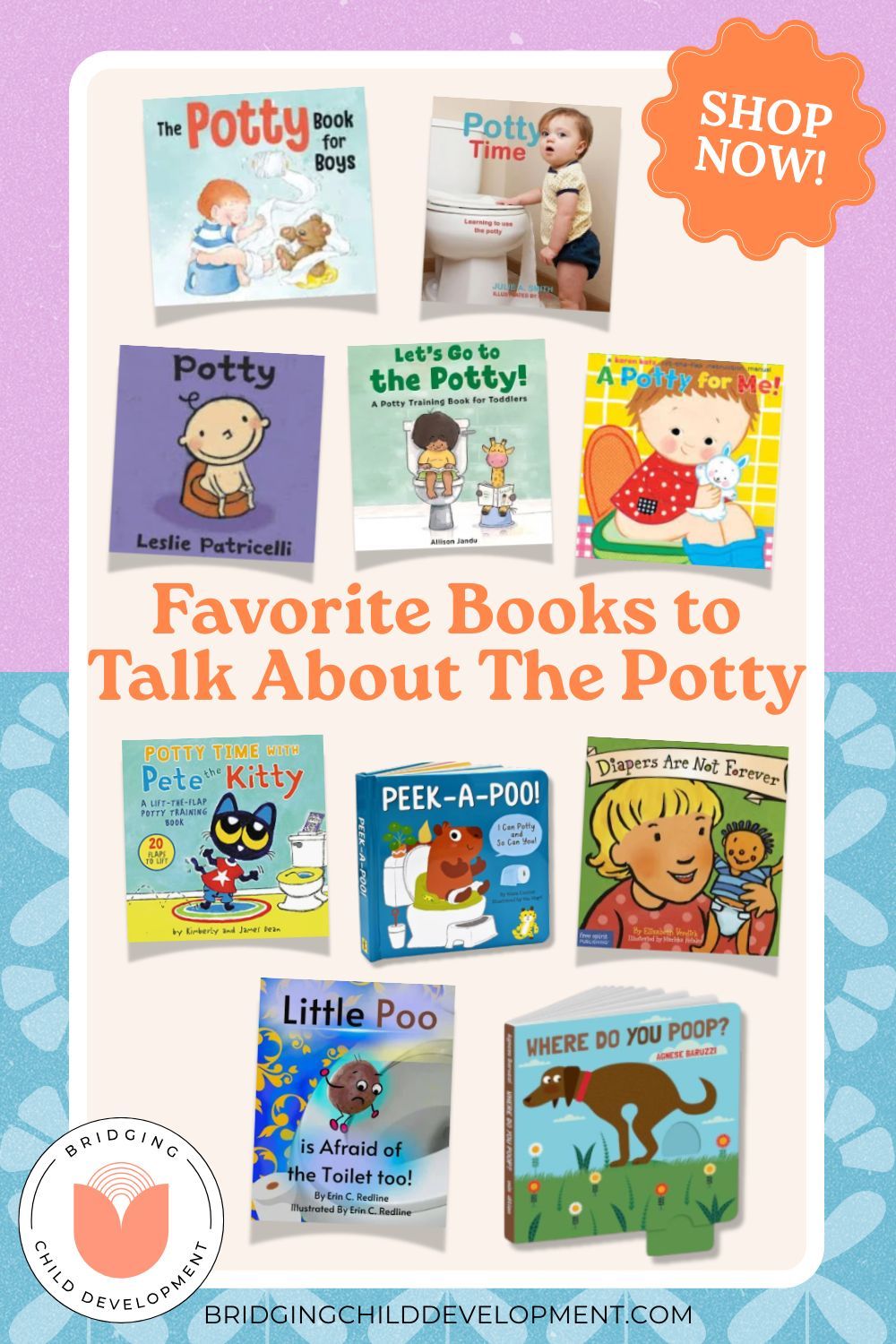
Here are the 11 books that make our list of potty training books to add to your early childhood classroom library.
The 11 Best Potty Training Books for the Classroom
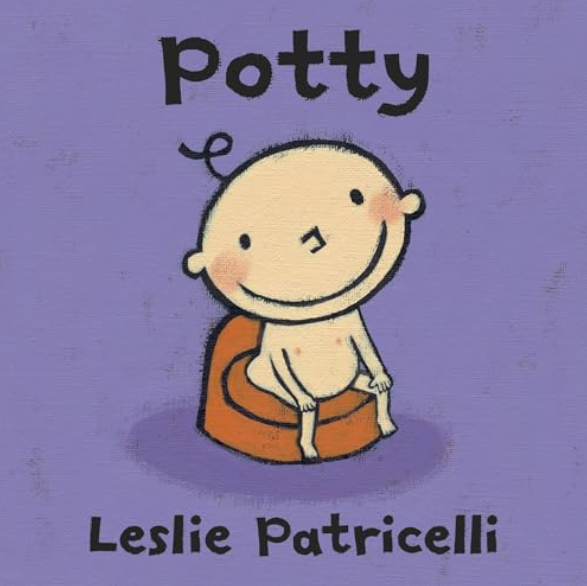
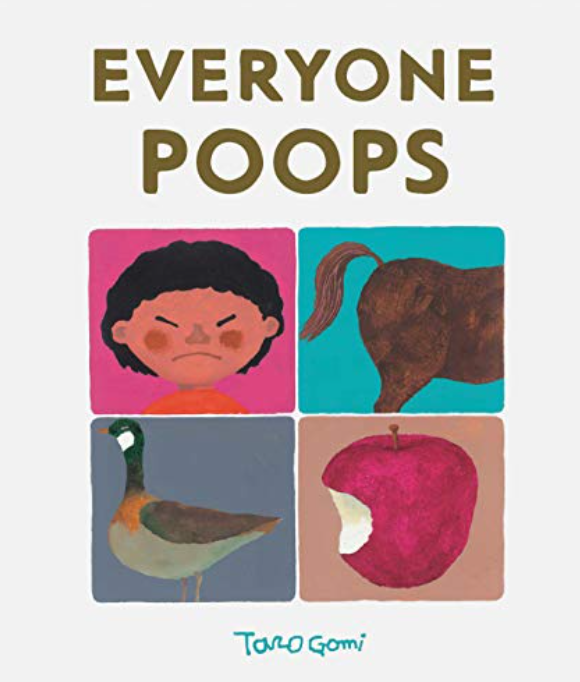
Perfect for that first introduction to potty training. The character explores the potty decision making process and observes how others (like the family cat and dog) go potty.
This book makes the list because:
It’s mainly told in pictures- allowing you to add your own words and potty vocabulary that fits your school!
When there are words, they are simple- making it easy for young toddlers to understand.
The illustrations are bold, clear, and add some humor!
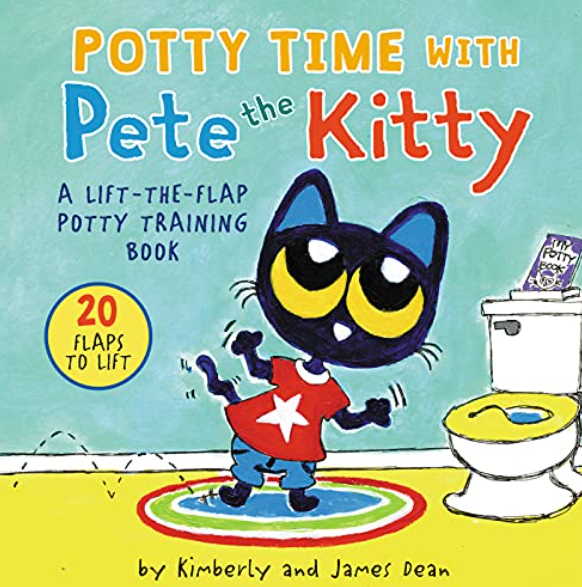
This book walks toddlers through the complete potty process, from recognizing the need to go to washing hands, and ends with various rewards like a high five, a check on a chart, or a sticker.
This book makes the list because:
All the lift a flaps! Every child will be able to have a turn lifting a flap.
The language! It’s simple so all children will understand the story (plus I love the use of location and direction words!)
They use a real potty with a potty seat over. This is great as many child cares are not able to use a potty chair.
The ending with multiple rewards is perfect for group care. Some providers use a high five and others like to give each child a sticker- this normalizes that and gives you an opportunity to talk more about using/not using rewards.(Read more about rewards in this blog!)
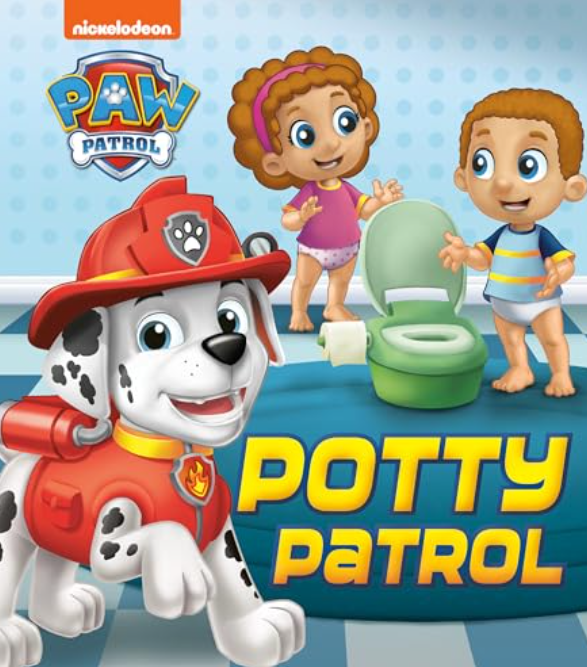
This book follows girl/boy twins learning to use the potty, with special attention to being brave when the bathroom feels scary.
This book makes the list because:
Many toddlers and preschoolers love PAW Patrol so we can learn into their favorite characters!
During and after reading you can talk about your bathroom sounds, sights, or smells and why it might feel a little scary but your class can be brave like PAW Patrol!
This book walks kids through each step in the potty process, from recognizing a rumble in your body, to asking a grown-up for help, to sitting on the potty.
This book makes the list because:
It includes a song that can be perfect to sing while kids are sitting on the potty or add to your transition to the bathroom!
It shows different potties- perfect for child cares that may not use a standard toilet or may have regulations against a potty training potty.
The normalization that sometimes nothing comes out, other times it might come out and surprise you, and sometimes you might have accidents.
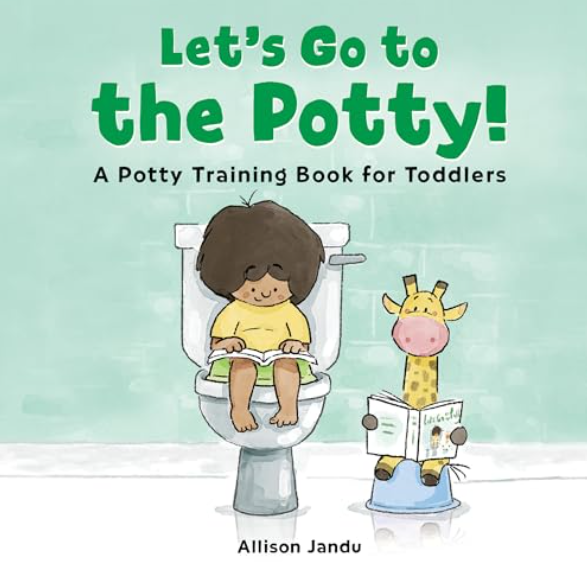
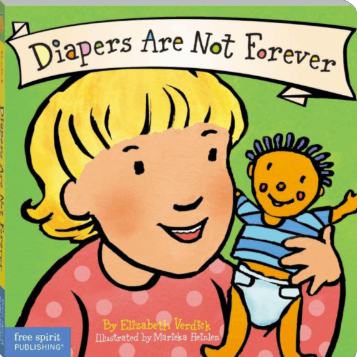
Great for toddlers in the beginning stages of potty training. First, the character is still in diapers while becoming familiar with their new potty. The book goes through all the stages of potty training- recognizing the urge to go, telling a grown-up, flushing the toilet and washing their hands.
This book makes the list because:
The illustrations and language are simple, keeping kids interested.
The character is gender neutral which may be something important to you for group care.
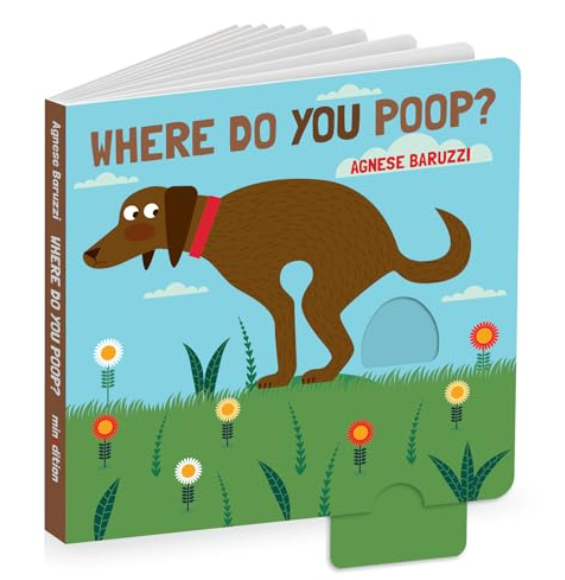
Every toddlers dream! Pull-the-flap and reveal the animal pooping! The book ends with a little boy pooping on the potty.
This book makes the list because:
The pull-the-flap makes the book interactive- remember, a child’s attention goes where their hands go so keep those little hands busy during book reading!
The rhyming structure is great for phonological awareness too!
If you’re doing an animal theme or unit study- you can use this book there too and talk all about habitats.
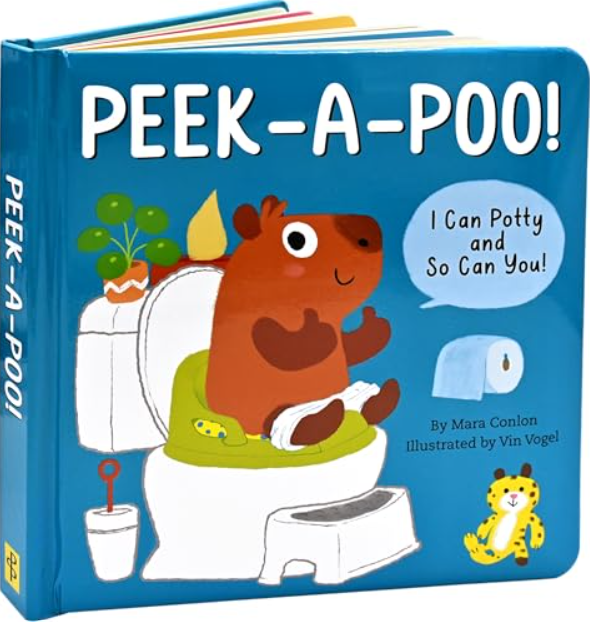
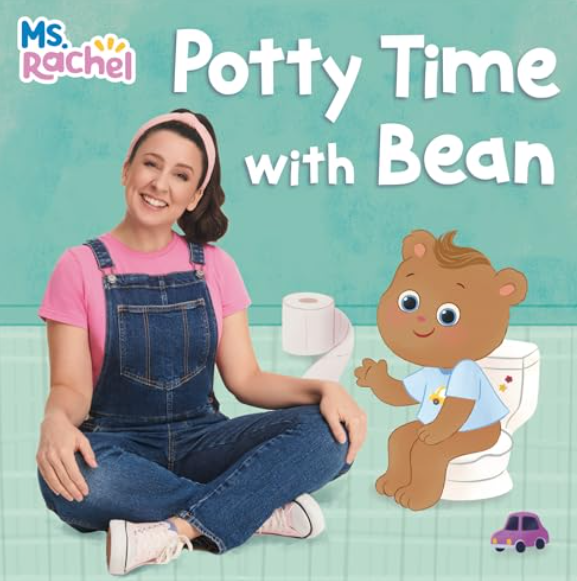
This book reassures toddlers that going on the potty takes time and everyone progresses at their own pace.
This book makes the list because:
It includes going potty, flushing, and wishing hands, all steps we want children to do in child care
Gender inclusive as it explains how girls sit and boys sit or stand with images of a potty and urinal which is perfect as your child care may have both
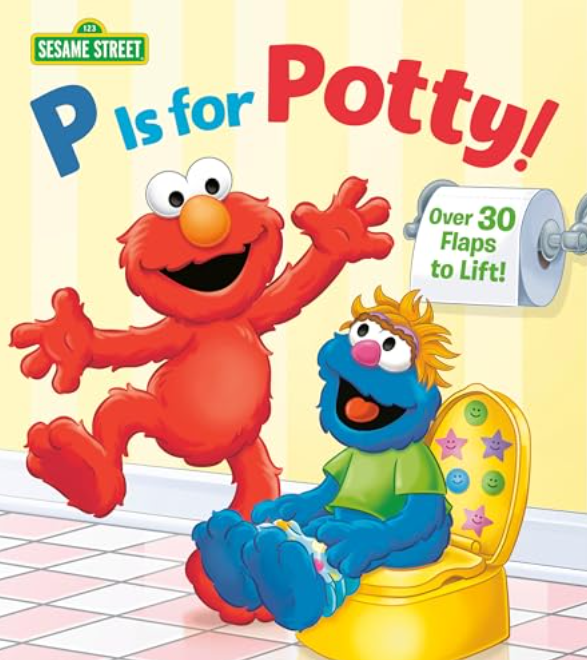
A lift-the-flap book about Elmo learning to use the potty just like his cousin does. It moves through the potty sequence, going after lunch, wiping, and washing hands.
This book makes the list because:
It has 30 flaps to lift to keep your toddlers busy while reading but has more text and an actual story line for your older kiddos- perfect for mixed ages!
Elmo has an accident while playing and both his cousin and Mom normalize that it’s no big deal and accidents happen when you learn new things.
The illustrations actually look more like a child care than a home so you could easily switch out “home”, “mom”, and “cousin” for your child care name, your name, and friends- making it more relatable!
Potty Training Professional Development Course for Child Care Providers
Books are a powerful tool but if you want a step-by-step system built specifically for early childhood education classrooms, the potty training course walks you through it all.
Frequently Asked Questions
What are the best potty training books for toddlers in a classroom?
The best classroom potty training books are simple, interactive (think lift-the-flaps), and easy to adapt for mixed ages. Favorites like Potty by Leslie Patricelli, Potty Time with Pete the Kitty, and P Is for Potty work because they keep little hands busy, use clear language, and normalize accidents without shame.
What potty training books work best for mixed ages or group care?
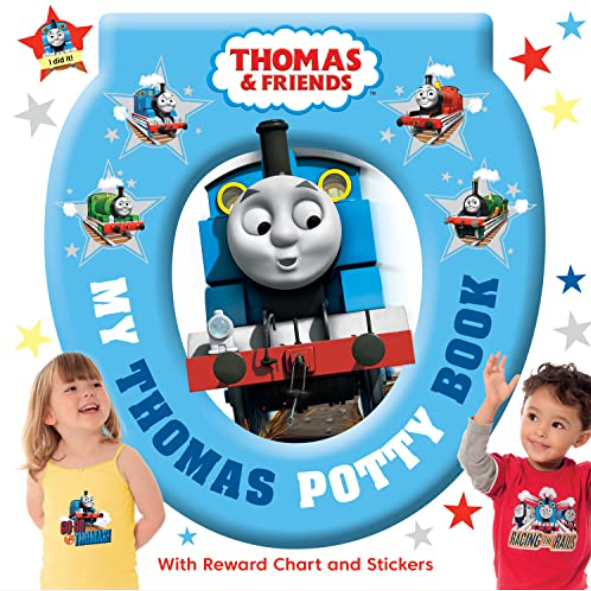
Look for interactive flap books and stories that show different potties and a range of characters. Books like My Thomas Potty Book, Everyone Poops, and P Is for Potty layer simple visuals for toddlers with more text for older kids, so one book can serve a whole room.
How do books help with potty training?
Books let children learn about potty training away from the pressure of the actual bathroom. They make a new routine predictable, build potty vocabulary, show relatable characters, and normalize the scary or messy parts, like flushing and accidents, all in a safe, low-stress way.
How often should I read potty training books?
Often! Repetition is your friend. Reading the same potty books regularly, even daily, builds the familiarity and confidence young children need, and it pairs perfectly with hands-on practice throughout your day.
Prefer to learn these tips in a training?
Find a format that works for you.
Get your state-approved hours and CEUs, a comprehensive handbook you'll reference forever, and strategies that’ll make a difference in the children you’re caring for.
Live Virtual Trainings
Real-time interaction, community with other providers, and the energy of learning together.
Self-Paced Trainings
Flexibility to learn on your own schedule, pause and rewatch as needed, with opportunities to learn and engage with others.
Private Trainings
A customized training for your entire staff, in-person or virtual, with hands-on activities built around your center's needs.
Hey, I’m kelly
Speech Language Pathologist, Early Intervention Specialist, Child Care Trainer, and Former Family Child Care Owner
I work alongside early childhood educators caring for children with a variety of needs. But these needs look very different than they did twenty years ago and you deserve trainings, resources, and tools that reflect that.
Trainings that are high quality, affordable, and worth coming back to.
That's why I built Bridging Child Development. Every training hour you earn here gives you strategies you can use the very next day in your classroom.
Login or sign up to start learningLogin to start learning