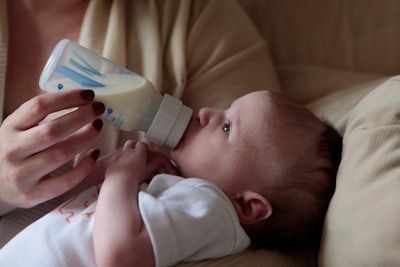
You've got the bottle ready, baby seems hungry, and...nope. They are not having it. Baby either cries when they see it, takes one suck and stops, or arches away from you.
This is a scenario almost every infant teacher has encountered at some point during their career: A baby who takes the bottle at home and is refusing the bottle at daycare.
You’re not alone,
how to handle bottle refusal is a common question in our Mealtime Struggles training! (Link to training at end!) The good news is there
are reasons behind it and there
are ways
to support baby.
In this blog I’ll explain what's actually going on and what you can do about it when you're managing five other kids at the same time.
When a baby refuses the bottle at daycare, panic can set in: "What if they don't eat all day?" "What will their parents think?" "Is this my fault?" All valid worries, but first and foremost, this is nothing you did wrong.
Here's what might be going on:
- The environment is different. Everything from the lighting and sounds to the smells and pace of the room differs from home. Some babies are more sensitive to these changes and need time to feel secure enough to eat.
- You're not mom, dad, or whoever primarily feeds them at home. Babies form strong associations between feeding and their primary caregivers. If a baby is exclusively breastfed at home, the bottle itself may feel foreign, and taking it from an unfamiliar person adds another layer of adjustment.
- The routine has changed. Babies thrive on predictability. At home, feeding might happen in a quiet nursery with specific lighting, positioning, and cues. In child care, those familiar patterns are disrupted.
- Baby might be overstimulated. A child care room offers countless sights, sounds, and activities. Some babies get so stimulated that they simply don't eat.
The good news is that with patience and a little support, most babies adjust to bottle feeding in child care. Below are strategies I use when supporting teachers with a baby who's refusing the bottle. I always suggest trying one strategy and seeing how it goes, then adding another if it was not successful. Don’t feel like you need to do all of these at once.
Some babies need to be away from the stimulation to focus on eating.
- If you have a second teacher, arrange the room so your back is to the action.
- If your center has a nursing room, try feeding in there a few times, then move back into your primary room.
- If you don't have a nursing room or it's just you, find the quietest spot in your room and dim the lights if you're allowed.
You can also change things up: Try the bottle while holding baby near a window, going outside if possible, having another teacher or child engage with them while you feed, or adding soft music or white noise in the background.
Some babies refuse the bottle in the traditional position, head in the crook of your arm, body upright. For breastfed babies especially, this is very different from the feeding position they're used to (which is more of a side lying position).
Try:- Positioning baby on their side on an elevated pillow, which also gives baby more control over the flow.
- Offering that side-lying position by propping up your legs and laying baby on their side along your legs.
- Walking while feeding.
- Offering the bottle while you rock in a chair.
Don't wait until baby is
really hungry (aka hangry). It sounds counterintuitive, but if baby is already hungry and then has to do something hard, frustration builds fast.
Try:- Offering the bottle at non-feeding times.
- Offering it right when they wake up, sleepy but awake.
- Watching for early hunger cues (rooting, hand-to-mouth movements, increased alertness) and offering the bottle then, before crying starts.
If you wait until they're too hungry, they're less likely to take a bottle they're unsure about, because they're already overwhelmed and dysregulated. It's like trying to teach someone to swim while they're panicking, it just doesn't work.
Babies pick up on stress and frustration, which can make them even less likely to take a bottle.
If you or baby are getting stressed:- Take a break and walk around with baby while offering comfort.
- Try a different caregiver. Seriously, sometimes a different person makes a huge difference, don't take it personally!
- Engage in play for a few minutes before trying again.
You don't have to use a bottle. If baby is 4+ months, you can try offering breast milk or formula on a spoon, in a straw cup, or in an open cup. Moving from the bottle to a straw or open cup is actually a natural developmental progression in drinking.
First and foremost,
don't wait to talk to parents. If baby refused the bottle,
mention it at pickup that day or send a quick message. Something as simple as:
"I noticed baby doesn't seem interested in the bottle. I tried a few things, like changing their positioning and moving to a quieter space. I'm curious whether you've noticed anything similar at home, and I'd love to know if you've found anything that helps." Get the conversation going and problem-solve from there.
Here are a few more tips to avoid when baby is refusing the bottle:
- Don't fall for "they'll eat when they get hungry enough." We just covered the real reasons behind bottle refusal, and "not hungry enough" wasn't one of them. This approach increases stress and frustration and can make things worse.
- Don't keep trying for 10+ minutes. If baby is stressed and you're stressed, it's not working. It's okay to take a break for a few minutes.
- Don't sneak or force the nipple into their mouth. Instead, dip the nipple in a little breast milk or formula, hold it near their mouth, and let them come to it.
Parents may need to adjust pickup times temporarily, come in during work breaks to nurse or bottle feed, or talk to their pediatrician about the transition. But remember, this is temporary, and it's often a normal developmental phase, not a reflection of your caregiving. Most babies adjust as they learn to trust you and grow familiar with their new environment. You've got this!
(Want more support with feeding challenges in the infant room? Don't miss
staying calm when baby gags, another common Mealtime Struggles question.)
Bottle refusal is just one of the feeding hurdles that can make the infant room stressful. Our Mealtime Struggles training for child care providers covers struggles from infant, toddler, and preschool teachers and gives you clear, therapist-backed strategies so mealtimes are smoother!
The daycare environment is simply different, new sounds, lighting, smells, pace, and a caregiver who isn't their primary feeder. Babies thrive on predictability, so it can take time to feel secure enough to eat in a new setting.
Go slow and reduce pressure. Try side-lying positioning (closer to nursing), a calm and quiet space, offering before baby is overly hungry, and letting baby come to the nipple rather than forcing it. A different caregiver or feeding position can also make a surprising difference.
Try one strategy at a time: calm the environment, change the feeding position, time the bottle before baby is too hungry, take breaks when stress rises, and for babies 4+ months, consider a spoon, straw cup, or open cup. Add another strategy only if the first didn't work.
That same day, at pickup or with a quick message. Share what you noticed and what you tried, and ask what works at home. Early, calm communication keeps parents informed and turns it into a team problem-solving effort.