All behavior is communication.
A child who is hitting, biting, or throwing toys is communicating. Their body reacts to big feelings before they can put those feelings into words, and until their sensory system is regulated, no amount of asking "
What's wrong?" or saying
"Calm down" will help. This is exactly the problem a calm down corner with the right tools solves.
Think about yourself. When you've had a stressful day, do you walk in the door and immediately sit down to calmly talk through your feelings? Probably not! Instead you take a walk, hit the gym, squeeze a stress ball, or take some deep breaths. Those are all sensory supports you've learned help you calm down. Children need the exact same kind of support.
This post contains affiliate links. We may earn a commission on qualifying purchases, at no extra cost to you.
Different bodies need different input, so the magic is in offering choice across the senses. Some children calm by getting cozy and still; others need to move or push.
Here are calm down corner ideas organized by the kind of input they provide, pick a few from a couple of categories to start.
- Cozy and calming: soft pillows, a small blanket, a stuffed animal, or a weighted lap pad (check your center's rules before using anything weighted).
- Movement (heavy work): a wobble cushion, a small peanut or exercise ball, a mini jumping mat, or a body sock. Pushing, bouncing, and squeezing give the calming "heavy work" input that settles the nervous system.
- Touch (tactile): stress balls, fidgets, playdough, and textured items to squeeze and explore.
- Visual: a glitter or sensory bottle, twinkle lights, a lava lamp, or a small mirror for watching themselves take belly breaths.
- Sound: soft music, a sound machine, or noise-reducing headphones to dial down an overwhelming room.
- Breathing: a water bottle to sip, or a pinwheel or bubbles to encourage slow, calming breaths.
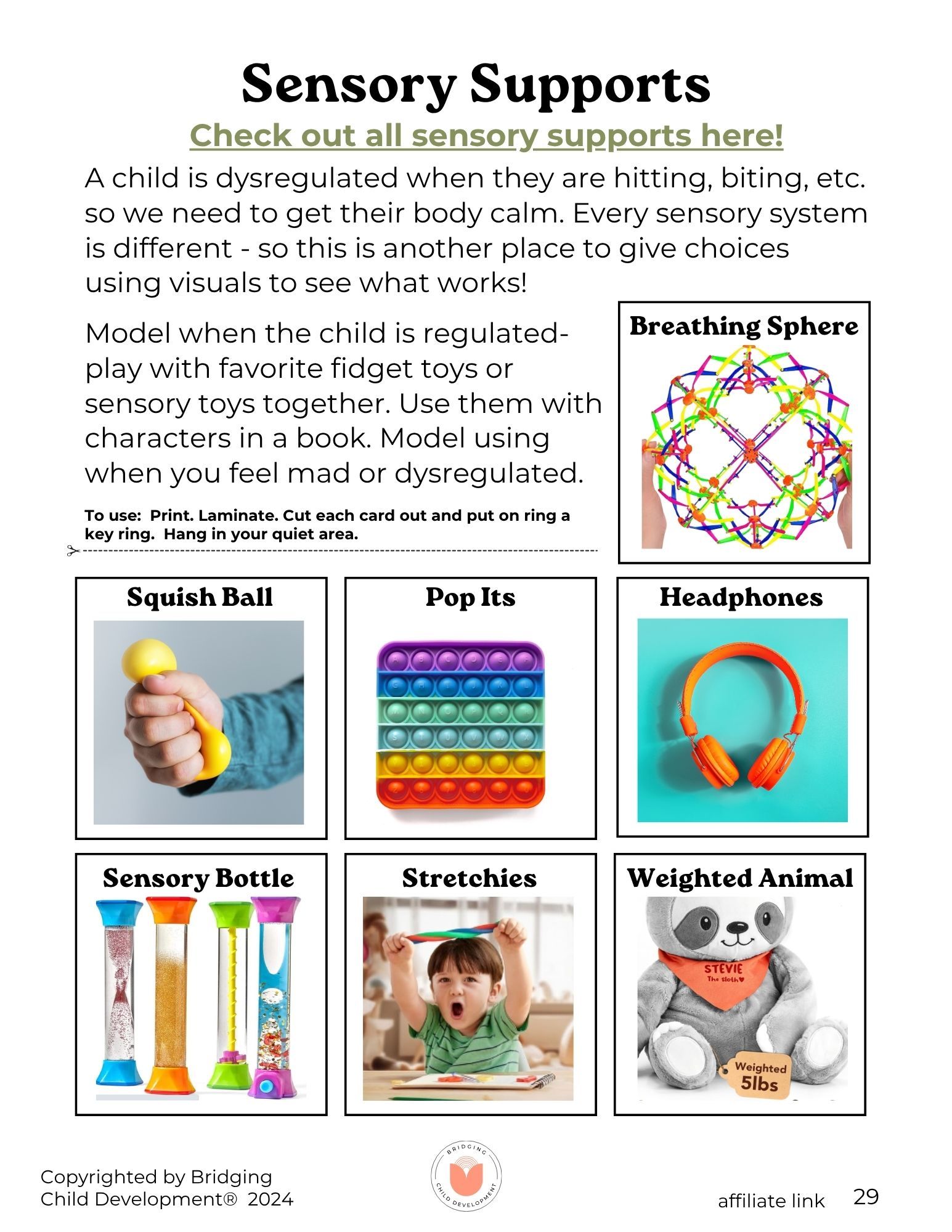
Pair your tools with a visual support so children can make a choice when emotions are high and words are low. A simple picture chart of the available tools (or a feelings chart) goes a long way. (
Here's more on visual supports that actually work in a calm down corner.)
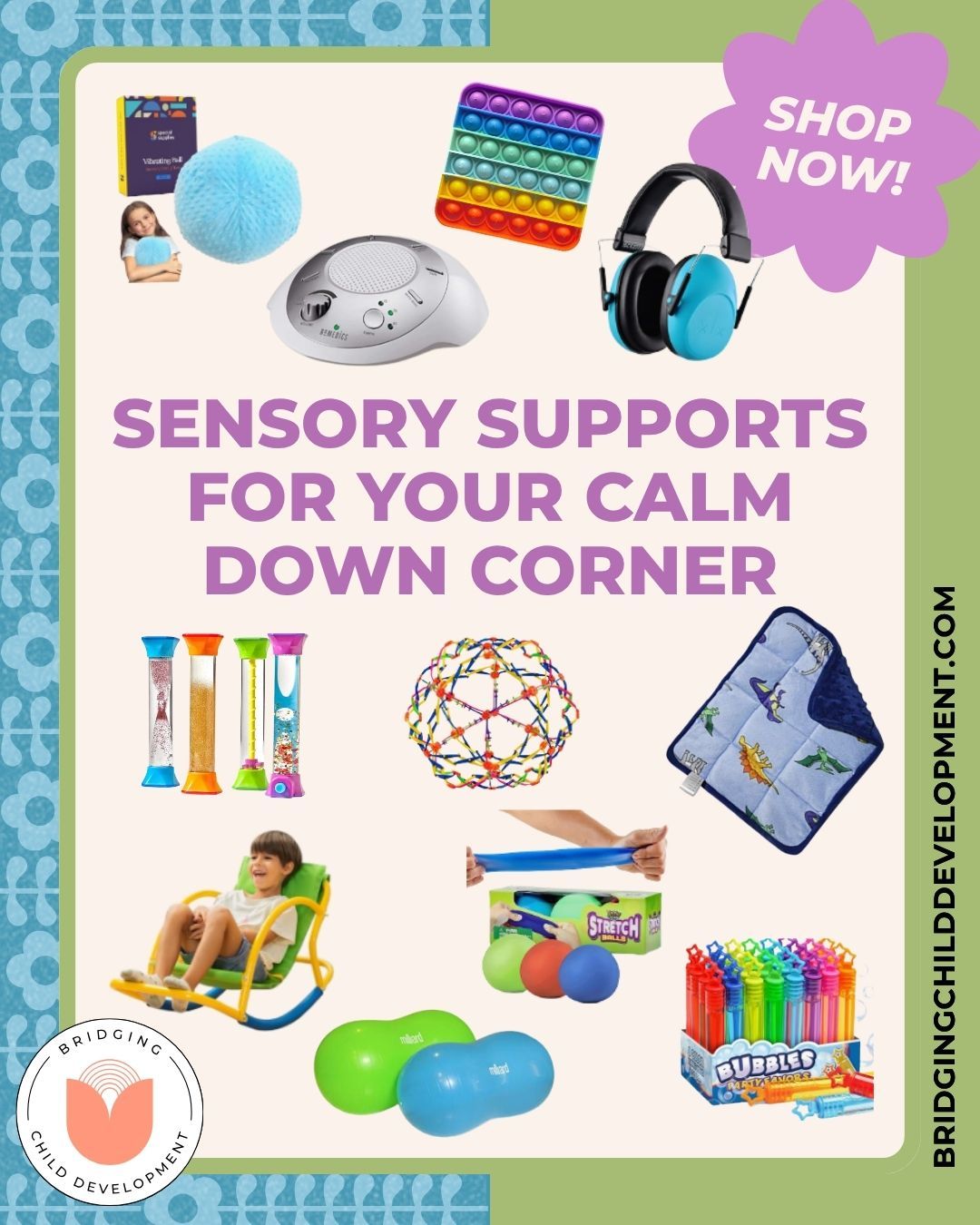
Click image or
click here to see all. Affiliate link.
1. Gather your tools. Order them, use what you already have, or make your own (DIY sensory bottles, stress balls, and sensory bins all work beautifully).
- Tip: The key is choice. Every child's sensory system is different, so what works for one child may not work for another. One child may need to bounce while another wants to get under a weighted blanket.
2. Introduce them to the children. Talk about how each tool works, model using it, and let children explore and notice which tools feel good for their bodies.
- Tip: Too many options can feel overwhelming. Start small, and swap out tools that don't get used for new ones to see what works for your group.
3. Include the kids in the setup. Have them put the tools in a basket and choose where they'll live in the calm down area.
- Tip: When children help build the space, they're far more likely to actually use it.
4. Add a visual of the tools. When emotions are high, words are low, so a picture menu helps children choose what their body needs. (see below- this visual is on Page 29 of the Goodbye Getting Even: Tips for positive behavior handbook included with your purchase of the Goodbye Getting Even training.)
5. Model and practice during calm moments. This is the most-missed step of all. Just because the tools are there doesn't mean children know how to use them. You have to model, and they have to practice, before the big feelings hit. (Here's a whole blog on how to
teach kids to use the calm down corner.)
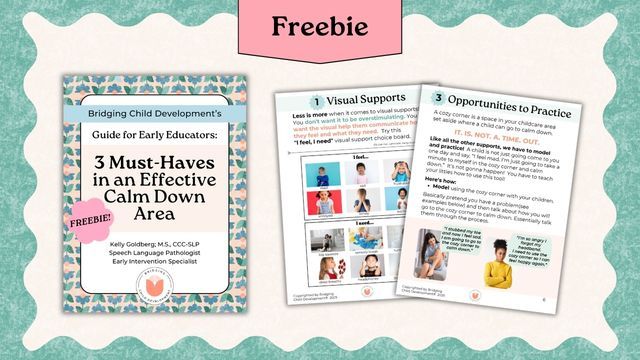
Sensory tools are just one of the three must-haves of an effective calm down area. Want all three, plus the setup and teaching strategies that make it stick? Grab this free guide for child care providers and preschool teachers, and start building a calm down corner your toddlers and preschoolers will actually use.
Tools that give calming input: stress balls and fidgets, glitter/sensory bottles, weighted lap pads (where allowed), noise-reducing headphones, soft items to snuggle, and movement tools like a wobble cushion or jumping mat. "Heavy work" input from pushing, squeezing, and bouncing is especially regulating.
No. A time-out is a consequence; a calm down corner is a supportive space a child chooses to help their body feel calm. If it's used as punishment, children won't seek it out when they're upset, which defeats the whole purpose.
Plenty of effective tools are DIY or already in your room: a homemade sensory bottle, a stress ball, a basket of soft items, a pinwheel for breathing, or a cozy blanket. A lot of heavy work activities don't require any materials at all, like wall push ups! The input matters more than the price tag.
Model using them yourself and let children practice during calm moments, not just when they're upset. This is the step most teachers skip. Tools only work when children already know how to use them before the big feelings arrive.