Why Every Toddler and Preschool Classroom Needs a Calm Down Corner (And How to Set One Up!)
Oct 19
/
Kelly Goldberg
A well-designed calm down corner doesn't prevent children from having big feelings, and it shouldn't. Big feelings are a normal part of childhood. Instead, a calm down corner gives children a safe place to practice calming their bodies, communicating their needs, and building emotional regulation skills.
Why Every Preschool Classroom Needs a Calm Down Corner
A calm down corner (you may also hear it called a cozy corner, quiet corner, break spot, etc) is one of the most powerful tools you can add to your classroom to support toddler through preschool age children with their big feelings.
What is a calm down corner?
A calm down corner is not just a play house cube with that flat blue mat and deflated pillow (IYKYK). It’s a small intentional space in the classroom designed to help children regulate emotions and sensory input.
IT. IS. NOT. A. TIME. OUT. SPOT. As a pediatric speech therapist and early intervention specialist that provides services in child cares, I can’t tell you how many times I have been in a center and heard a teacher say, “I can’t believe you just…[insert undesirable behavior]. Go to the cozy corner!” Umm…What!? That’s a time out and I can 100% assure you that child is NOT going to seek that space out when they are feeling upset or dysregulated.
A calm down corner gives children the chance to practice regulation. It’s a support, not a consequence or time out.
How to set up the calm down corner:
Choose the Right Location
Pick a spot in your classroom that is generally away from distractions or busy areas. Try to look for a little “nook” or arrange some of your furniture to create that “nook” feeling. (You can use the play house cube. I wasn’t hating on the cube itself, just what’s in it and how it is used)
Create a Cozy Space
Add soft rugs, pillows, stuffies, cushions, a bean bag chair, or a soft blanket. I love weighted blankets too but not all child care’s are allowed to have them so make sure to check with your director. You can always try a weighted lap pad or stuffy.
Add Sensory Tools
Add some sensory tools- (Click to read the whole blog) Things to touch, look at, listen to, etc. Squeeze toys, noise reducing headphones, visual bottles, soft music, twinkle lights, etc. can all be available to support the child’s sensory needs. (we have a blog on this too!)
Add visual supports
A simple feelings chart with faces (happy, sad, mad, scared) helps pre-verbal toddlers and preschoolers communicate. You can also post a visual "calm down steps" poster with pictures showing options like "take deep breaths," "hug a stuffy," or "look at a book." Not sure which visuals actually help? Read this blog:Visual Supports for a Calm Down Corner That Actually Work.
A Few More Setup Tips:
Keep it small. The space only needs to fit one or two children comfortably. A small space actually feels safer and more contained to a dysregulated child.
Rotate materials. Just like other classroom centers, refresh the calm down corner occasionally to keep children's interest—but keep a few "anchor" items consistent so the space always feels familiar and predictable.
Less is more. Too many toys can turn the corner into another play area (or create MORE sensory overwhelm). Choose 3–5 calming tools at a time.
Make it safe for unsupervised moments. Choose items that are age-appropriate and safe, since children may use the space independently. Always keep the area visible to teachers—cozy doesn't mean hidden!
How to introduce a calm down corner to your toddlers and preschoolers:
Talk about the calm down corner during circle time or group meetings.
Show children what’s inside it and how to use the sensory tools.
Model using the space yourself.
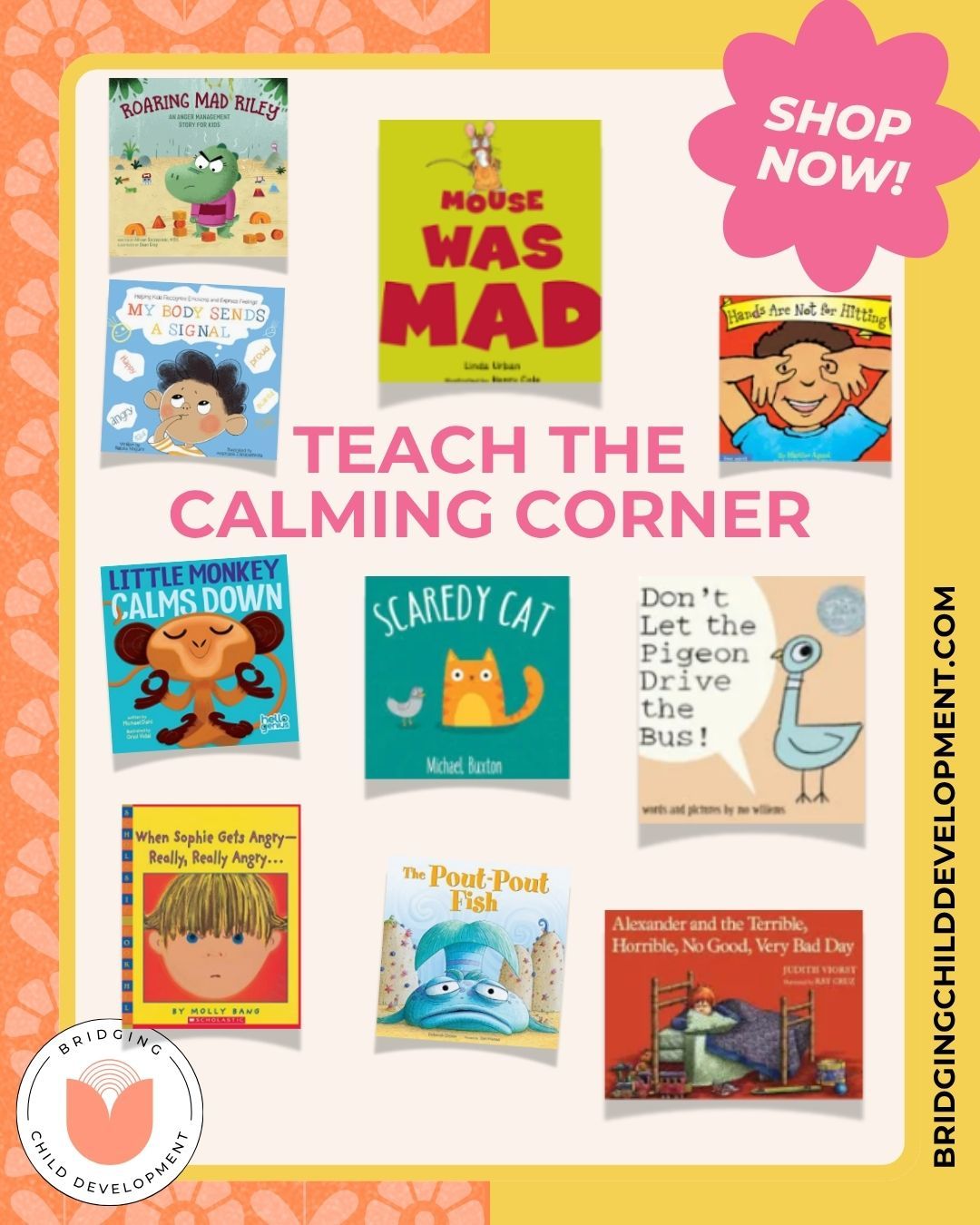
Use books to talk about feelings.
The key is teaching children what the space is for before they need it. Use the books below and have children “act out” the characters feelings and then practice going to the calm down area. This is called role playing and it is so helpful!
Click image to see all books and start building your class library! Commissionable link.
I go into much more detail in How to Teach Children to Use a Calm Down Corner here,where I share exactly how to model, practice, and role-play using the space.
Common mistakes to avoid when setting up a calm down area:
Even well-meaning teachers can accidentally undermine the calm down corner. Here are the most common pitfalls I see in child care centers:
Sending children there as punishment. (Yes, I'm saying it again because it's THAT important!) The moment the calm down corner becomes a consequence, children will avoid it.
Forcing a child to use it. You can invite and offer ("It looks like your body needs a break—would you like to visit the cozy corner?"), but forcing a child into the space turns it into a time out.
Expecting instant results.Self-regulation is a skill that develops over months and years, not days. Be patient and consistent.
Skipping the teaching phase. If you set up the corner and never explain it, children won't know how to use it. Introduce it when everyone is calm, practice often, and revisit the expectations regularly.
Putting a time limit on it.Some children need 2 minutes; others need 10. Watch the child, not the clock. When their body looks calm and they're ready to rejoin, welcome them back warmly.
Leaving children completely alone. Especially with toddlers, co-regulation comes before self-regulation. Younger children often need an adult nearby to help them through the process at first.
Co-regulation comes before self-regulation.
A calm down corner is a tool. Toddlers especially are not developmentally ready to regulate on their own feelings, they borrow OUR calm. This is called co-regulation.
In the beginning, plan to accompany children to the corner. Sit with them, breathe with them, narrate gently ("You're feeling so mad. I'm here. Let's squeeze the squishy ball together."). Over time, as children learn the routines and tools, they'll need less support and begin using the space more independently. That gradual release is exactly how self-regulation skills are built.
And don't forget, children are always watching us! When YOU feel frustrated, narrate your own regulation out loud: "I'm feeling frustrated. I'm going to take three deep breaths." Modeling is one of the most powerful teaching tools we have (and one that is totally underutilized!)
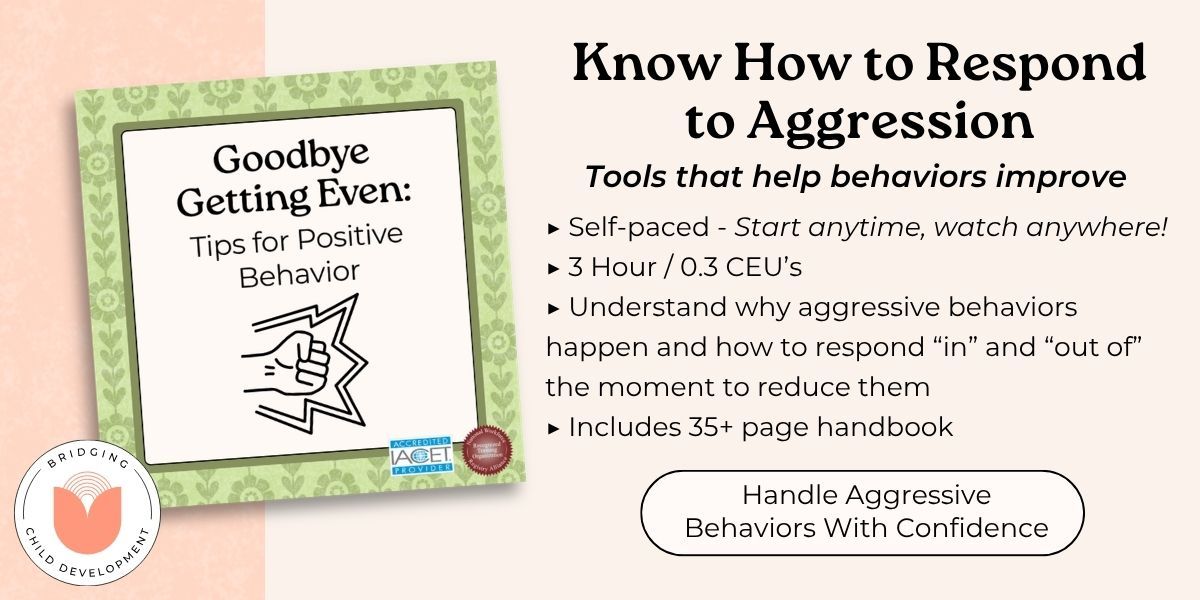
Online behavior training for early childhood educators
Earn required professional development training hours! As an IACET-approved organization, our continuing education is recognized and accepted across many states, so your time counts toward the hours your program already needs.
Frequently Asked Questions (FAQ)
What age is a calm down corner appropriate for?
Calm down corners can be used with children as young as 18 months, all the way through elementary school. For toddlers, expect to provide lots of adult support (co-regulation). Preschoolers (ages 3–5) can begin using the space more independently once it has been taught and practiced, but they will need support too! The tools inside should always be age-appropriate and safe.
What if a child refuses to use the calm down corner?
That's okay! The corner is always an invitation, never a demand. Some children prefer to regulate in other ways like movement, being held, or staying close to a teacher. Keep modeling, keep practicing during calm moments, and respect each child's individual needs. Forcing the space defeats its purpose.
What if children play in the calm down corner all day?
This is super common when the corner is new and it's actually a good sign that the space feels inviting! Set simple expectations during your introduction (for example, "one friend at a time" and "this is our space for when our bodies need a break"). I have seen some classrooms use a visual cue like a "1 friend" sign. But honestly, the novelty usually wears off within a couple of weeks.
How do I get other teachers (or my director) on board?
Share the "why"! Explain that calm down corners support social-emotional development, reduce challenging behaviors over time, and align with developmentally appropriate practice (DAP) and many state quality rating systems. Offer to model how to introduce and use the space. Once teachers see fewer and shorter meltdowns, they're usually sold!
This post may contain affiliate links where I earn a small commission.
Prefer to learn these tips in a training?
Find a format that works for you.
Get your state-approved hours and CEUs, a comprehensive handbook you'll reference forever, and strategies that’ll make a difference in the children you’re caring for.
Live Virtual Trainings
Real-time interaction, community with other providers, and the energy of learning together.
Self-Paced Trainings
Flexibility to learn on your own schedule, pause and rewatch as needed, with opportunities to learn and engage with others.
Private Trainings
A customized training for your entire staff, in-person or virtual, with hands-on activities built around your center's needs.
Hey, I’m kelly
Speech Language Pathologist, Early Intervention Specialist, Child Care Trainer, and Former Family Child Care Owner
I work alongside early childhood educators caring for children with a variety of needs. But these needs look very different than they did twenty years ago and you deserve trainings, resources, and tools that reflect that.
Trainings that are high quality, affordable, and worth coming back to.
That's why I built Bridging Child Development. Every training hour you earn here gives you strategies you can use the very next day in your classroom.
Login or sign up to start learningLogin to start learning