Finding the best board games for kids that are actually appropriate for early childhood education classrooms can feel like a challenge. You want something that is fun enough to keep preschoolers interested but also gives them a chance to practice early math skills.
When it comes to early math, games are an especially easy way to give preschoolers extra practice. The right preschool math games can turn skills like counting and building patterns into something preschoolers actually want to do.
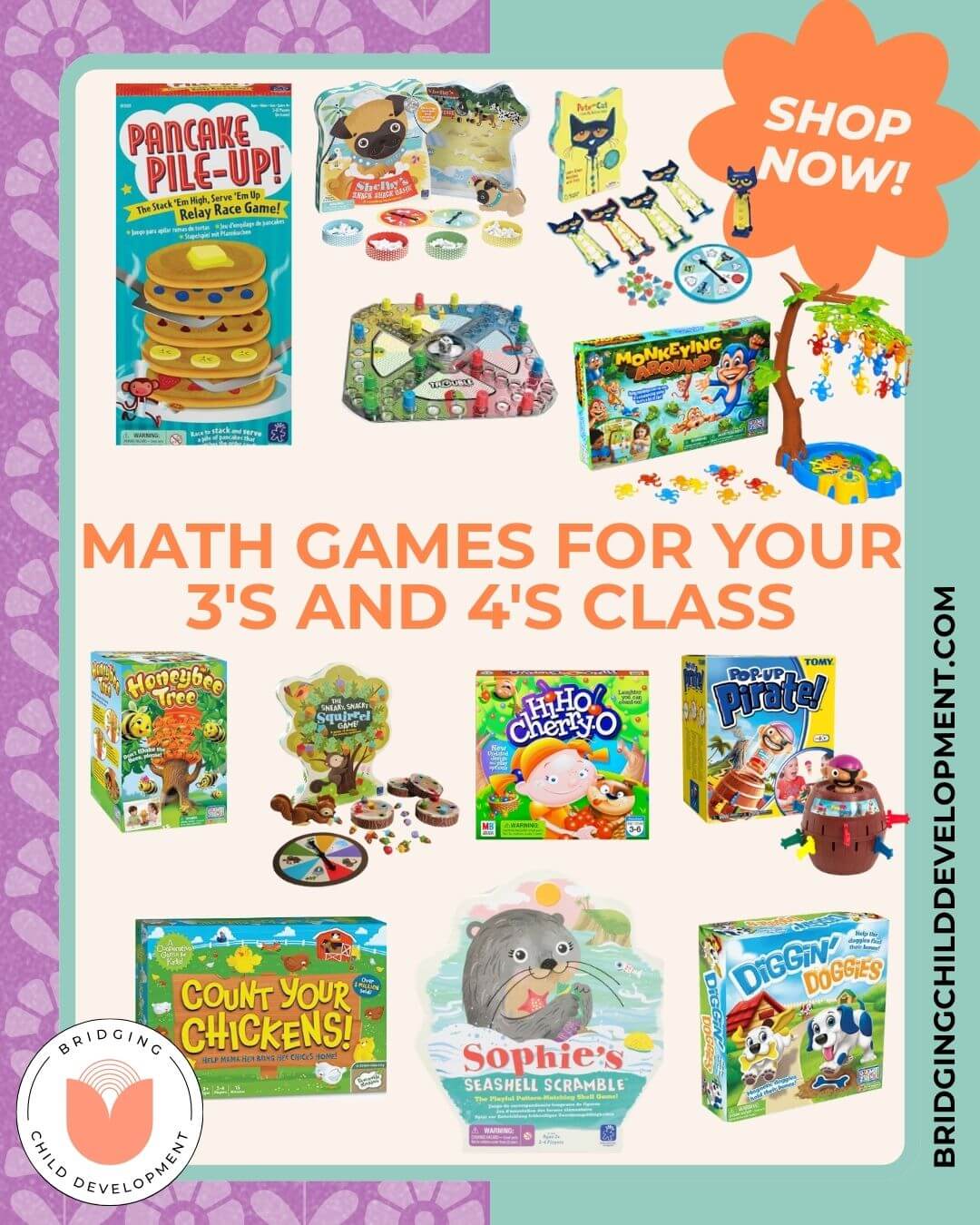
In this post, I’m sharing 12 of my favorite board games for kids, with a focus on games that are great for preschool math and exactly what math skills you can sneak into each one.
Click image to see all. Affiliate link.
Different board games for preschoolers are opportunities to practice different areas of early math
When looking for board games to play with your preschool class, there are 5 key concepts to focus your math talk on that are central to building strong early math skills! They are: Numbers and their operations, Measurement, Patterns, Data, and Geometry. Each of these games either "naturally" works on these skills or you can "take it further" during or after the game to add in some additional concepts.
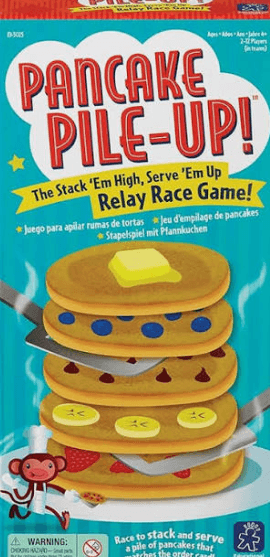
1. Pancake Pile-Up
click to go to game
Age recommendation: 2.5 years + Number of players: 2-4 Play time: 10 minutes About the game: Children race to pick up the pancakes shown on their order card, stack them in the correct order, and carry their pancake stack to the plate. Kids love racing with their pancake stacks! Math Skills:Geometry- Shapes • Measurement- Tall/Short and fast/slow • Data- More/Less Why it’s good for math: Math Talk: While playing, talk about which stack is taller or shorter and who has more or less pancakes in their stack. When children race to stack, make sure to use speed and distance measurement words too! Take It Further: After the game, check out the pancakes and talk about the shapes of the toppings. You can name the shapes and describe their features such as, "Oh this has banana slices. They are circles. Circles don't have any sides or corners!"
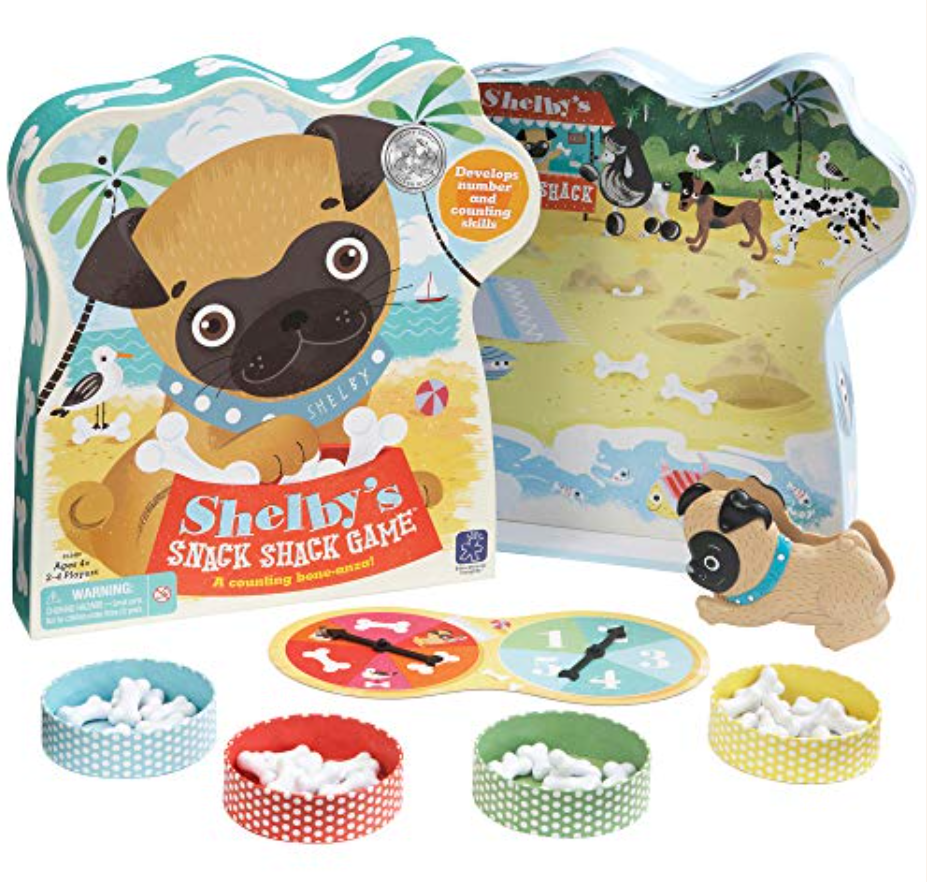
2. Shelby Snack Shack
click to go to game
Age recommendation: 3 years Number of players: 2-4 Play time: 10 - 15 minutes About the game: Spin the first spinner to determine if you take a bone, the seagull steals a bone, or you lose a turn. The second spinner determines how many bones you take/are stolen. Keep playing until there are no more bones. The cutest are the puppy tongs used to pick up the bones. Math Skills:Numbers and their operations- Number recognition and 1:1 correspondence • Data- More/Less • Measurement Math Talk: While playing, have the child name the number they landed on. Then have them count as they drop 1 bone at a time into the bowl (perfect for 1:1 correspondence). Make comparisons of who has more or less bones in their dish throughout the game. Take It Further: After the game, line up the bones in a straight line and use the puppy tongs to measure how many puppy's long their bone line is.
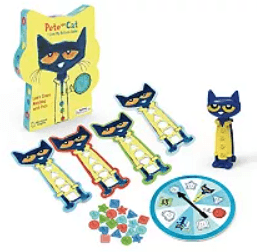
3. Pete the Cat: I Love My Buttons
click to go to game
Age recommendation: 2 years + Number of players: 2-4 Play time: 10 minutes About the game: Pete the Cat has lost his buttons! Children spin the spinner, find the button that matches the color or shape they need, and add it to their Pete the Cat board. Math Skills:Geometry- Shapes and shape features • Same/Different • Patterns
Math Talk: While playing, name the shapes. Then talk about the shape features like, "A triangle has 3 sides." or "A square has 4 equal sides." Take It Further: After the game, have the kids sort the buttons by shape and talk about shapes that are same and different. Then build a pattern and have them add the next shape in the pattern.
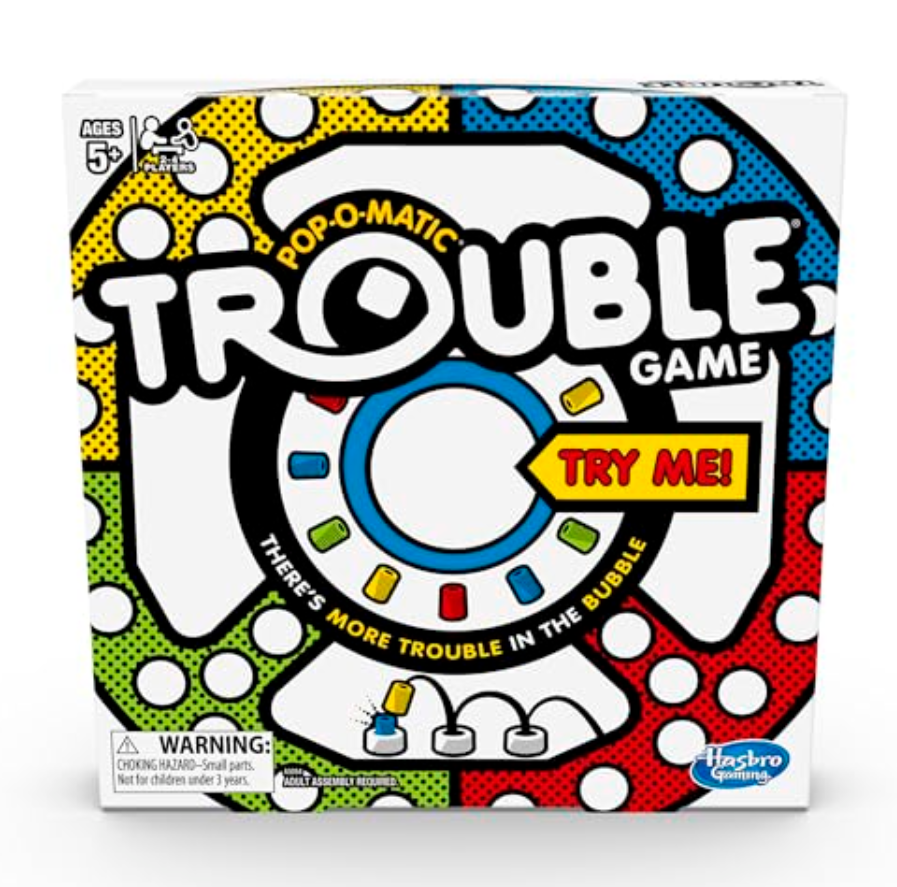
4. Trouble
click to go to game
Age recommendation: 4 years (Watch for small pieces) Number of players: 2-4 Play time: 20 minutes About the game: It's a classic! Push the die popper and players move their pawn that amount. Whoever gets all their pawns home first wins. Math Skills: Numbers and their operations- 1:1 correspondence and number recognition • Geometry- Spatial concepts
Math Talk: While playing, there are natural opportunities to name the numbers on the die and move your pawn that amount. The pawns fit into a little hole, adding a little multi-sensory component when counting. During play you can also use spatial words like "behind, ahead, next to, before, after, closer, and farther." Take It Further: After the game, count a few pawns while putting them in the holes. Then push the dice and add that amount to what you already put in. You could also push the die and take amount away in order to clean up.
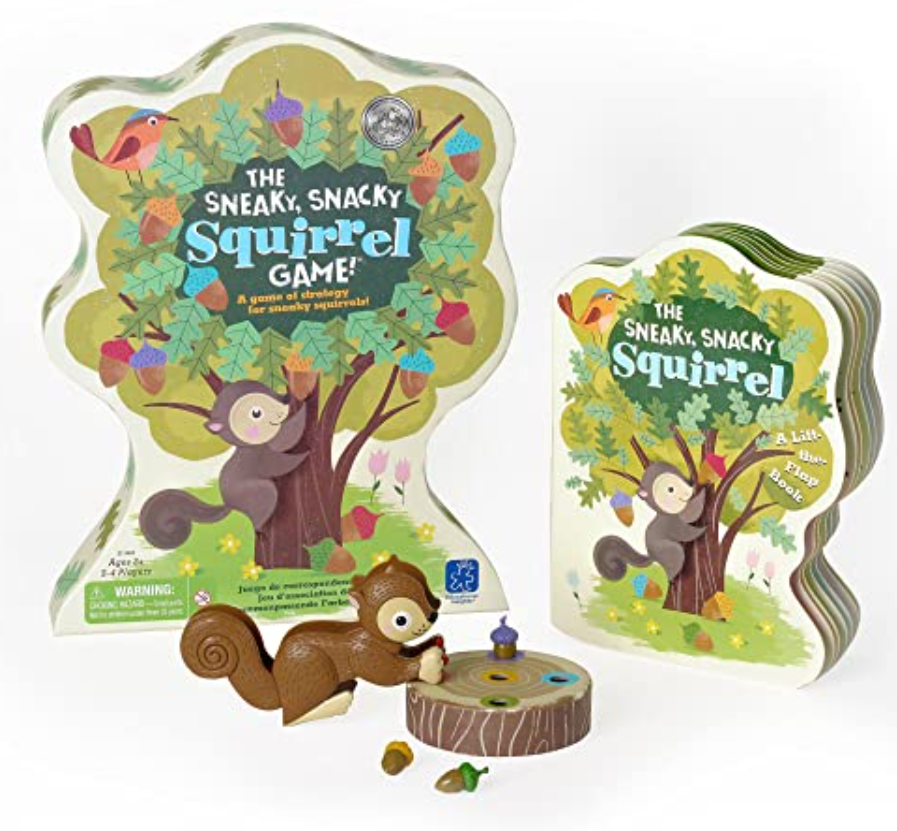
5. Sneaky Snacky Squirrel
Click to go to game
Age recommendation: 3 years Number of players: 2-4 Play time: 10 minutes About the game: I feel pretty confident saying every SLP owns this game! Children spin the spinner and try to fill their stump with each colored acorn. But watch out, the wind or a sneaky squirrel may take your acorns. The best part is the little squirrel tweezer/tong they use to pick up the acorns. So fun and hello, fine motor development too! Math Skills:Numbers and their operations- Counting • Data- Take 1 away • More/Less • Same/Different
Math Talk: While playing, have the children count each acorn as they put it into the stump. When they match by color make sure you use the vocabulary "same" and "different". When the Sneaky Snacky Squirrel steals an acorn try using language like, "You had 3 acorns but one was stolen, now you have 2. 3 take away 1 equals 2!" Take It Further: After the game, group the acorns into 2 sets and have the kids point to the group with more/less. Repeat this a few times making different sets.
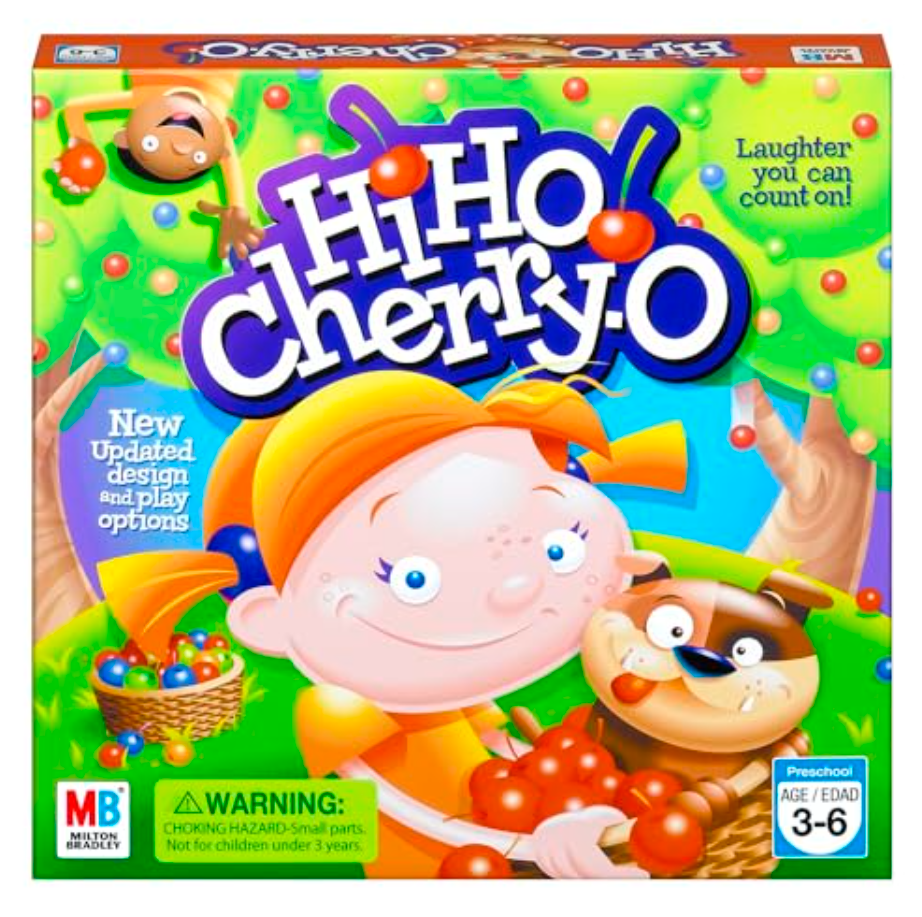
6. Hi-Ho! Cherry-O
Click to go to game
Age recommendation: 3 years (watch for small pieces) Number of players: 2-4 Play time: 10 - 15 minutes About the game: Another classic! Spin the spinner. When you land on a number, pick that amount of fruit from your tree and put it in your basket. Take the fruit out of your basket when you spin a bird or a dog. Be the first to pick all your fruit from your tree! Math Skills: Numbers and their operations- Number identification and 1:1 Correspondence • Data- Adding/Taking Away, More/Less, and sorting.
Math Talk: While playing, count as you put the fruit in your basket. Make sure to use language like, "I have 3. Now I need to add 2 more. That's a total of 5." Or "I have 5 fruits but oh no, the bird took 1 away. 5 take away 1 is 4." Take It Further: After the game, mix all the fruits and have them sort by color. Then make groups of more and less and have the children identify.
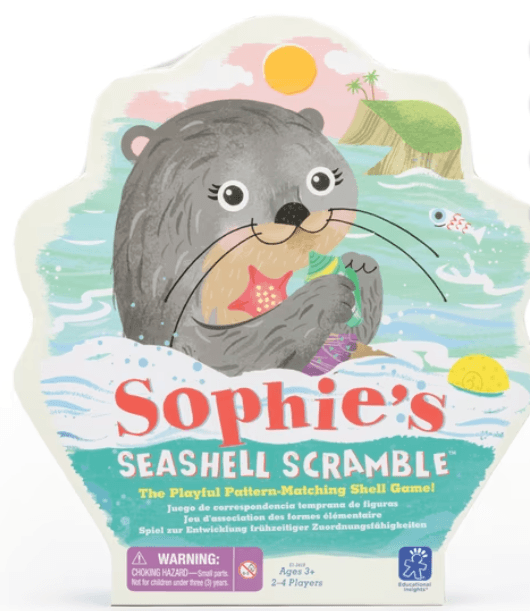
7. Sophie’s Seashell Scramble
Click to go to game
Age recommendation: 3 years
Number of players: 2-4
Play time: 10 - 15 minutes
Math Skills: Patterns • Data- More/Less and Same/Different
Why it’s good for math:
Math Talk: While playing, talk about who has more or less shells on their card.
Take It Further: After the game, use the shells to make your own simple patterns. Start with an AB pattern like clam shell, swirly shell, clam shell, swirly shell and see if the kids can tell you what comes next. Then let them create a pattern for you to copy!
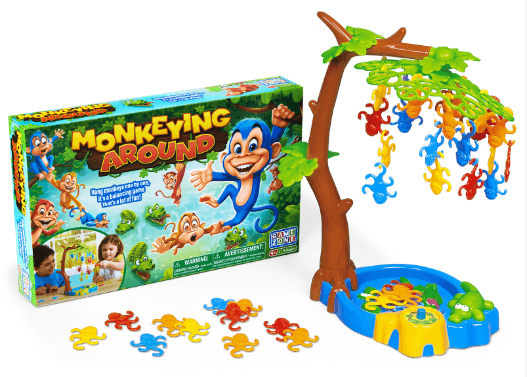
8. Monkeying Around
Click to go to game
Age recommendation: 3 years
Number of players: 2-4
Play time: 5 - 10 minutes About the game:
Math Skills: Measurement- long/short and heavy/light • Numbers and their operations- 1:1 correspondence • Patterns
Math Talk: While playing, model measurement words when comparing which monkeys are heavier, lighter, longer, or shorter. You can also practice counting as you add monkeys to the tree.
Take It Further: After the game, line up the monkeys to form different lengths. Have the children compare by length- long/short. You can also make patterns with the monkeys for children to either complete, copy yours, or build their own.
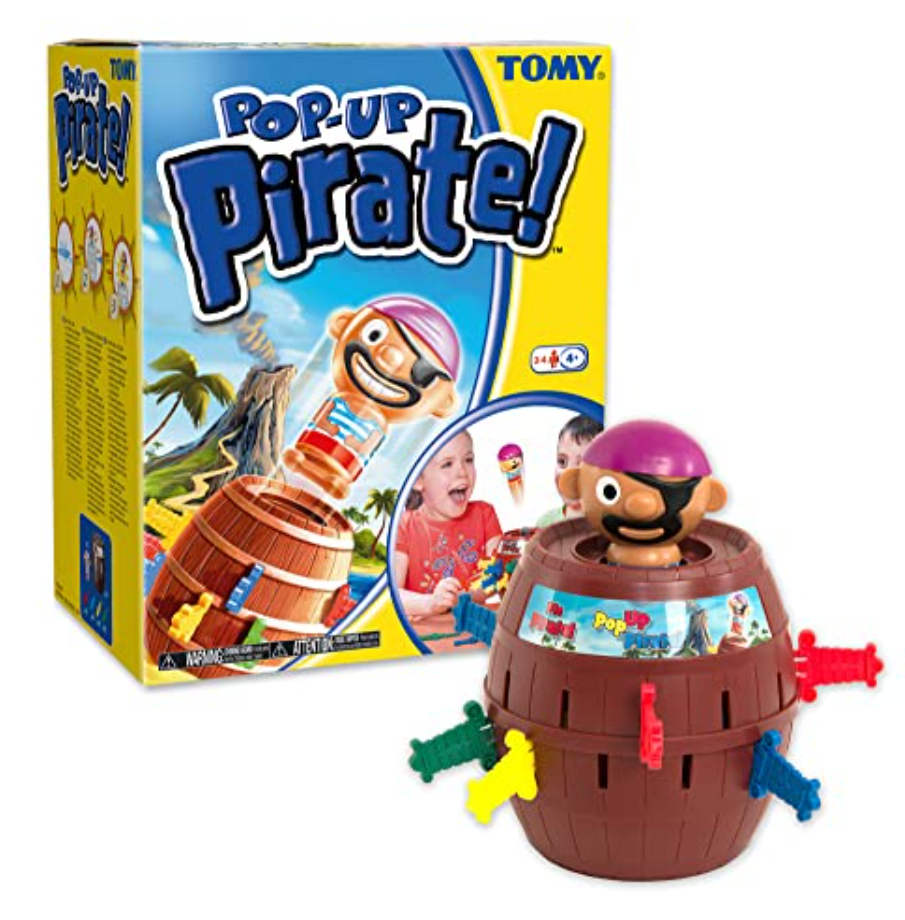
9. Pop Up Pirate
Click to go to game
Age recommendation: 2 years + Number of players: 2-4 Play time: 5 - 10 minutes About the game: Ok 100% of SLPs have this game! It's a must! Children pick a sword, put it in one of the slots on the side of the barrel, and wait to see which sword/slot will pop the pirate! Math Skills:Numbers and their operations- 1:1 Correspondence • Data- More/Less • Measurement • Patterns Math Talk: While playing, make groups of different amounts of swords. Have the kids identify groups with more/less. Once the pirate pops, use the swords to measure how far away he is from the barrel "Oh wow, he jumped 3 sword lengths!" Take It Further: After the game, as the child pulls out each sword, have them count them. Then make a pattern. See if they kids can complete your pattern or build a pattern for them to replicate!
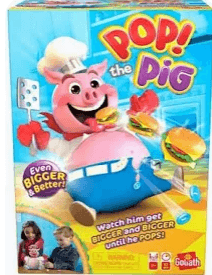
10. Pop The Pig
Click to go to game
Age recommendation: 3 years Number of players: 2 - 6 Play time: 10 minutes About the game: Every SLP likely has this game too! The child rolls the die, finds the matching hamburger, looks on the bottom of it, and names the number. Then they feed the hamburger to the pig and press down on the pigs head the number of times shown on the bottom of the burger. Each push fills the pigs belly until it pops! Math Skills: Numbers and their operations- 1:1 correspondence and Number recognition • Data- More/Less
Math Talk: While playing, have children name the numbers and count aloud while pushing the pigs head, perfect for adding a multisensory component to 1:1 counting! Take It Further: After the game, group the burgers into 2 sets and have the kids point to the group with more/less. Repeat this a few times making different sets
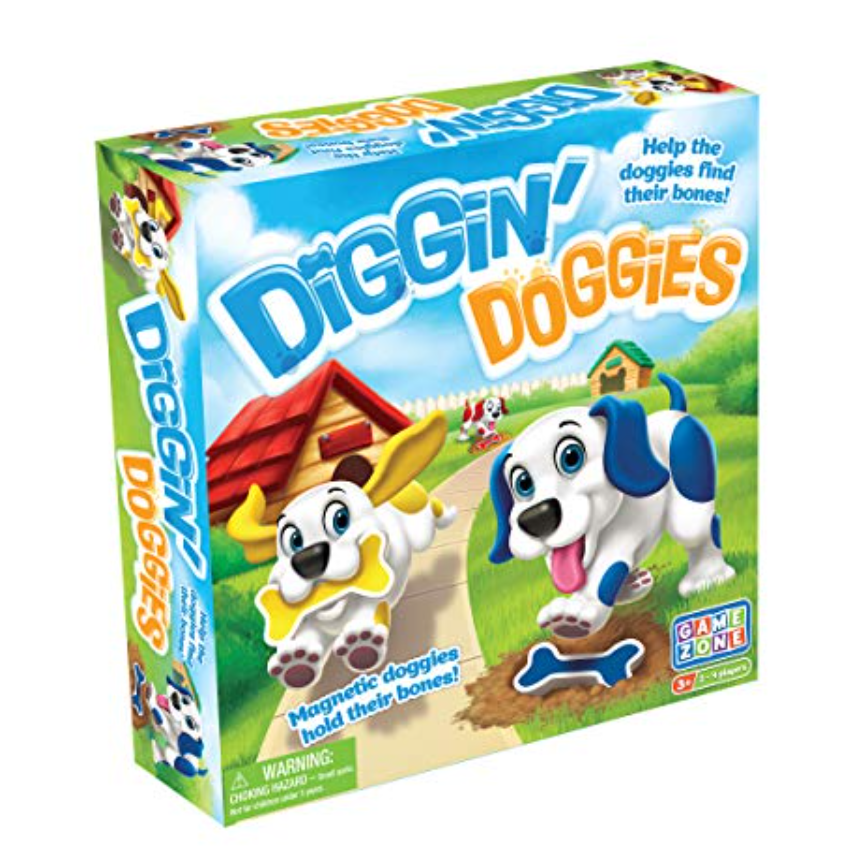
11. Diggin Doggies
Click to go to game
Age recommendation: 3 years Number of players: 2-4 Play time: 15 minutes About the game: Players push the Mama dog who barks either 1, 2, or 3 times. Then the player moves their puppy that number of barks and digs up a bone. If the bone matches the color of their dog house they keep it but if not, they put it back and it is the next child's turn. use the doggies to dig for bones and try to collect the most bones. The little puppies make this one extra fun as their mouth has a magnet to pick up the bones! Math Skills: Numbers and their operations- 1:1 correspondence • Data- More/Less • Measurement Math Talk: While playing, move the puppy the number of times Mama dog bards. Perfect for adding a multisensory component to 1:1 correspondence. While playing point out who has more or less bones. Take It Further: After the game, Line up the bones and measure how many dog lengths the bones are when you put them in a line.
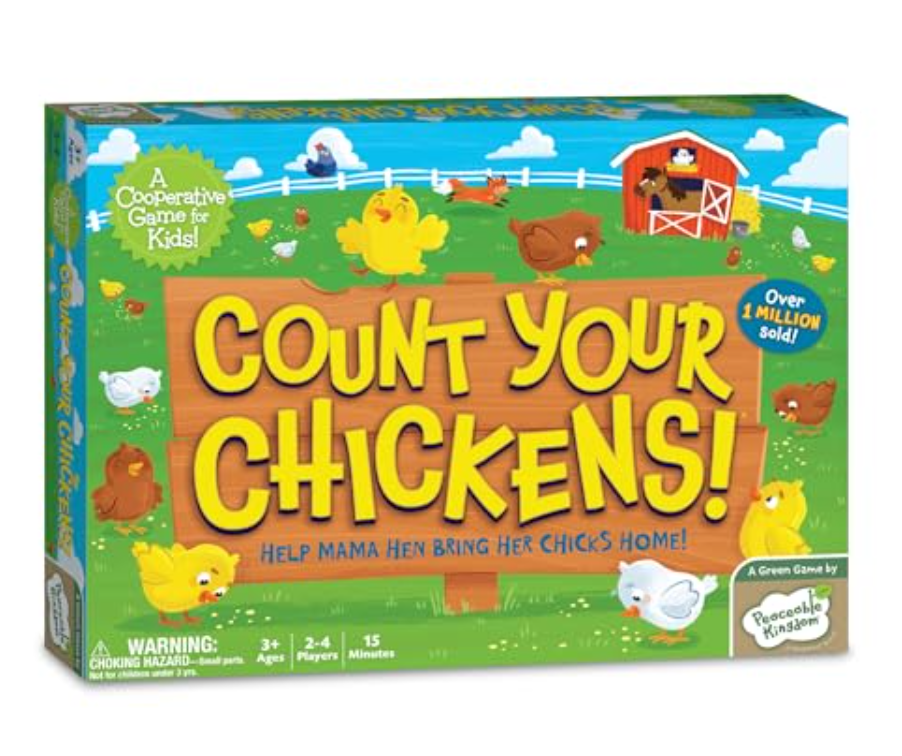
12. Count your chickens
Click to go to game
Age recommendation: 2.5 years (watch for small pieces) Number of players: 2 - 6 Play time: 10 - 15 minutes About the game: This is a cooperative game (no winner or loser) where everyone works together to get the baby chicks back to the coop before Mother Hen gets there and before any are stolen by a fox! Math Skills: Numbers and their operations- 1:1 correspondence • Data- More/Less • Take 1 away Math Talk: While playing, have the children count each space as they move their hen. Then count each chick as they add it to the coop. If they spin a fox he takes a chick out of the coop. You can say, Oh no, fox took 1 away, now we have 1 less chick.” Take It Further: After the game, make different size groups with the baby chicks and have the kids determine which groups have more or less chicks in them.
Make Math Part of Play
You don't need a complicated lesson plan or a Pinterest-perfect activity to help preschoolers build strong early math skills. Board games for kids are an easy way to add math into something children already love to do, play!
The best preschool math games give children opportunities to count, compare, sort, recognize shapes, notice patterns, and use math words while they are having fun. Don't forget, you don't have to stop when the game ends. Look at the pieces, cards, or game materials and think, “How can I take the math a little further?”
Online training for infant, toddler, and preschool teachers all about math!
If you'd love even more math activity ideas you can use in your preschool classroom, our on-demand math training is made for exactly that. You'll walk away with practical strategies and activities you can use the very next day and you'll earn the training hours you need to maintain your child care license.
As an IACET-approved organization, our continuing education is recognized and accepted across many states, so your time counts toward the hours your program already requires.
Frequently Asked Questions About Board Games for Kids and Preschool Math
What are the best board games for preschoolers?
The best board games for preschoolers are games that are simple enough for young children to understand, don't take too long to play, and give them opportunities to practice skills while they play.
Can board games help preschoolers learn math?
Absolutely! Board games for kids can give preschoolers opportunities to practice counting, number recognition, one-to-one correspondence, comparing quantities, sorting, matching, patterns, and shapes. The key is to use math language while children are playing rather than turning the game into a formal math lesson.
What math skills can preschoolers practice with board games?
Different preschool math games support different skills. Depending on the game, preschoolers can practice counting and number recognition, one-to-one correspondence, more and less, sorting, matching, patterns, shapes, measurement, and even adding or taking away.
How can I add more math to a board game?
You don't need to change the rules of the game. Simply add math talk as you play. Ask questions like, “How many do you have?” “Who has more?” “What comes next?” or “How are these the same?” You can also use the game pieces after the game to sort, count, compare, or make patterns.
Prefer to learn these tips in a training?
Find a format that works for you.
Get your state-approved hours and CEUs, a comprehensive handbook you'll reference forever, and strategies that’ll make a difference in the children you’re caring for.
Live Virtual Trainings
Real-time interaction, community with other providers, and the energy of learning together.
Self-Paced Trainings
Flexibility to learn on your own schedule, pause and rewatch as needed, with opportunities to learn and engage with others.
Private Trainings
A customized training for your entire staff, in-person or virtual, with hands-on activities built around your center's needs.
Hey, I’m kelly
Speech Language Pathologist, Early Intervention Specialist, Child Care Trainer, and Former Family Child Care Owner
I work alongside early childhood educators caring for children with a variety of needs. But these needs look very different than they did twenty years ago and you deserve trainings, resources, and tools that reflect that.
Trainings that are high quality, affordable, and worth coming back to.
That's why I built Bridging Child Development. Every training hour you earn here gives you strategies you can use the very next day in your classroom.
Login or sign up to start learningLogin to start learning