Walk into any early childhood classroom during art time and you'll see glue sticks, maybe even some liquid glue (gasp, haha) tissue paper, markers, and glitter (well this is teacher dependent, we all cringe a little at glitter!) But also, there is so much more than just the materials and mess.
Art in child care is about far more than a finished product. Every time a child pinches, tears, squeezes, holds a writing tool, or places the materials onto the glue, they're strengthening the small muscles in their hands, the same muscles that support writing, cutting, drawing, and self-help skills like pulling up their pants, feeding themselves, or eventually tying shoes.
Fine motor development happens through consistent, intentional opportunities. We can offer these opportunities with arts and crafts activities.
To be clear, this isn't process art versus product art (crafts), both absolutely belong in your classrooms. I've written more about why crafts are not the enemy here.
Encourage Fine Motor Skills
Fine motor skills should be encouraged, never forced. Some children will jump right in. Others may observe first, participate briefly, or choose not to engage at all. That's okay. Art time should feel inviting, not mandatory.
When a child isn't interested, teachers can offer a gentle invitation like, "Would you like to try one piece?" and then let the child move on if they decline. When children feel safe and in control, they're far more likely to engage, and that's when meaningful development happens.
The Top 3 Fine Motor Skills Built During Art
When art is set up intentionally, three major fine motor skills are consistently strengthened in child care classrooms.
1. Pincer Grasp (Thumb + Index Finger Control)
This is the foundation for holding crayons, using scissors, buttoning coats, and eventually writing.
You'll see it when children:
Pick up tissue paper pieces
Peel and place stickers
Sprinkle glitter
Place small collage materials
What you can do: Intentionally provide smaller materials and allow children time to struggle productively (You could also call it Zone of Proximal Development which is the space between what a child can do independently and what they can do with support.) You want this little sweet spot so the skill development happens.
2. Hand-Eye Coordination
This skill lets children guide their hand movements based on what they see.
You'll see it when children:
Apply glue inside a shape
Cut along a line
Place materials intentionally
Draw or trace
What you can do: Guide with words rather than physically correcting a child's hand. Ask, "Where do you want that piece to go?" instead of moving it for them. This also gives you an opportunity to use spatial words, which is a critical math language skill and needed to accurately follow directions!
3. Bilateral Coordination (Using Both Hands Together)
Often overlooked, this skill is essential for cutting, writing stamina, and everyday independence.
You'll see it when children:
Hold paper with one hand while cutting with the other
Stabilize materials while gluing
Tear paper
Roll and shape playdough
What you can do: Observe whether both hands are engaged. If they are coloring and their helper hand is not holding the paper so it is wiggling all over the place, show them how to swoop that helper hand in and hold the paper. Some kids need skills directly taught at that's ok!
Simple Spring Crafts That Build Fine Motor Skills
Here are four spring-themed, classroom-friendly projects that support these skills across age groups. Each one uses minimal materials for quick, easy setup and cleanup.
1. Butterfly Stained Glass
Looks beautiful on windows and gives children repeated practice with pinching, placing, and controlling hand movements! Materials
Pre-draw a butterfly on construction paper
Several different colors of construction paper or tissue paper
1 tongue depressor
Any marker color of choice + black
Glue
How to Set It Up (Preschool/Pre-K)
Draw a butterfly on a piece of construction paper
Provide a variety of construction paper/tissue paper colors.
Have child glue on the ripped/cut paper all over butterfly until the butterfly is covered in color
Have child pick any color marker and color the tongue depressor
Glue the tongue depressor down the center of the butterfly and have child draw 2 eyes and smile on the tongue depressor with a black marker for the face
Optional: For snipping and cutting practice, have children cut construction paper pieces with scissors vs rip tissue paper.
Infant/Toddler Adaptations
Infants: Use contact paper (sticky side up). Provide tissue paper for babies to grab and pat to the contact paper.
Toddlers: Encourage ripping and pinching the tissue paper and use contact paper instead of glue. Starting at 2, children should be snipping with scissors. Here are my favorite scissor recs!
2. Cherry Blossom Tree
This is a perfect spring activity for strengthening the pincer grasp (thumb + index finger), which is one of the most important skills for later writing development. Materials
Blue construction paper
Brown marker
Pink & white tissue paper
Glue stick
How to Set It Up (Preschool/Pre-K)
Pre-draw a tree trunk and branches with brown marker on blue construction paper or encourage children to draw their own tree and branches
Provide pink and white tissue paper
Have child tear small pieces of tissue paper
Let them crumple each piece slightly into a loose ball
Rub glue onto branches and press the tissue paper ball (blossoms) onto the glue
Infant/Toddler Adaptations
Infants: Use contact paper or glue dots on the branches. Babies can grab and release tissue paper pieces.
Toddlers: Encourage tearing (even large rips count!) and pressing tissue paper onto glue.
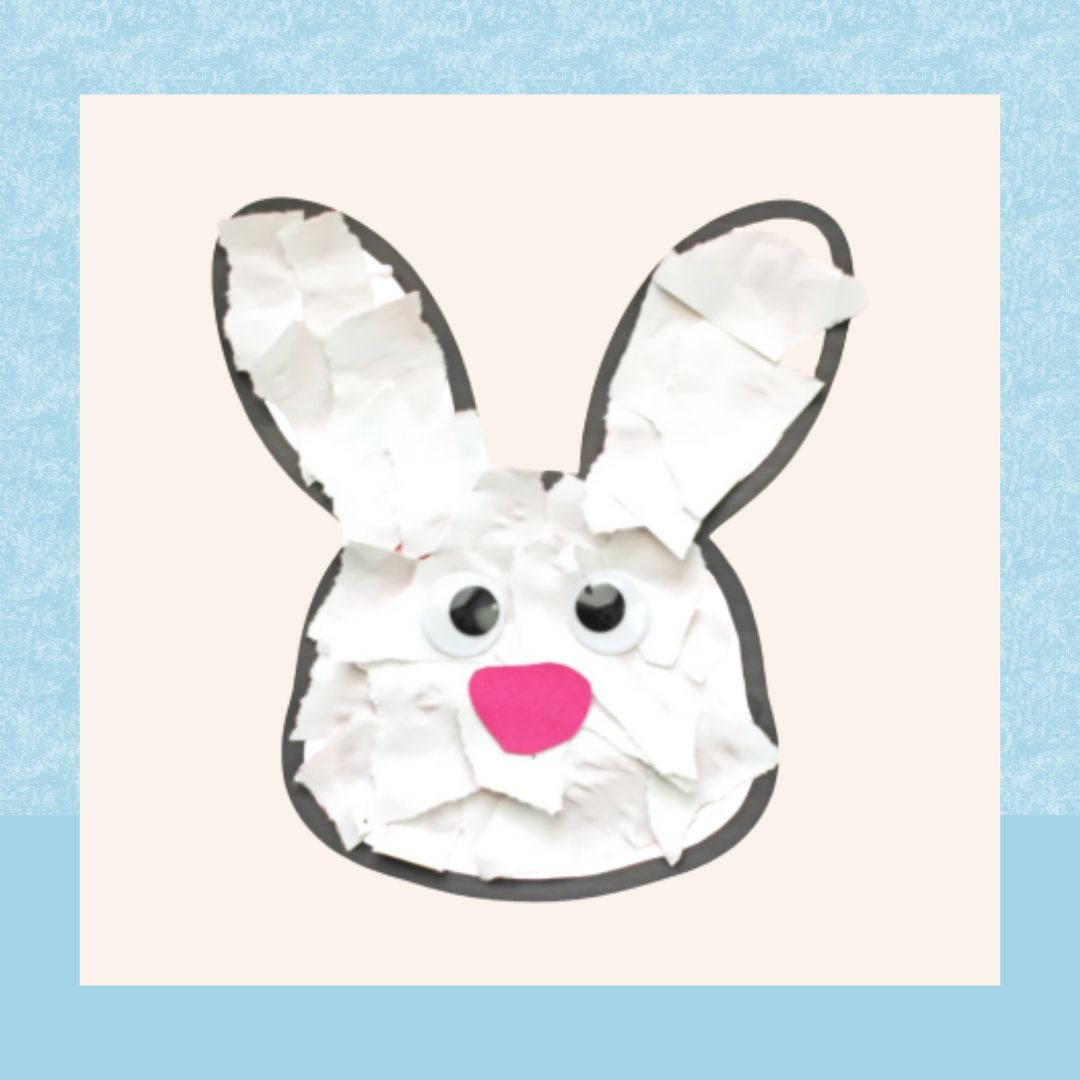
3. Bunny Face Collage
This is a great example of a craft that builds so many skills in a very short amount of time.
Materials
Bunny template (in resource at end)
White construction paper or tissue paper
1 piece of pink construction paper ripped (for nose)
Googly eyes
Glue
How to Set It Up (Preschool/Pre-K)
Print the template and provide children with white construction or tissue paper to rip
Have children rub glue on the bunny template and push ripped paper onto glue. If you want to include scissor practice, have them cut shapes out of construction paper.
Glue both googly eyes on the bunnies face
Tear a piece of pink construction paper and glue under the eyes (nose)
Infant/Toddler Adaptations
Infants: Offer tissue paper for babies to explore and help them clue it to the template.
Toddlers: You add the glue and let them explore and push the tissue paper onto it. Also, 2 year olds should have opportunities to snip so you can have them snip construction paper to glue.
4. Glitter Rainbows
This is a classroom favorite, but you gotta embrace the glitter!
Materials
Blue construction paper
Glue sticks
Glitter (various colors)
Cotton balls
Shallow trays (to contain glitter)
How to Set It Up (Preschool/Pre-K)
Pre-draw rainbow arcs on blue construction paper
Have child trace each arc with glue, one color at a time
Let children sprinkle different colored glitter on each arc (over trays to contain the mess)
Have them shake off excess glitter and move to next color
Have them glue cotton ball clouds at rainbow ends
Infant/Toddler Adaptations
Infants: Skip glitter and use colored tissue paper strips instead.
Toddlers: Get some snipping practice in and have them make their own confetti glitter instead of giving them actual glitter. They can make this on a different day and use for this craft so they are not sitting too long!
Want Done-for-You Spring Crafts That Build Real Skills?
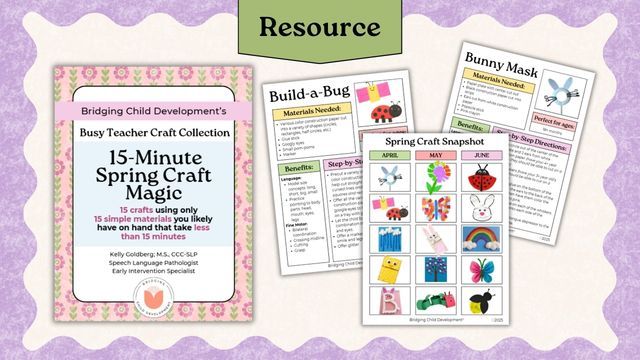
If you want low-prep, developmentally intentional crafts you can use all spring long, I pulled my favorites into one ready-to-go resource: 15 Minute Spring Craft Magic.
Final Takeaway
Fine motor development doesn't require complicated crafts or expensive materials. It requires consistent opportunities, intentional material choices, patient adult support, and freedom to create in a way that works for that child!
Frequently Asked Questions
How does art help develop fine motor skills?
Every time a child pinches tissue paper, tears, squeezes glue, or places small materials, they're strengthening the small hand muscles that support writing, self-help skills, and independence. Art gives children repeated, low-pressure practice with these movements, which is exactly how fine motor skills develop.
Should art be process-focused or product-focused?
Both process art and structured crafts belong in early childhood classrooms; one isn't better than the other. The key is keeping the focus on the child's process and the skills they're building, rather than on a perfect finished product that all looks the same. Don't forget I have a whole blog on this here!
What if a child doesn't want to participate in art?
Follow their lead. There could be something sensory going on or it could be that they need more opportunities for movement before they are able to sit for a craft. Learn more about when thebest times to schedule your arts and craft times here!
Prefer to learn these tips in a training?
Find a format that works for you.
Get your state-approved hours and CEUs, a comprehensive handbook you'll reference forever, and strategies that’ll make a difference in the children you’re caring for.
Live Virtual Trainings
Real-time interaction, community with other providers, and the energy of learning together.
Self-Paced Trainings
Flexibility to learn on your own schedule, pause and rewatch as needed, with opportunities to learn and engage with others.
Private Trainings
A customized training for your entire staff, in-person or virtual, with hands-on activities built around your center's needs.
Hey, I’m kelly
Speech Language Pathologist, Early Intervention Specialist, Child Care Trainer, and Former Family Child Care Owner
I work alongside early childhood educators caring for children with a variety of needs. But these needs look very different than they did twenty years ago and you deserve trainings, resources, and tools that reflect that.
Trainings that are high quality, affordable, and worth coming back to.
That's why I built Bridging Child Development. Every training hour you earn here gives you strategies you can use the very next day in your classroom.
Login or sign up to start learningLogin to start learning