Get Your Babies Talking and Your Toddlers Talking More
- The communication milestones babies and toddlers should be reaching at different ages
- Simple strategies that naturally encourage first words and phrases
- How to adapt activities to match each child's developmental level and interests
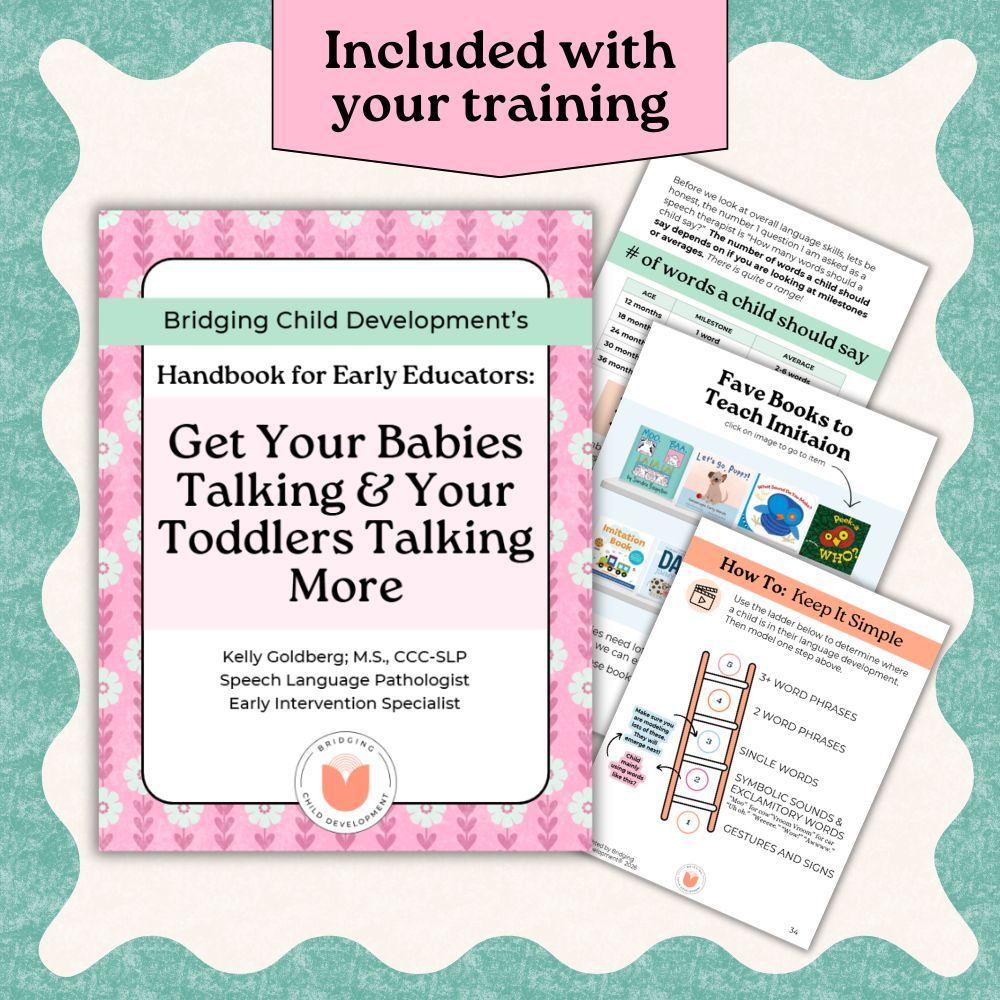
Your training includes a digital handbook with everything from the training, all in one place, yours forever!
- Printable language milestone checklists from 3 months to 3 years old
- 3 "First Word Strategies" that move baby from gestures to first words
- 4 "Talk More Strategies" that support moving toddlers from single words to phrases and sentences
- Over 50 activities plus book and toy suggestions to support infant and toddler language development
Encourage talking without flashcards, pressure, or turning play into work
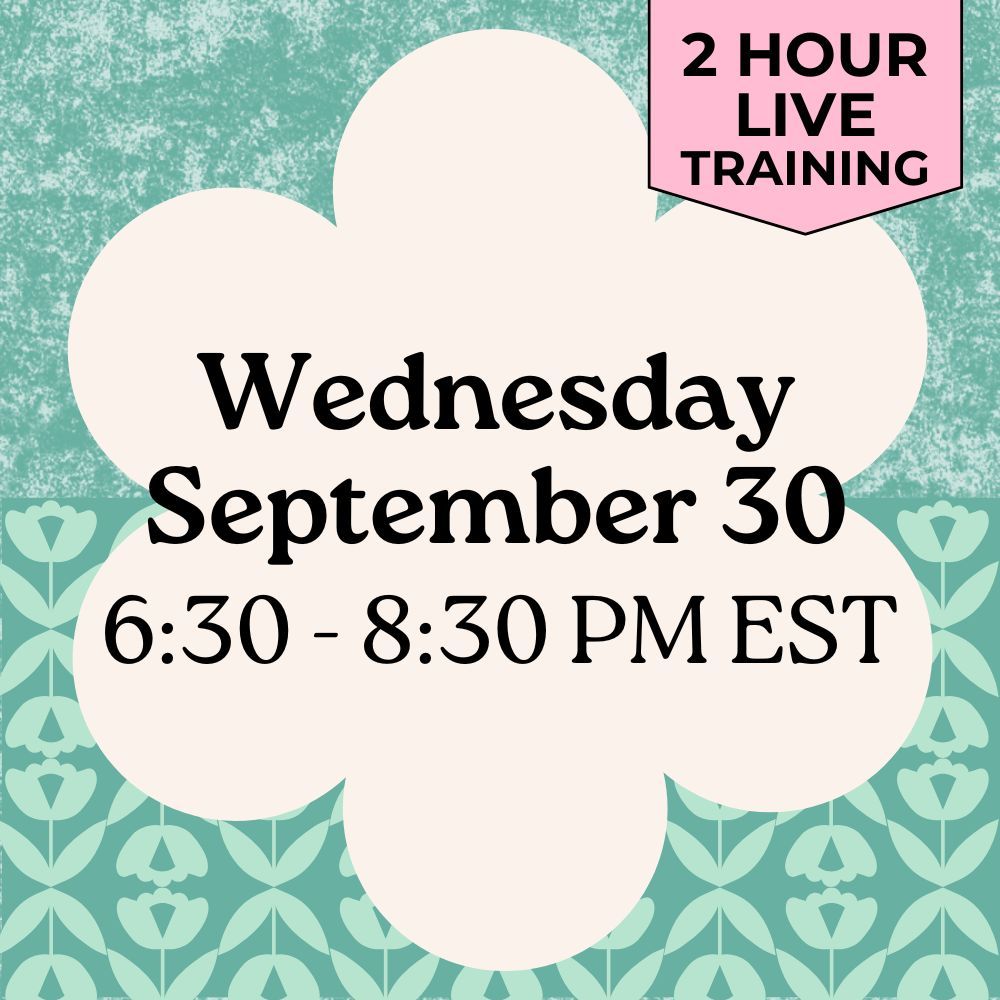
By the end of this 2 hour | 0.2 CEU training, participants will be able to:
- Identify language milestones expected at specific age check points
- Identify verbal and nonverbal communication strategies that support communication development in babies and toddlers
- Identify language development activities that can be adapted to support each child’s developmental milestones, communication abilities, interests, and learning style
See what early childhood educators are saying
The examples of imitation, gestures, and verbal routines were helpful, and I learned new ways to encourage babies’ communication and first words."
I learned so many things that I can use with my children.”
I learned that sign language is more beneficial than I thought. I use sign language with my youngest learners so it was encouraging!"
Frequently Asked Questions
What age group is this language development training designed for?
This training focuses on infants and toddlers (ages birth – 36 months). If you have infants only you will want the self paced training, First Babbles to First Words and if you have toddlers and young preschoolers that may be late talkers, you will want the Get Your Toddlers Talking More self paced training.
What type of early childhood education settings is this training for?
Any! This training is designed for child care centers, Early Head Start classrooms, and family child care providers working with infants and toddler age children.
Will this training help me if I have a child I think is behind in their language development?
Yes. You’ll learn developmental milestones and activities that support language development. You will also learn when it may be appropriate to recommend early intervention.
Is this training approved in my state?
We are an IACET and NWRA recognized organization and many states accept elective hours. This training is specifically approved by these individual states and their registries (as applicable):
Alabama, Connecticut, D.C. (2 CKA's (1) Child Growth and Development (1) Curriculum), Delaware (DEEDS), Florida, Georgia, Kentucky, Louisiana, Maine, Maryland (2 COK's (1) Child Development (1) Curriculum) North Carolina, Pennsylvania (PQAS/ACT-48), South Carolina (SC Endeavors), Texas, Vermont, Virginia, and Wyoming (Stars)
Hi, I'm Kelly
A licensed Speech Language Pathologist, Early Intervention Specialist, Child Care Trainer, and Former Family Child Care Owner
I kept hearing the same thing: "Our trainings don't teach us this." So I created trainings that do!
No fluff. Just practical strategies designed to fit naturally into everyday routines with infants, toddlers, and preschoolers



Training requirements so you get your CEU's
Are Bridging Child Development courses accepted in my state?
Bridging Child Development is an IACET-accredited training organization. This means every training meets the highest standards for professional continuing education, and your CEU's are recognized across the US and internationally. We are also an approved Training Organization with the National Workforce Registry Alliance.
Bridging Child Development meets the child care training requirements for many states and is in the process of approval in all 50 states. Review our state training information pages before enrolling to ensure you receive credit.
Do I need to switch on my camera?
Cameras are encouraged but completely optional. There are break out rooms and other fun activities that you will likely want a camera on for!
I can't stay the whole time, will there be a recording?
No, recordings are not permitted when it comes to live trainings- I will not be recording and participants are not permitted to record. You must be present for the full duration of the training to receive your certificate. Live trainings are hosted in ZOOM but all live trainings are also available in a self-paced format that you can find here.
What is your refund policy?
Cancel at least 24 hours before a live training for a full refund. Cancellations under 24 hours will be transferred to the self-paced version of the same training. There are no refunds once the training has taken place.
When will I receive my certificate?
Certificates are issued within 48 hours of completing your training and evaluation. Be sure to check your promotions and spam folder for an email from kelly@bridgingchilddevelopment.com.
Do you report my hours to my state registry?
Yes! If your state has a registry, those hours will be reported within 48 hours to your state. Make sure you know your registry number if applicable, you will enter that at the start of the training!

Subscribe to BCD's Teacher Tea Monthly Newsletter