Questions Parents Ask on a Child Care Tour (and How to Answer Them)
Aug 1
/
Kelly Goldberg
A great child care tour is more than what you show, it's how you show it and how you respond to what parents ask. The families touring your program are making one of the most emotional decisions of their lives, and the way you answer their questions tells them whether they can trust you with their child.
In this blog we will cover how to run a child care tour and how to confidently answer the questions you'll hear most, whether a family is touring for your infant room or your Pre-K class. Think of this blog as "what to say" on a child care tour but if you want more insight into what to highlight on a child care tour or "what to show", start with this blog.
Tour Strategy & Logistics
Timing and length:
20–30 minutes is ideal, long enough to see classrooms and ask questions, short enough to keep energy high and avoid information overload
The actual time of day is going to be very dependent on your program. I have talked to directors that do tours from 8 - 9 am because the kids are there but it is not interrupting the structured part of the day. Other directors block out tours for between 3 - 5pm because kids are up from nap but pick up hasn't started yet. Pretty consistently, most directors avoid tours during nap time.
When I (Kelly) did child care, we gave tours in the afternoon but since it was a home child care, we also accommodated families when they needed a weekend tour. (obviously if this does not work for you, that's ok!)
Space tours out so families get individual attention, not rushed group tours
Who should lead the tour:
You, the director, should always be the primary guide. You set the tone and represent the center's values
Consider having a teacher join for part of the tour, real conversations with teachers build credibility
Never let a tour happen without leadership present
What to Do During the Tour
Start in your office: 2–3 minutes to build rapport, learn their story, and understand their needs.
Move to classroom(s): let them observe, not just look. Give them 5–10 minutes to watch teachers interact
Ask open-ended questions: "What questions do you have?" rather than just delivering information
Watch their reactions: Are they smiling? Do they seem connected to the space? This tells you about fit
Take notes on their concerns, you'll follow up on these later
What NOT to Do
Don't talk the entire tour. Silence lets them absorb and ask questions
Don't over-sell or sound desperate. Confidence is attractive
Don't bad-mouth other centers or compete on price
Parent Questions You'll Hear (and How to Answer)
On Talking About Openings
The very first question a parent is going to have is, "Do you have any openings?" This may be controversial, but I suggest you think about how you frame this answer. Why?
If you frame the answer as the spot is open and no one else is interviewing for it, you've basically handed it over before you know whether the child and family are the right fit for your program. While this is typically not a problem,we all have horror stories of saying something at the start of the tour only to think, this will not be a good fit by the end of the tour,and it is hard, hhhaaarrrrdddd, to walk those words back after the fact.
Here's what you can do: Frame it as in-demand and mutual:"We currently have an opening, and we have a few families interested, so I'm using these tours to find the right fit, for your family and for our program." This keeps the spot from feeling automatically "claimed," positions your program as sought-after, and gives you room to ask questions and assess fit.
On Daily Routines & Milestones
Parents want to picture their child's actual day and feel confident that learning is intentional. Below in bold are questions parents may have and suggested ways to answer.
"What does a typical day look like?"
Answer: Share the specific schedule, but focus on the why:"At 9 a.m. we have floor play because this is when babies are most alert and ready to explore. We feed based on hunger cues, not the clock."
"How do you track development and milestones?"
Answer: Describe your observation system:"We document observations weekly and share progress with families monthly. If we notice a child isn't meeting milestones, we communicate early and partner with you on next steps."
"What if my child has a different schedule at home?"
Answer: "We work with your home schedule during the transition. Once your child adjusts, we follow our routine because consistency helps children feel secure."
On Teacher Interaction & Communication
Communication is consistently one of the top deciding factors for families choosing care.
"How will I know what my child did all day?"
Answer: Show them your communication tool, walk through an actual daily report or app: "You'll get photos (if your program does pictures), updates on eating and sleeping, and notes about their day. You can also leave a message in the app and we return those within [X hours]."
"Will my child have the same teacher?"
Answer: "Yes. We assign primary teachers to build secure attachment. Primary teachers work the hours of " You can also share your substitute policy or how teachers rotate for breaks.
"What if my child doesn't bond with their teacher?"
Answer: "We take this seriously. We'd talk with you early and consider adjustments if needed, and we support families with transition strategies at home too."
On Behavior & Guidance
How you talk about behavior is important and can cause some really deep rooted feelings for some parents. I personally don't think we need a specific label like "gentle parenting" or "FAFO" but keep it grounded in how you respond that leads to teaching vs punishing.
"What if my child cries a lot at drop-off?"
Answer:"Crying is normal during transitions. Here's what we do to support it: [specific strategies]. Most children settle within 2–4 weeks, and we communicate with you daily during the adjustment."
"How do you handle biting, hitting, or challenging behavior?"
Answer: "We see behavior as communication. We help children learn skills, redirect with empathy, and document what we're seeing. We partner with families, we'll never surprise you with a behavior concern."
"What if I think my child might have a delay?"
Answer:"We are a refer and see program which means we'll observe, document, share our observations with you. If we have concerns, we connect parents with early intervention so they can refer and see if your child is eligible for additional supports."
On Feeding, Health & Safety
Similar to behavior, these questions can be emotional for some families as they are picturing their child's daily wellbeing.
"Do you accommodate picky eaters or food allergies?"
Answer: "Yes. We work with families on feeding approaches, never force eating, and support all dietary needs and restrictions."
"What's your illness policy?"
Answer: Explain it clearly (fever, vomiting, rashes, return-to-care guidelines) and the rationale: "We ask families to keep sick children home because it protects everyone in our care."
"How do you keep the classroom clean and safe?"
Answer: Share specifics: "We sanitize toys daily, high-touch surfaces hourly, and build handwashing into the routine before meals and after toileting."
On Safety, Security & Supervision
This category is one parents increasingly ask about and depending on family dynamics, is worth spending some time gathering information.
"Who is allowed to pick up my child, and how do you verify it?"
Answer:"Only authorized adults on your pickup list, and we check ID until we know someone. We use [code entry / sign-in app / check-in procedures] for every drop-off and pickup."
"How do you handle emergencies?"
Answer:"We have written plans for fire, severe weather, and lockdown, and we practice drills regularly. Here's how we'd contact you in an emergency."
"Are children always supervised, even during naps?"
Answer: "Yes, always. Staff actively monitor children at all times, including while they sleep, and we follow safe sleep practices in our infant room."
On Staff Qualifications & Turnover
Parents aren't just choosing a center, they're choosing the people who will care for their child.
"What are your teachers' qualifications, and are they background-checked?"
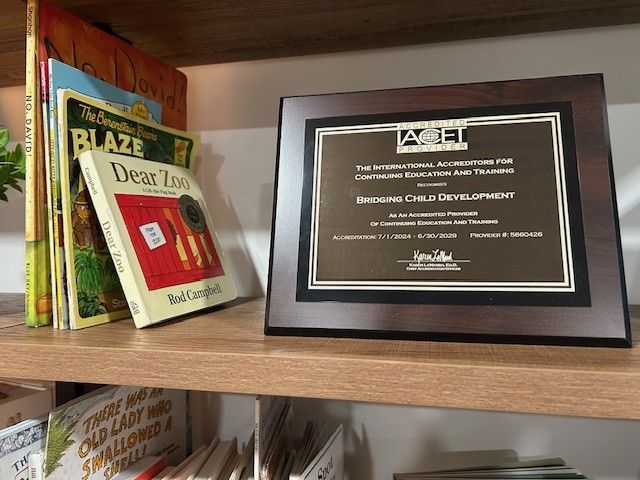
Answer:"All staff complete background checks and clearances, hold required credentials, and are CPR and First Aid certified. They are also required to take ongoing training." You can also share here that you use Bridging Child Development for your trainings because every course is taught by a speech language pathologist and developmental specialists. Parents like knowing the trainings are high quality!
"What's your staff turnover like?"
Answer: This is a quality signal families look for, so answer honestly and confidently. "We're proud of our staff retention. We invest in our teachers through [training, support, culture], because stable, happy teachers mean consistent, loving care for your child." (If retention is a focus for you, read this blog on how we build a positive culture that keeps teachers.)
"Are you licensed and accredited?"
Answer:"Yes, here's our current license, and we're [accredited by / working toward accreditation with NAEYC or any additional certifications by your state]. You're also welcome to review our inspection history."
On Curriculum & School Readiness
"How do you prepare children for kindergarten?"
Answer: The answer to this one will really depend on your teaching philosophy. Are you a play based or nature based program? Montessori? Explain how those unique practices support development. You could also share trainings your staff has completed that support development. Check out our liveand self paced trainings.
On Pricing & Enrollment
Money questions come up fast, so lead with value before numbers and be fully transparent.
"What's included in tuition?"
Answer: Break it down: "Tuition covers teacher salaries and training, meals, materials, and activities. Here's what's not included: [diapers, special activities, etc.]."
"What if I need to withdraw or change my schedule?"
Answer: "We ask for [30 days'] notice. Schedule changes are accommodated when possible, and we'll discuss options together."
"Can we start part-time and move to full-time?"
Answer: "Yes, we can work with your transition. Here's how that looks: [specific details]." or "No. We are a full time program only."
Follow Up After A Tour
Thank them for coming
Give them a packet with enrollment information, your unique value, and your contact info
Tell them the next step: "I'll follow up this week."
Follow up within 24–48 hours with a personal email or call addressing the specific concerns they mentioned
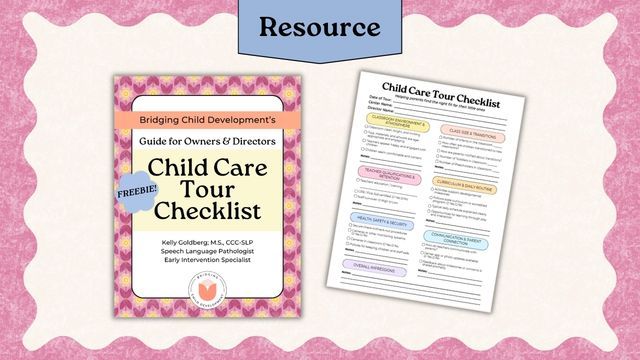
Free Child Care Tour Checklist for Directors
Tours convert when families feel heard, confident, and genuinely connected to you and your team. Being prepared for these questions, communicating clearly, and assessing fit will help you attract families who are excited to partner with you.
Download this free checklist you can provide to families at the start of a tour to help guide the conversation and ensure you cover everything!
Frequently Asked Questions
How do I answer tough questions about staff turnover or behavior?
Answer honestly, calmly, and specifically. But we have a whole blog on this topic with questions and answers you can read here.
Prefer to learn these tips in a training?
Find a format that works for you.
Get your state-approved hours and CEUs, a comprehensive handbook you'll reference forever, and strategies that’ll make a difference in the children you’re caring for.
Live Virtual Trainings
Real-time interaction, community with other providers, and the energy of learning together.
Self-Paced Trainings
Flexibility to learn on your own schedule, pause and rewatch as needed, with opportunities to learn and engage with others.
Private Trainings
A customized training for your entire staff, in-person or virtual, with hands-on activities built around your center's needs.
Hey, I’m kelly
Speech Language Pathologist, Early Intervention Specialist, Child Care Trainer, and Former Family Child Care Owner
I work alongside early childhood educators caring for children with a variety of needs. But these needs look very different than they did twenty years ago and you deserve trainings, resources, and tools that reflect that.
Trainings that are high quality, affordable, and worth coming back to.
That's why I built Bridging Child Development. Every training hour you earn here gives you strategies you can use the very next day in your classroom.
Login or sign up to start learningLogin to start learning