As a preschool teacher, you already know how important fine motor skills are for your four-year-olds. Those little hand muscles need practice for writing, buttoning, zipping, and using classroom tools. But between lesson planning, cleanup, and the hundred other things on your plate, who has time for elaborate fine motor setups?
For this blog, I teamed up with our amazing occupational therapist, Kaitlyn, who brings over a decade of experience supporting children's motor development. Together, we've pulled together simple, no-prep activities you can use right away, without adding extra work to your already full day.
Fine motor skills are the small muscles in the hands and fingers that power grasping, pinching, and tool control.
For your four-year-olds, they're the foundation for holding a pencil, using scissors, and self-help skills like buttoning and zipping. Building strength and coordination now means less frustration with writing and cutting as kindergarten approaches, and the best part is you can build it all through play. (Even your
arts and crafts time builds fine motor!)
The setup: Hand your students old magazines, junk mail, or construction paper scraps. That's all.
How to do it:
- Give each child a pile of paper and a base (construction paper, cardboard, or a paper plate)
- Let them tear freely, no rules, no "correct" way
- As they tear, narrate what you see: "You're tearing long pieces… I see small bits… look at your fingers working!"
- Glue the pieces down into a collage (theme it for fall or ocean, or keep it open-ended)
Why it works: Tearing paper strengthens hand muscles while teaching both hands to work together (bilateral coordination). It's also naturally calming, the sound and sensation are deeply satisfying, which makes it a great transition activity or a go-to when a child needs sensory input.
Embed it into your routine: Keep a basket of scrap paper near your glue station so it's an always-available choice during free time.
The setup: One ball of playdough per child. Done.
Why it works: Playdough is a powerhouse for hand strength, finger isolation, and building the arches of the hand, all foundational for writing grip and control. Rolling, pinching, poking, and squeezing each work different muscle groups, plus it's deeply satisfying sensory play.
How to do it:
- Offer each child a ball and let them explore: roll snakes, make balls, pinch off pieces, poke holes
- Layer in challenges: "Can you make a flat pancake? Can you hide this button inside and let a friend squeeze to find it?"
- Invite them to form letters or numbers
Embed it into your routine: Playdough at the table during transitions (while waiting to line up, before lunch) is a game-changer, hands stay busy, behavior settles, and you're building skills at the same time.
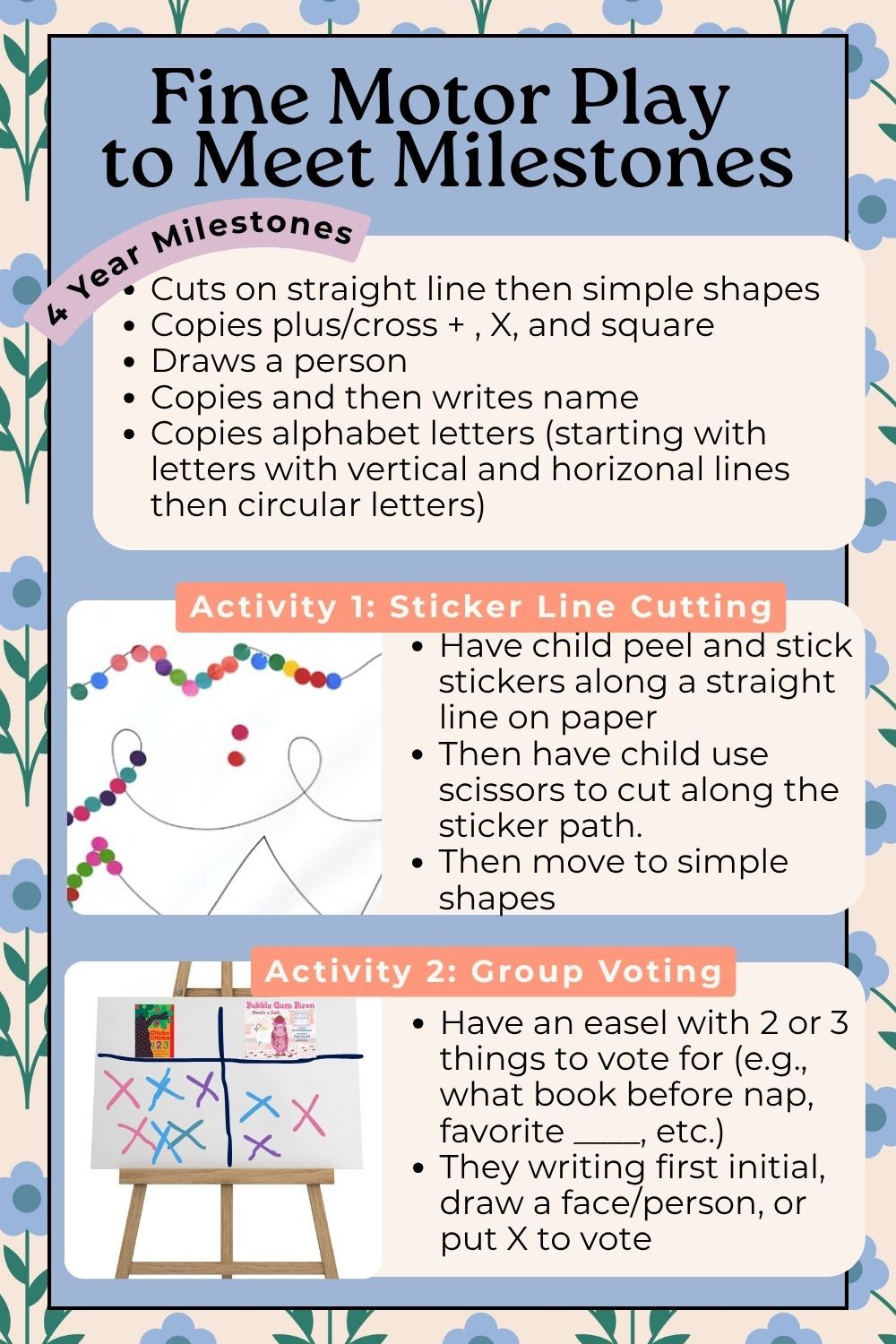
Screen shot this image and reference later!
The setup: Draw two simple columns on large paper or your whiteboard. Label each with a picture or word.
Why it works: Every time a child makes a mark, a face, an initial, an X, a line, they're practicing pencil control, hand strength, and hand-eye coordination. And their mark matters: they're voting, so they're motivated. Meaningful practice beats mindless practice every time.
How to do it:
- Create a simple two-choice chart (apples or bananas, blocks or outside, red or blue)
- As each child comes up, invite them to mark their choice however matches their skill level
- Count the votes together to fold in math
- Celebrate the result: "Our class chose… let's see how you made your mark!"
Embed it into your routine: Use voting for everyday decisions, snack, song, story, outdoor activity, and you'll watch mark-making skills progress over the weeks.
Teacher Tip: Keep a template on your clipboard or easel so you can pull it out anytime you need to make a group decision. You'll naturally see children's mark-making skills progress over weeks and months.
The setup: Paper, stickers, scissors. That's genuinely all.
Why it works: Peeling and placing stickers builds the pincer grasp (the thumb-and-finger grip needed for pencils) and hand-eye coordination. Cutting along a sticker line builds bilateral coordination and hand strength, and teaches children to follow a visual guide, all essential pre-writing skills.
How to do it:
- Draw a line on paper (straight, wavy, or zigzag depending on their scissor skills)
- The child peels stickers and places them along the line (coordination practice on its own)
- Once the line is covered, they cut along it, slicing through the stickers
- The stickers make cutting purposeful and far more engaging than a blank line
Teacher tip: Use dot stickers for younger children or those still building scissor strength; larger stickers give bigger targets.
Embed it into your routine: Keep stickers and paper in your fine motor station. The visual goal of "follow the stickers" gives clear direction, perfect for a child who needs a focused, calming task.
You already have everything you need to support fine motor development, no elaborate prep, no special materials, no Pinterest projects. These four activities work because they're simple, because children enjoy them, and because you can offer them consistently, and consistency is what actually builds skills.
Pick one to start with this week. Offer it during center time or weave it into a transition, then notice what your students enjoy and what feels manageable for you. That's the one worth repeating. Your children's little hands are getting stronger every day, and you're the reason why.
If you have mixed ages or looking for more ideas, check out our fine motor activities for your
3 year olds and
5 year olds! If you love simple, doable fine motor practice, you'll want the full picture. Kaitlyn and I created a training, Supporting Fine Motor Skills from Infancy through Preschool, that maps out how these skills develop at every stage and gives you easy, play-based ways to build them (plus how to help children who need a little extra support).
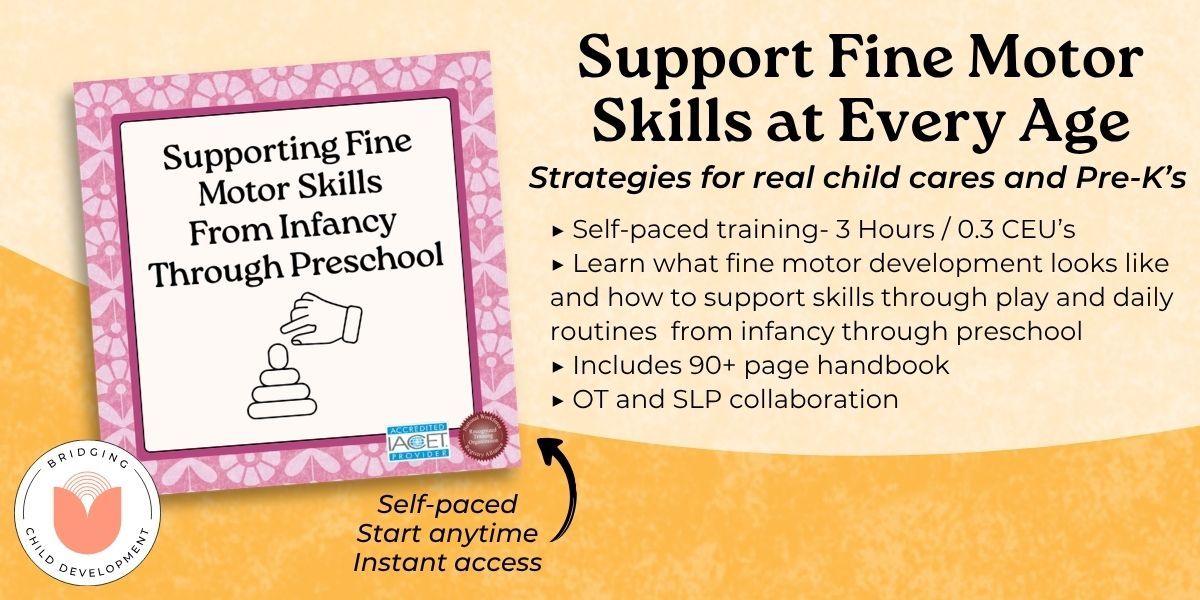
- Cuts on straight line then simple shapes
- Copies plus/cross + , X, and square
- Draws a person
- Copies and then writes name
- Copies alphabet letters (starting with letters with vertical and horizonal lines then circular letters)
They're the foundation for writing, cutting, and self-help tasks like zipping and buttoning. Strengthening little hands at four means smoother pre-writing skills and far less frustration when kindergarten expects pencil and scissor control.
Short, frequent practice woven into your day beats one long activity. A few minutes of playdough at transitions, sticker cutting at a center, or marking a vote at group time adds up, consistency matters more than intensity.
If a child consistently struggles with tasks their peers are managing, like holding a crayon, using scissors, or buttoning, or gets very frustrated with hand-based activities, it's worth a conversation with the family and the child's pediatrician. An occupational therapist can help when extra support is needed.