You can set up the coziest corner in your classroom, fill it with soft pillows, sensory tools, and calming visuals. You can spend time picking the perfect weighted blanket and color-changing lights. But
learning how to use a calm down corner is just as important as setting one up. The best calm down corner in the world won't help children if they haven't been taught how and when to use it.
As a pediatric speech-language pathologist and early intervention specialist, I visit child care classrooms weekly and see this all the time.
Teachers have invested in beautiful materials and designed a great calm down corner (also called a calming corner or cozy corner),
but children aren't using it. Not because the space isn't appealing, but
because no one has actually taught them how.
It's tempting to think children will naturally gravitate to these tools when they need them. But here's what child development tells us:
self-regulation is a skill, and it starts with co-regulation. Like learning to use a napkin, share a toy, or sit at circle time, using a calm down corner has to be taught, modeled, and practiced with intention.
Before we dive into the
how, let's talk about
why this matters. Many teachers assume once they create a calm down corner and label it, children will automatically know how to use the calm down corner independently. However, when a child is having big emotions, they don't automatically think, "Oh, I should use that space and this tool to help myself calm down."
Young children, especially toddlers and preschoolers, need explicit instruction. They need to see what self-regulation looks like, hear the language that goes with it, and practice it over and over in calm moments before they can access these skills during actual emotional moments.
Children learn best by watching adults, and your calm becomes their calm. That's co-regulation. So you'll want to intentionally model using the calm down corner throughout your day, not just when a child is dysregulated, but during calm times too.
A few ways to model:
Narrate what you're doing. Say out loud:
"I feel a little frustrated right now. I'm going to sit in the calm down corner for a few minutes and take some deep breaths. This helps my body feel better." Then actually go sit and breathe, and invite the kids to join you.
Demonstrate specific tools. Pick up a stress ball, fidget, or glitter bottle and show how it works: "When I feel worried, squeezing this ball helps calm me down." Invite them to try.
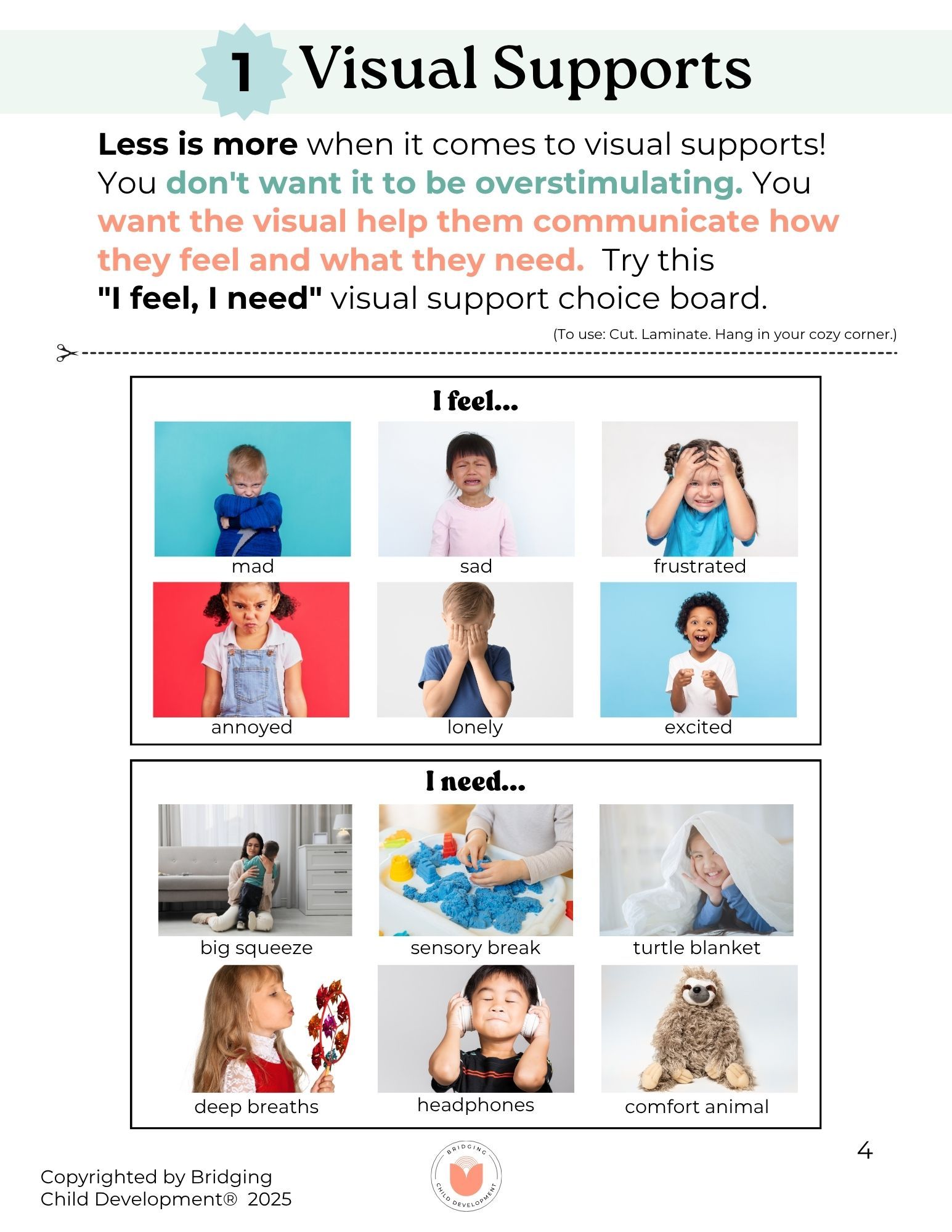
Use visuals while you model. Point to your "I Feel, I Need" visual or emotion chart (see below): "My face looks like this right now [point to the frustrated face]. I feel frustrated. I need some quiet time, so I'm going to sit with my blanket."
- Invite children to join you. "I'm going to the calm down corner for a few minutes. Would anyone like to come?" Some will sit nearby, some will use a tool alongside you, and some will just watch. There's no pressure, you're simply showing them it exists and how it works.
- Do it regularly. Model when you're waiting for lunch, resetting between activities, or transitioning between tasks. The goal is for children to see that everyone, adults and kids alike, sometimes needs to pause and regulate.
One of the biggest misconceptions about a calm down corner is that children only use it during a meltdown. Actually, that's often too late. A calm down corner works best before emotions become overwhelming. Think of it as a place where children can notice their bodies, use calming strategies, and prevent those big feelings from getting even bigger.
Modeling gets the ball rolling, but practice is what builds the skill. The most important part: practice should happen during calm times, not when a child is already having big feelings.
If children can't use the tools when they're calm, I promise you they won't use them when they're emotionally dysregulated.
Imagine trying to teach someone to swim while they're drowning, it just doesn't work. We teach swimming in a calm pool, and we teach regulation in calm moments.
1. Build it into story time.
Books are one of my favorite ways to teach emotional regulation because children can safely practice identifying feelings before they experience those emotions themselves.
When you're reading a picture book, pause at moments when characters have big feelings. Ask: "Hmm, this character looks really upset. What could they do in a calm down corner?" Let children brainstorm ideas. You might model: "I think they could use the breathing bottle" or "Maybe they'd like to wrap up in a cozy blanket." Then let the kids role play, pretend they are the character and use the tool! Below are books I love to practice this skill.
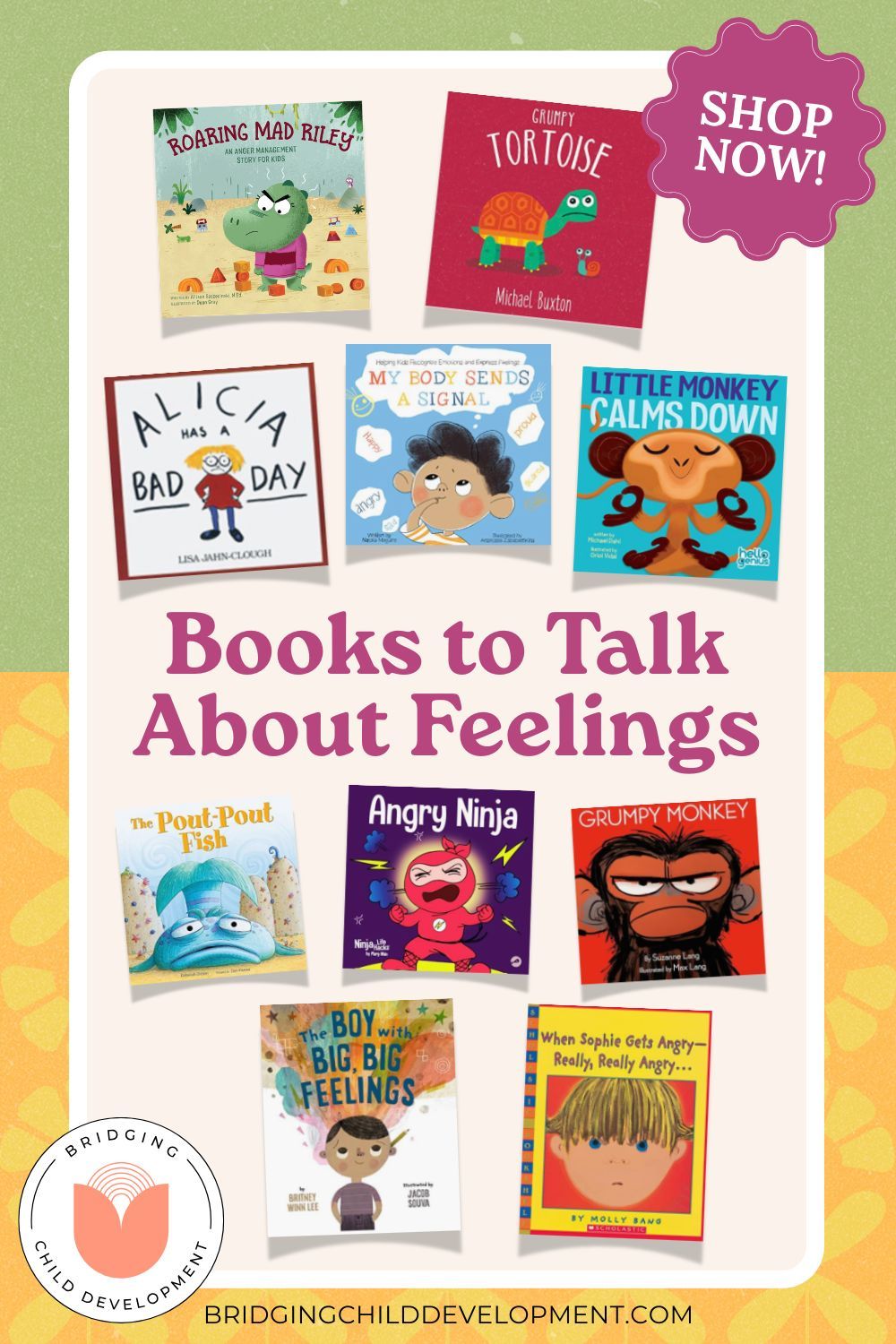
Click the image to see all our book suggestions
or click here. Start building your class library. Affiliate link.
2. Create a classroom routine. A center I work with just started a "calm down corner practice" at the start of circle time.
We put a basket of fidgets and calm down tools in the center of the circle and sing, to the tune of "London Bridge": - "It's time for circle, go sit down, go sit down, go sit down. It's time for circle, go sit down, and grab a fidget."
Everyone (adults included) picks a tool and uses it while the group transitions. Circle starts with a quick practice of one or two tools, a brief chat about how they help our bodies feel calm, then the tools go back in the basket. This also gives every child an opportunity to practice using calm down tools before they're upset.
Here are some other calm down corner tools.
This has seriously been a game changer for the circle time transition and getting opportunities to practice regulating emotions when everyone is calm!
3. Give reminders before tricky transitions. Right before cleanup or the shift from free play to table work, say: "Remember our calm down corner? If you feel frustrated during cleanup, you can use a tool to help your body stay calm."
Even the coziest space won't help if it's introduced in ways that make children avoid it instead of choosing it.
Here are the most common mistakes I see in classrooms and how to avoid them.
Don't force a child to go. A calm down corner should never feel like a place children are sent because they misbehaved.
Instead of saying, "Go to the calm down corner," try, "Would sitting in the calm down corner help your body feel better?" or "Let's go together and see what might help."
The goal is for children to eventually choose the space themselves because they know it helps, not because an adult told them to go there.
Don't use it as a time-out. This is probably the biggest mistake.
A time-out is a consequence. A calm down corner is a support.
If children associate the calm down corner with getting in trouble, they won't use it when they're genuinely overwhelmed. Instead of feeling safe, it becomes another form of punishment.
The calm down corner should always communicate one message: "This is a place where I can help my body feel calm."
Don't send children there after punishment. If the only time children ever hear about the calm down corner is after they've hit, screamed, or thrown something, they're learning that it's connected to getting in trouble.
Instead, use the calm down corner every day when children are already calm. Practice using the tools during circle time, after recess, while reading books about feelings, or during classroom discussions about emotions.
The more children practice while they're regulated, the more likely they'll remember those strategies when they need them.
If you want them to use it, you have to use it! Children aren't born knowing how to calm their bodies.
If we expect them to independently choose a breathing tool or squeeze a stress ball without ever seeing an adult do it first, we're asking them to use a skill they've never learned.
Model the calm down corner often. Talk through your thinking and show children how different tools help your own body feel calm.
Your calm becomes their calm.
Don't wait for the meltdown.
Once a child is screaming, throwing toys, hitting, or completely overwhelmed, they're no longer in a place where they can easily learn or use new calming strategies.
Some common early signs include:
- Clenched fists
- Covering their ears
- Pacing around the room
- Whining or becoming unusually irritable
- A rigid or stiff body
- Hiding under a table or in a corner
- Repeating "no" over and over
- Raising their voice
When you notice these early signals, that's the perfect time to gently offer support. You might say: "I notice your body looks really frustrated. Would you like to sit in the calm down corner together?" Or: "Your hands are squeezed really tight. I wonder if taking a few deep breaths or using a fidget would help your body feel better."
The calm down corner isn't designed to stop a full-blown meltdown. It's designed to help children recognize what their bodies are telling them before they become completely dysregulated.
Self-regulation starts with co-regulation, and it's a process, not an instant fix. If you set up a calm down corner and expect children to use it independently within a week, you'll likely feel frustrated. But if you commit to consistent modeling, practice, and intentional language for 4 to 8 weeks, you'll start to see real change.
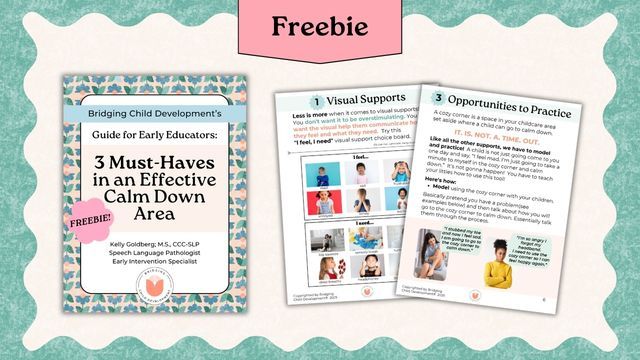
Want to set up a calm down corner children will truly use? I put together a free guide just for child care providers and preschool teachers that walks you through it step by step.
A calm down corner (also called a calming corner or cozy corner) is a small, intentional space in the classroom where children can go to regulate their emotions and sensory input. It's stocked with comforting, sensory, and visual tools that help a child's body feel calm, and it's something children learn to use, not a space they're simply sent to.
No. This is the most important distinction to get right. A time-out is a consequence; a calm down corner is a supportive space a child chooses to help themselves feel better. If children experience the space as punishment, they won't seek it out when they're upset, which defeats the entire purpose.
Keep it simple and intentional: soft seating, a few durable sensory tools (like a fidget, stress ball, or glitter bottle), an emotion or "I feel, I need" visual, and a couple of feelings books. More isn't better, too many items can become overwhelming or turn the space into a play area.
Keep modeling and practicing during calm times, and never force a child into the space. Forcing it makes the corner feel like punishment. Some children will use it sooner than others, and continued, pressure-free exposure is what builds the habit over time.