Toddler Throwing Food? A Child Care Teacher's Guide
Nov 15
/
Kelly Goldberg
If you work with toddlers, you know the scene well: cereal scattered across the classroom floor, a spoon flying mid-air, or an entire plate of food swiped right off the tray. As a speech therapist and early intervention specialist who supports infant and toddler teachers and preschool teachers with mealtime struggles in child care settings, I get asked about food throwing almost every week — usually with the question, "How do I get toddlers to stop throwing food?"
The good news is that food throwing is a completely normal part of toddler development. Let's unpack why it happens and explore practical, classroom-tested strategies you can use as a teacher to make mealtimes calmer and more manageable in your early childhood program.
Is Food Throwing Normal for Toddlers?
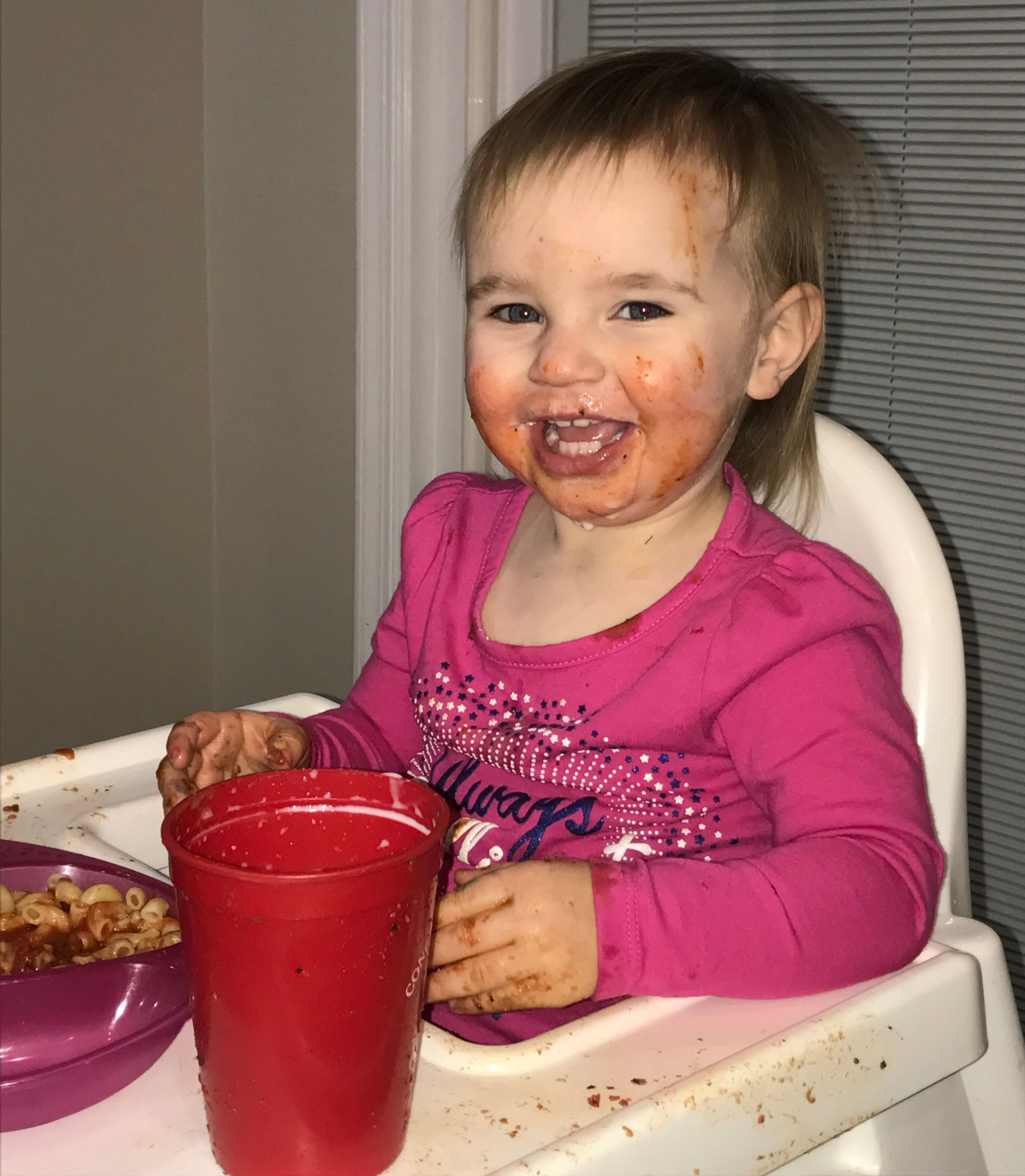
Food throwing is expected for children between 8–18 months, and it can linger into the 2s (sometimes on and off). At this age, toddlers are experimenting with cause-and-effect, practicing independence, and exploring boundaries.
Quick takeaway: Food throwing will happen, it's developmental, and it won't last forever.
Why Do Toddlers Throw Food?
It helps to remember that food throwing is communication and exploration, not defiance.
Toddlers in your classroom may throw food because:
It feels like a game: Cause-and-effect is exciting, especially when it gets a big reaction from a teacher or the other children at the table.
They're full: Tossing food may be their way of saying, "I'm done."
They're overwhelmed: Too much food on the tray can feel overstimulating, especially during a loud group mealtime.
They're frustrated: Slippery textures or tricky shapes may be too hard to pick up with their current fine motor skills.
They don't like the food (yet): Throwing is often rejection without words.
Quick takeaway: Throwing is communication. It's a learning opportunity, not misbehavior.
Practical Strategies for Teachers to Manage Food Throwing in the Classroom
The good news for toddler teachers: you don't have to eliminate food throwing overnight to make mealtimes in your classroom calmer. These are simple, child care friendly strategies you can start using at the very next snack or lunch, no special training or extra hands required.
1. Stay calm and keep it neutral
It's tempting to react quickly, but even an enthusiastic "no!" can feel like a fun game to toddlers, especially when they have a little audience of other kids watching. A calm, steady response is the best way to reduce throwing. In a busy toddler classroom, your neutral tone is one of your most powerful tools.
2. Use "can do" language
Instead of focusing on what not to do, show them what to do:
"You can scoop it."
"You can mix, mix, mix."
"You can take a bite or put it on your plate."
"You can drink it or put it down."
3. Notice what they're doing well
Reinforce positive behaviors by pointing them out so the child (and the children watching) hear what to do:
"That was a great sip!"
"Wow, look at you dipping!"
"You're keeping your food on the plate!"
In a classroom setting, narrating one child's success often nudges the rest of the table to follow.
4. Teach ways to engage with food
Model skills and language during mealtimes. Toddlers in child care learn a huge amount just by watching you:
"It's hot. Let's blow on it."
"I'm going to take a bite."
"I put my drink next to my plate."
5. Reduce overwhelm
Too much food at once can invite throwing and a tray piled high is even more overstimulating in a noisy group setting. Start with small servings, about a tablespoon of each food. If they want more, offer just a teaspoon at a time. Smaller portions also mean less to clean up off the classroom floor.
6. Decrease frustration
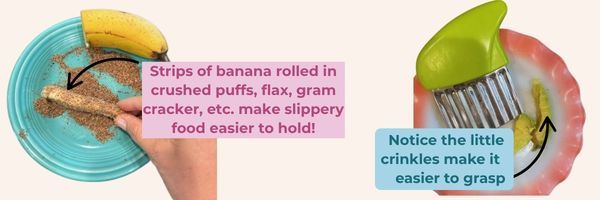
If food is too slippery or tricky to grasp, food throwing can simply be a sign that a toddler's fine motor skills aren't there yet. Set them up for success:
Slice into smaller, easier-to-hold shapes.
Lightly coat with crumbs for grip.
Try crinkle cuts. (I love a crinkle cutter for avocados, peaches, mango, and more!)
I love this crinkle cutter. Clickhereto get one! (Affiliate Link)
7. Teach "all done"
Sometimes food throwing simply means the child is finished. Give toddlers a better way to tell you. Model words or signs for "all done" and "more," and give wait time so they have a chance to use them. Want to learn more about signing in child care- start here!) If a child signals "all done" or keeps throwing, gently remove the tray and model: "All done." Used consistently across your classroom, this gives even your toddler class a clear way to communicate at mealtime instead of tossing food to make the point.
8. Keep exposing to disliked foods
If the same food keeps getting tossed, continue offering very small portions of that food alongside foods the child enjoys. Over time, repeated, pressure-free exposure builds familiarity and that's a core picky eating strategy too!
Final thoughts on food throwing
Food throwing may feel messy and overwhelming in the moment, but it's a normal, temporary part of toddler development, not misbehavior and not a reflection of your classroom management.
By staying calm, offering clear "can do" guidance, and using the simple strategies above, you help toddlers build independence, communication skills, and a more positive relationship with food.
However, if a child's food throwing, gagging, extreme picky eating, or feeding difficulties go well beyond the typical developmental window, trust your instincts and loop in your early intervention team or talk to the family to see if they can bring up concerns with their pediatrician.
Want to go deeper and earn child care training hours online?
If you'd like more strategies for creating calmer, more positive mealtimes in your classroom, join our on-demand training built specifically for toddler teachers and early childhood educators. You'll walk away with practical, ready-to-use tools — and earn required training hours toward your professional development at the same time.
As an IACET-approved organization, our continuing education is recognized and accepted across many states, so your time counts toward the hours your daycare or child care program already needs.
Frequently Asked Questions
Is food throwing normal for toddlers in a daycare classroom?
Yes. Food throwing is a developmentally normal behavior, most common between 8–18 months and sometimes lingering into the 2s. In a toddler classroom, it tends to look bigger simply because there's an audience — but it's exploration and communication, not misbehavior.
How do I stop toddlers from throwing food at mealtime in my daycare?
You may not stop it overnight, but you can reduce it. Stay calm and neutral, use "can do" language, serve small portions to avoid overwhelm, teach signs for "all done" and "more," and set children up for success with easy-to-grasp foods. Consistency across your classroom is what makes these strategies stick.
What should I do when a toddler keeps throwing the same food?
Keep offering it in very small amounts alongside foods the child enjoys, and stay neutral when it's rejected. This pressure-free, repeated exposure builds familiarity over time and it doubles as a picky eating strategy.
When should food throwing be a concern?
If food throwing is paired with gagging, choking, extreme food refusal, or it continues well past the toddler years, it's worth talking to the family about your observations. Encourage the family to connect with their pediatrician and have them reach out to early intervention for a feeding evaluation.
Can I earn training hours for learning mealtime strategies?
Yes. Our mealtime struggles training is designed for early childhood education staff and counts toward your required training hours. Because we're an IACET-approved organization, the continuing education is accepted across many states.
Prefer to learn these tips in a training?
Find a format that works for you.
Get your state-approved hours and CEUs, a comprehensive handbook you'll reference forever, and strategies that’ll make a difference in the children you’re caring for.
Live Virtual Trainings
Real-time interaction, community with other providers, and the energy of learning together.
Self-Paced Trainings
Flexibility to learn on your own schedule, pause and rewatch as needed, with opportunities to learn and engage with others.
Private Trainings
A customized training for your entire staff, in-person or virtual, with hands-on activities built around your center's needs.
Hey, I’m kelly
Speech Language Pathologist, Early Intervention Specialist, Child Care Trainer, and Former Family Child Care Owner
I work alongside early childhood educators caring for children with a variety of needs. But these needs look very different than they did twenty years ago and you deserve trainings, resources, and tools that reflect that.
Trainings that are high quality, affordable, and worth coming back to.
That's why I built Bridging Child Development. Every training hour you earn here gives you strategies you can use the very next day in your classroom.
Login or sign up to start learningLogin to start learning