What are the benefits to using Sign Language in early childhood classrooms?
1. Reduces Frustration and Challenging Behaviors
One of the biggest benefits of sign language in daycare classrooms is reducing frustration. We all know children get frustrated when we can't figure out what they want or need, so what do they do-tantrum, cry, or hit. All behavior is communication. When children learn simple signs like “help,” “eat,” or “all done,” they gain a reliable way to express their wants and needs. Signs are especially helpful with your toddler class, as frustration is common for this age!
As soon as we get signs going in the child care classrooms I service children in, caregivers report fewer meltdowns!
As soon as we get signs going in the child care classrooms I service children in, caregivers report fewer meltdowns!
For child care providers, this creates:
- Calmer classrooms
- Easier transitions
- Improved emotional regulation
- More positive teacher-child interactions
2. Supports Speech and Language Development
A common myth is that sign language delays speech. Research shows the opposite is true. The American Speech-Language-Hearing Association stated, “Contrary to predictions often cited in the literature, acquisition of sign language does not harm spoken vocabulary acquisition.”
Signing actually supports spoken language development by:
- Increasing vocabulary exposure
- Reinforcing word meaning
- Encouraging communication attempts
- Strengthening understanding of language
What I find is signing acts like a bridge to spoken words. Children typically sign then sign and say the word together before eventually relying mostly on verbally saying the word only. Also, it is a common myth that sign delayed speech and language development. Learn more common myths here.
3. Encourages Inclusion in Early Childhood Classrooms
Sign language helps create inclusive classrooms where all children can participate successfully. While I am typically in a child care setting because the child qualified for service, we know, Signing supports:
- Children with speech delays
- Typically developing children
- Dual language learners
- Children with developmental differences
- Children who are shy or slow to warm up
- Infants and toddlers still developing verbal communication
4. Strengthens Teacher-Child Relationships
Communication builds connection and connection supports positive behaviors, so it's a win-win!
When educators understand children’s needs faster, children are less frustrated, more motivated to keep the communication exchange going, and emotionally secure.
This stronger communication can improve:
When educators understand children’s needs faster, children are less frustrated, more motivated to keep the communication exchange going, and emotionally secure.
This stronger communication can improve:
- Responsive teaching practices
- Attachment and bonding
- Emotional security
- Participation during routines and activities

How Sign Language Fits Naturally Into Daily Child Care Routines
Diapering and Potty Time Routines
Outdoor Play
Signs at Circle Time
Best Practices for Teaching Sign Language in Child Care and Preschool
Why Every Early Childhood Program Should Consider Sign Language
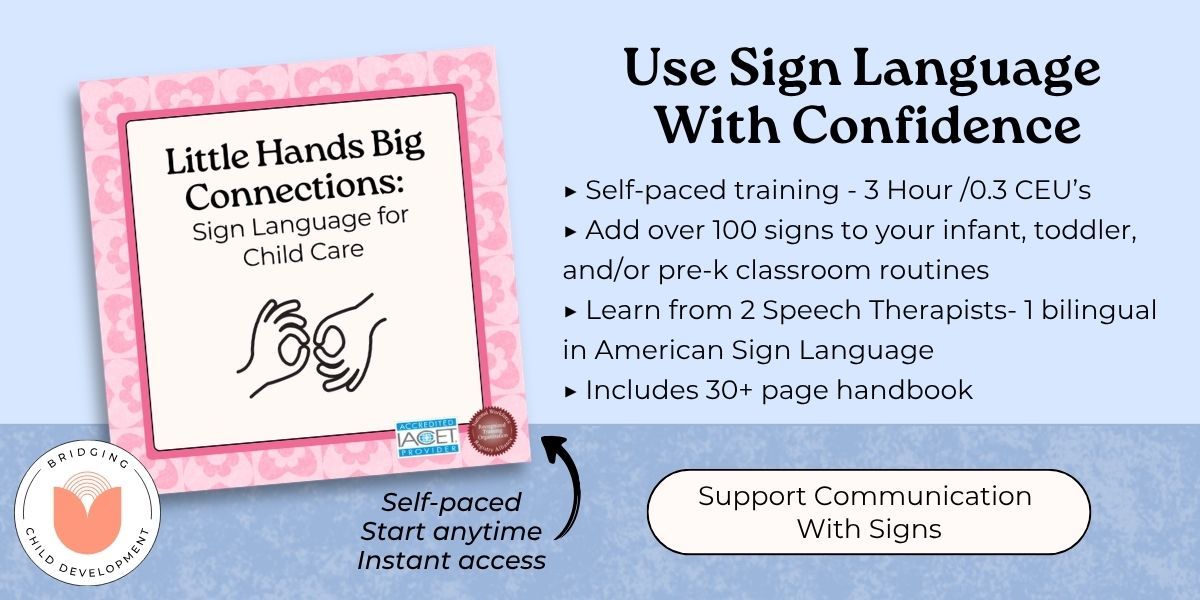
Sign language training for infant, toddler, and preschool teachers
Common Questions About Sign Language in Child Care
Does sign language delay speech?
What age should children start learning signs?
How many signs should educators teach?
Do preschoolers still benefit from sign language?
Prefer to learn these tips in a training?
Find a format that works for you.
Live Virtual Trainings

Self-Paced Trainings

Private Trainings

Speech Language Pathologist, Early Intervention Specialist, Child Care Trainer, and Former Family Child Care Owner

Subscribe to BCD's Teacher Tea Monthly Newsletter