Sign Language Benefits, Myths, and How to Get Started in Your Child Care Classroom
Dec 16
/
Kelly Goldberg
Want to start signing with the children in your care but not sure where to begin? This blog is packed with everything you need: what baby sign language actually is (and if we should call in "baby sign"), why sign language is important in early childhood classrooms, the myths to ignore, and how to get going in your classroom tomorrow.
Whether you're brand new to signing or just want to be more consistent, sign language is one of the most valuable tools you have for improving communication with babies who can't yet express themselves with words.
What Is Baby Sign Language?
OK the term "baby sign language" is actually quite controversial and I honestly do not use it. It is sign language, used with babies and toddlers to support communication before spoken language is fully developed.
When you use sign language with infants and toddlers, you're giving them a way to communicate their wants, needs, and ideas before they can say the words themselves.
Think about it this way. Long before children can clearly say "milk," "help," or "all done," they can often imitate a simple gesture. Sign language gives them a bridge between what they understand and what they're able to express.
Are There Benefits to Signing With Children In Your Child Care?
Yes. Seriously, the benefits are amazing!
Babies and toddlers can learn to sign before they can talk because imitating a gesture is easier than imitating speech (for example, babies typically clap before they say "yay!" or lift their arms to be picked up before saying, "up."). That means signing gives a child a way to communicate before they can produce spoken words. This means:
Less frustration and fewer tantrums. A child who can ask for what they want doesn't have to melt down to get your attention.
Enhances caregiver-infant bonding. Caregivers who sign report less stress, more affectionate interactions, and an easier time responding when a child is upset. When children can communicate their needs, it's easier to respond quickly and confidently. That leads to less stress and more positive interactions throughout the day.
Better language down the road. Ok, this is amazing- researchers compared 3 groups of babies. Group 1’s parents were trained to use signs, group 2’s parents were taught to label everything in the child’s environment with spoken words, and group 3’s parents were not told to do anything in particular. Guess what? The children in the group of families using signs had better language skills than the other groups—specifically they had bigger vocabularies and used longer sentences when they were two years old!
So no, signing isn't a cute party trick. It's genuinely building communication and language.
When Can Babies Learn Sign Language?
Earlier than most people think.
Children begin understanding signs long before they can use them independently. Many babies start using their first signs between 6 and 10 months of age, although every child develops at their own pace.
The key is consistent exposure. The earlier you model signs during everyday routines, the more opportunities children have to connect the sign with the spoken word and its meaning.
Let's Bust 5 Common Myths About Using Sign Language
Signing with children gets a bad rap, usually because a lot of outdated misinformation is still floating around. Let's clear up the big five:
Myth 1: Signing delays speech
Reality: In all the research that has been done on using signs with babies and toddlers, none have shown that using signs causes a delay in speech or language development. And as we already talked about, many studies suggest that sign language supports language growth and communication development.
Myth 2: Using sign language is a fad and will go away, no need to bother
Reality: It has actually been studied and implemented for decades. Researchers, speech-language pathologists, educators, and early intervention specialists have long recognized its value as an early communication tool.
Myth 3: Signs replace spoken language
Nope. Signs complement speech, they don't replace it. The whole point is to support communication while words develop, which is why you always say the word out loud as you sign.
Myth 4: Children will get "dependent" on signs and never talk.
Reality: Studies have shown that babies who learn sign language may surpass their non-signing peers in spoken language development. Studies found children that were signed to understood more words at 15 months and used more words at 2 years old.
Myth 5: If a child doesn't seem interested, it won't work.
Reality: Babies develop at their own pace. Some take longer to show interest or imitate a sign, and that's completely okay. Keep modeling.
Best First Signs for Babies
One of the most common questions I get is: "What signs should I start with?" We have awhole blog on it here,but here is a brief answer to get you started.
Start with words babies actually need throughout their day. Words that help them get their wants and needs met. Speech therapists call these "power words": Here are a few signs I typically help child care providers use with their infant and toddler class:
Again
Eat
Drink
Milk
Help
All Done
These signs occur naturally during routines, are highly motivating for young children, and are likely words you're already saying over and over again.
Don't try to teach 30 signs at once. Start with 5ish useful signs that fit naturally into your daily routines.
Consistency beats quantity every single time.
Children learn signs best when they see them repeatedly during meaningful activities, no need for any special "lesson" or extra planning and prep.
How to Teach Sign Language in Your Child Care Classroom
Start simple. Pick words tied to basic needs: eat, help, milk, again, all done. They give you the most bang for your buck. If a child loves a specific toy (their ball, say), that's a great early sign too, because it's motivating enough to make them want to imitate you.
Say and sign. Pair the sign with the spoken word every single time, then repeat, repeat, repeat. And always follow through: if you sign "milk," give the milk, so the child connects the sign to getting what they want.
Weave it into your day. Use signs during feeding, diapering, playtime, and transitions, the routines you're already doing. No separate "sign language time" required.
Want to learn more about signing with different ages? Here's blogs breaking down how to do sign language or how to make it work fortoddlers!
Extra Sign Language Tips for Child Care Providers
Partner with families. Keep the families you service informed that you are using sign language. Let them know the signs you are focusing on and share resources so they can reinforce signing at home.
Build sign language into your lesson plans. Integrate sign language into daily lesson plans and activities. Studies show that when the teacher used gestures and signs while explaining a lesson, even a simple math lesson, the children used those same gestures and signs which helped them learn and retain the new information!
Add signs to songs Use songs and games that involve sign language. This adds a fun, multi sensory, and interactive element to the learning process.
Get your whole team on board. Ensure that all staff at your childcare are trained in basic sign language. This consistency will help create a supportive environment for the children.
Bring Sign Language Into Your Program (and Earn CE Credit)
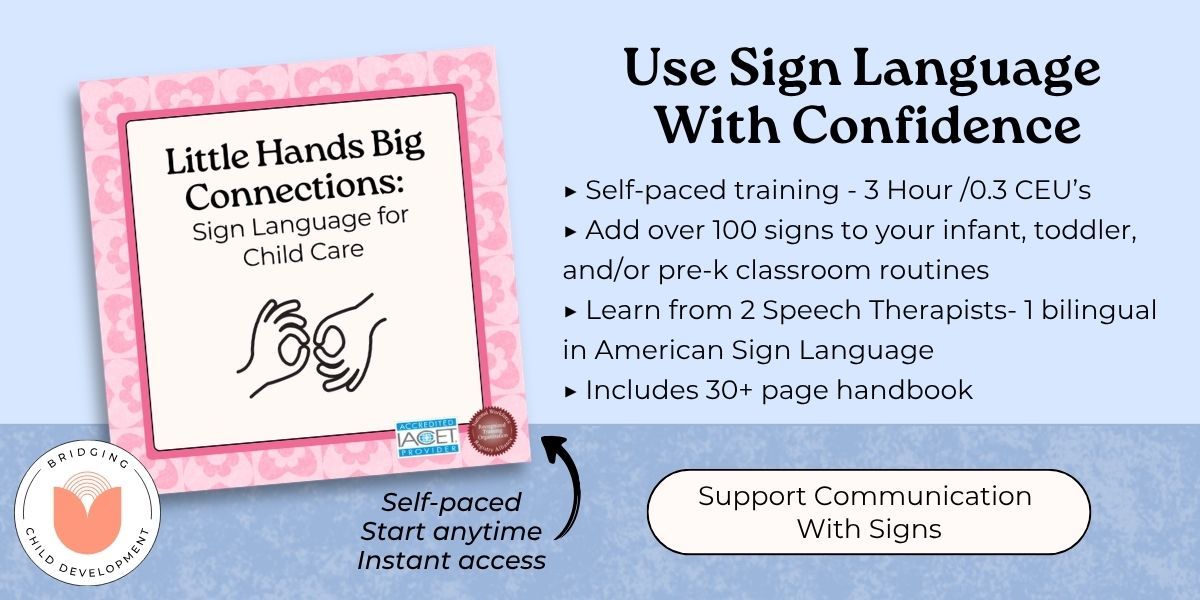
Want to feel confident signing with the children in your care, and earn continuing education while you're at it?
Frequently Asked Questions
How many signs should I start with in my classroom?
Just a few. Pick five or so power words tied to your daily routines (more, eat, milk, help, all done) rather than trying to teach a long list. A small, consistent set is far more effective.
Should I tell families I'm using sign language?
Definitely. Share the signs you're focusing on so families can reinforce them at home. The more consistent a child's whole world is, the quicker the signs click.
Should I use sign language with toddlers who are already talking?
Absolutely.
Sign language continues to support communication, participation, vocabulary development, and learning. Many toddlers enjoy using signs alongside spoken language, especially during songs, stories, and group activities.
Prefer to learn these tips in a training?
Find a format that works for you.
Get your state-approved hours and CEUs, a comprehensive handbook you'll reference forever, and strategies that’ll make a difference in the children you’re caring for.
Live Virtual Trainings
Real-time interaction, community with other providers, and the energy of learning together.
Self-Paced Trainings
Flexibility to learn on your own schedule, pause and rewatch as needed, with opportunities to learn and engage with others.
Private Trainings
A customized training for your entire staff, in-person or virtual, with hands-on activities built around your center's needs.
Hey, I’m kelly
Speech Language Pathologist, Early Intervention Specialist, Child Care Trainer, and Former Family Child Care Owner
I work alongside early childhood educators caring for children with a variety of needs. But these needs look very different than they did twenty years ago and you deserve trainings, resources, and tools that reflect that.
Trainings that are high quality, affordable, and worth coming back to.
That's why I built Bridging Child Development. Every training hour you earn here gives you strategies you can use the very next day in your classroom.
Login or sign up to start learningLogin to start learning