Sign Language for Preschoolers: Supporting Words, Literacy, and Big Feelings
Jul 6
/
Kelly Goldberg
By preschool, most of the children in your classroom are talking—sometimes nonstop! So when I bring up sign language with preschool teachers, I usually get a little head tilt: "They can talk now… do they really still need signs?"
I get why it sounds backward. But here's what I've watched play out in classroom after classroom: just because a child can talk doesn't mean they can always find the words, especially when a big feeling has taken over. A preschooler mid-meltdown is not reaching for their best vocabulary. Think about the last child who had a huge meltdown because someone took their toy. Were they calmly saying, "I'm feeling frustrated because I'd like another turn?"
Probably not. Emotional regulation skills are very much under construction, and "use your words" only works when the words are actually available.
Why Sign Language Still Matters for Preschoolers
7 Benefits of Sign Language for Preschoolers
Many people think sign language is only for babies who can't talk yet. In reality, sign language for preschoolers looks different than it does with infants. Instead of replacing missing words, it strengthens learning by giving children another way to understand, remember, and use language.
1. Builds Vocabulary Development
One of the biggest benefits of preschool sign language is vocabulary growth. Pairing a word with a sign makes that word concrete or "visible". It adds an additional layer of learning, tactile and visual where as using words is auditory only. We know the more ways we engage the brain, the faster children learn and understand the meaning of words. That's why signs work so well when introducing new classroom vocabulary.
Whether you're talking about insects during a science lesson or positional words during math, signs help make abstract words more concrete. You can build vocabulary through signs with your infants andtoddlers too! Click to go to those blogs.
2. Supports Early Literacy
This is one of my favorite reasons to continue using sign language in preschool.
When you sign key vocabulary while reading books, children become more engaged with the story and remember new words more easily.
Signs help children:
remember story vocabulary
retell stories
understand sequencing
identify characters' emotions
participate during repeated readings
The next time you read Brown Bear, Brown Bear or The Very Hungry Caterpillar, try signing repeated words and watch how much more involved your class becomes.
3. Strengthens Social-Emotional Learning
This might be my favorite use of sign language at the preschool level. Signs provide another way to communicate.
Teach signs like:
mad
sad
frustrated
scared
help
stop
wait
This gives children tools they can still access when finding spoken words feels difficult.
These signs pair beautifully with calm-down corners and problem-solving activities.
4. Creates More Inclusive Classrooms
Sign language benefits every child—not just children with communication delays.
Sign language supports:
multilingual learners
children with speech or language delays
autistic children
children who are shy
children who need extra processing time
For example, if you are talking about horses, and you sign "horse", the sign for horse is the same regardless of the language children speak.
When everyone learns the same classroom signs, communication becomes more accessible for everyone.
5. Improves Attention During Learning
I say this all the time... Attention goes where hands go.
Movement naturally increases engagement.
That's why adding signs to songs, stories, and small group lessons keeps children actively involved instead of simply listening.
The more children participate, the more they remember.
6. Supports Classroom Routines
One of the easiest ways to teach sign language to preschoolers is by embedding it into routines you already have.
Signs can make transitions smoother and classroom expectations easier to understand.
Try using signs during:
cleanup
lining up
snack
bathroom
centers
outdoor play
Children quickly learn that the sign becomes another visual reminder of what's happening next.
7. Encourages Multisensory Learning
Research consistently shows that children learn best when multiple senses are involved.
When children hear a word, watch a sign, perform the movement, and then use the word in conversation, they're strengthening neural connections that support language development.
That's why sign language fits so naturally into preschool classrooms.
Seriously, so many benefits! But there are also so common myths about signing. Click here to read more!
How to Teach Sign Language to Preschoolers
You don't need a curriculum overhaul, just a few intentional spots to add signs. Here are some ideas where I have seen signs work in preschool classrooms.
And the rule that never changes, no matter the age: keep your signs consistent across routines and across staff. When every teacher uses the same sign the same way, preschoolers connect it to meaning so much faster. Oh, and keep saying the word out loud as you sign,signs are meant to ride alongside speech, never replace it.
Circle Time
Teach signs for key vocabulary in songs like "If your happy and you know it" and sign "happy". Teach signs for simple directions too.
Here are some ideas:
Sit
Stand up
Dance
Friend
Book
Story Time
Choose 3 - 5 important vocabulary words from the story. Sign them every time they appear. Plus you can sign: book, open, and read.
Social-Emotional Learning
Teach signs for feelings, self-advocating, and problem-solving.
Some favorites include:
happy
sad
excited
frustrated
help
stop
wait
Math Activities
Signs make abstract concepts easier to understand.
Try:
more
less
same
different
numbers
Science Activities
Use signs for:
grow
plant
bug
hot
cold
sink
float
Adding movement makes new vocabulary much more memorable, multisensory learning is key!
Want to Bring Sign Language Into Your Classroom with Confidence?
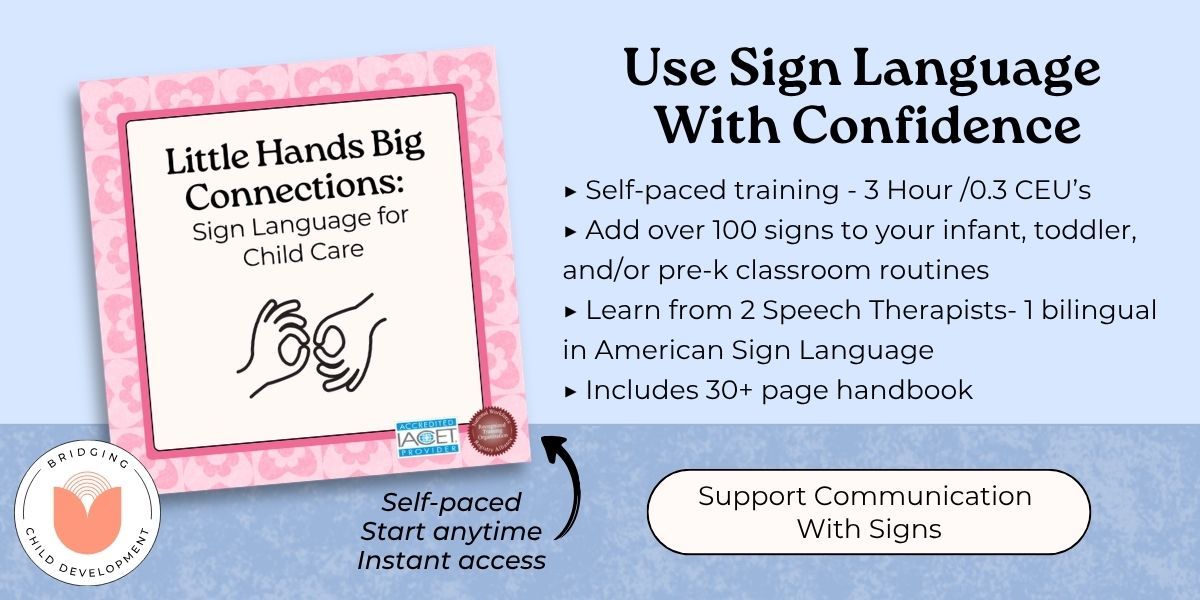
If you'd love a clear, doable way to use signs with your preschoolers, which signs to use, how to teach them, and how to weave them into circle time, transitions, and social-emotional learning, this training is for you!
Frequently asked questions
Should preschoolers still use sign language if they're talking?
Absolutely. Sign language continues to support vocabulary, literacy, social-emotional learning, and classroom participation long after children begin talking.
Does sign language improve preschool vocabulary?
Yes. Pairing spoken words with signs creates a multisensory learning experience that helps children understand and remember new vocabulary.
How do I teach sign language in my preschool classroom?
Start with a handful of useful signs and use them consistently during circle time, story time, transitions, meals, and everyday routines. You don't need a separate lesson, just weave signs naturally into your day.
Prefer to learn these tips in a training?
Find a format that works for you.
Get your state-approved hours and CEUs, a comprehensive handbook you'll reference forever, and strategies that’ll make a difference in the children you’re caring for.
Live Virtual Trainings
Real-time interaction, community with other providers, and the energy of learning together.
Self-Paced Trainings
Flexibility to learn on your own schedule, pause and rewatch as needed, with opportunities to learn and engage with others.
Private Trainings
A customized training for your entire staff, in-person or virtual, with hands-on activities built around your center's needs.
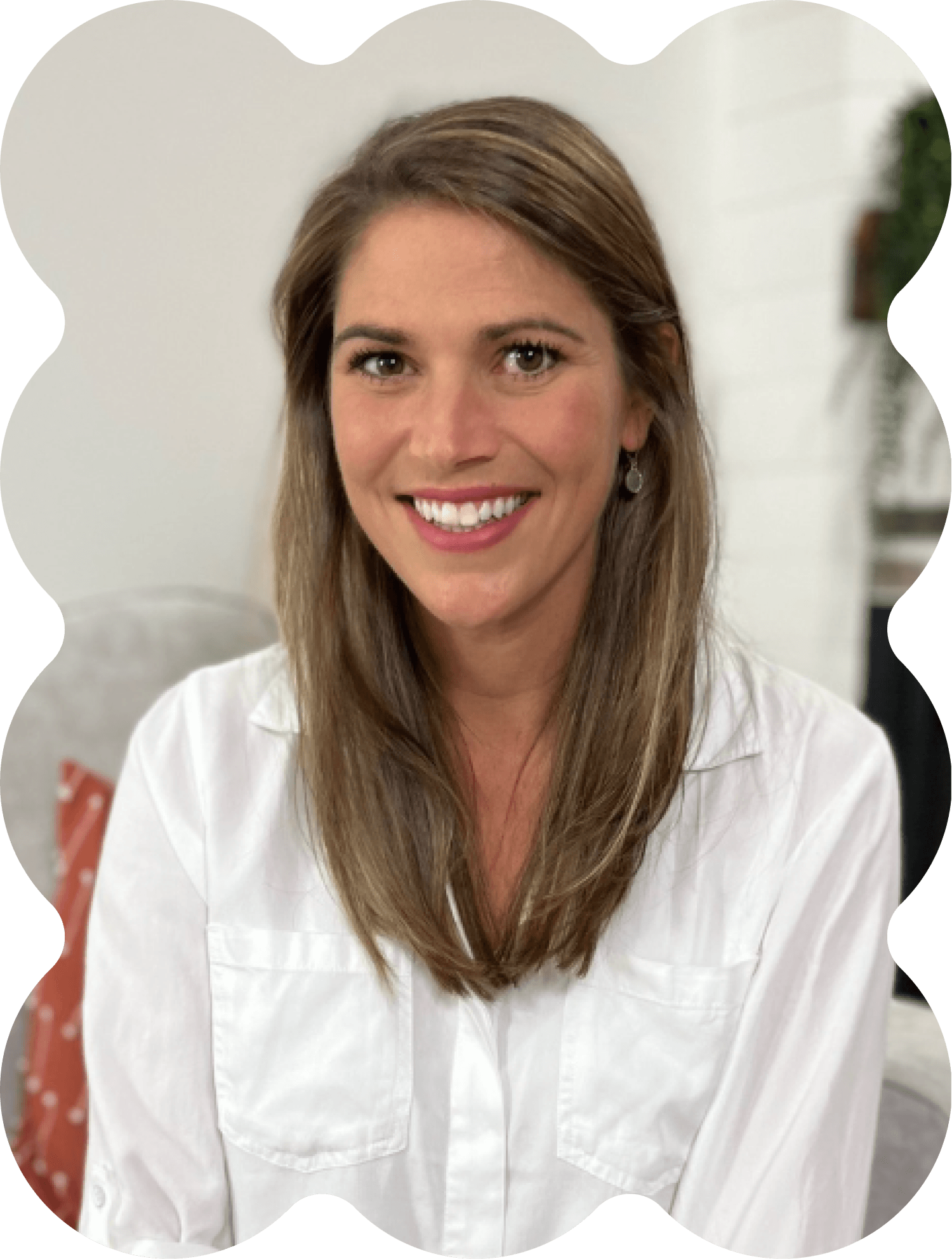
Hey, I’m kelly
Speech Language Pathologist, Early Intervention Specialist, Child Care Trainer, and Former Family Child Care Owner
I work alongside early childhood educators caring for children with a variety of needs. But these needs look very different than they did twenty years ago and you deserve trainings, resources, and tools that reflect that.
Trainings that are high quality, affordable, and worth coming back to.
That's why I built Bridging Child Development. Every training hour you earn here gives you strategies you can use the very next day in your classroom.
Login or sign up to start learningLogin to start learning