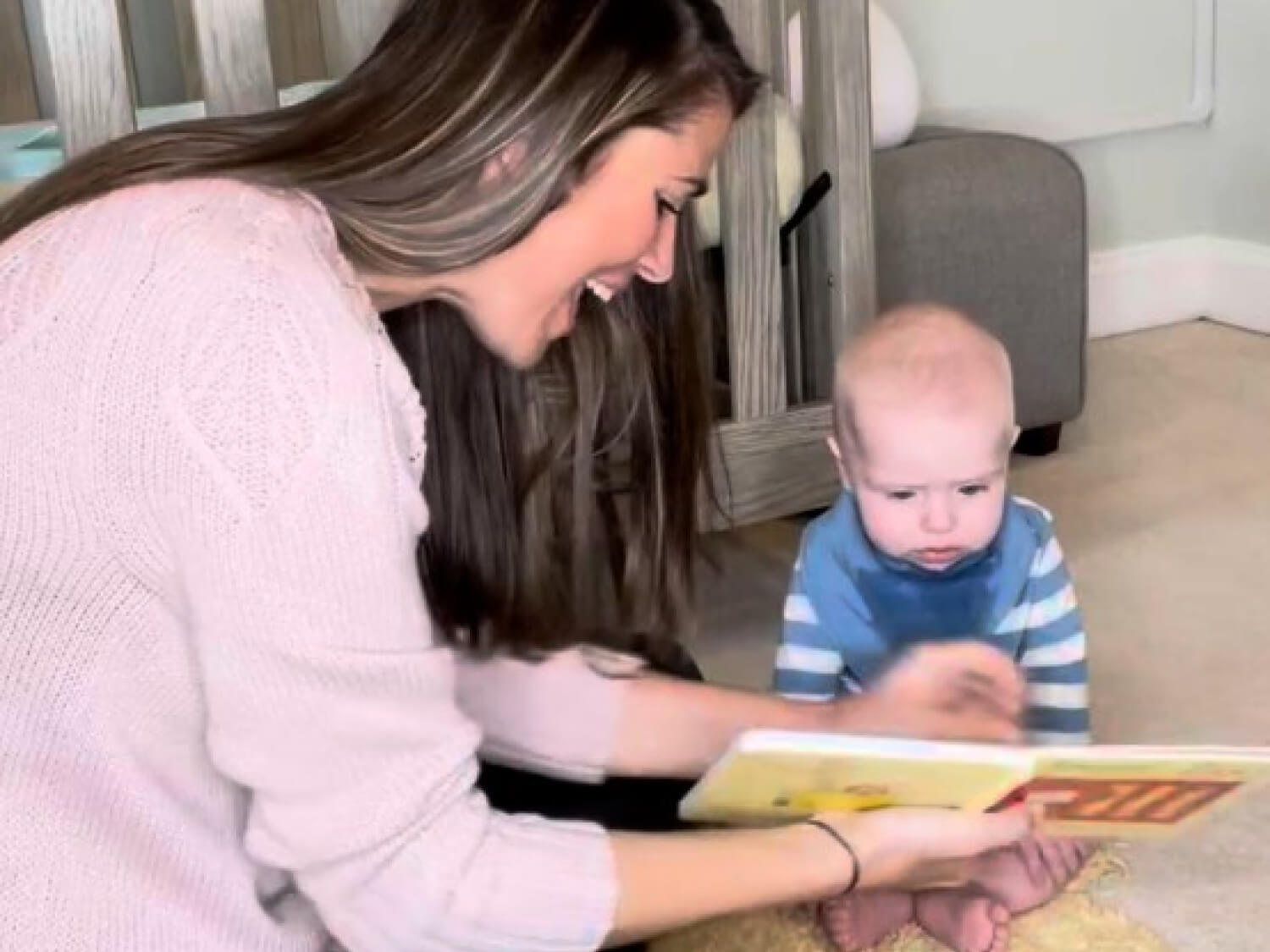
As a pediatric speech-language pathologist and early intervention specialist, I spend a lot of time in infant classrooms. And almost every time I suggest using sign language with babies, teachers are either all in or they are like, "uuggghhhh, seriously!?"
I get it, you're juggling bottles, diapers, and naps, and adding "teach sign language" to that list sounds like a lot. But sign language isn't just one more thing on your plate. It's a tool that makes your whole day smoother.
So let's walk through why it works, when to start, which first signs to teach the babies in your class, and how to fit signing naturally into the busy rhythm of your infant room.
Why Use Sign Language in Your Infant Room?
Babies have a lot to "say" long before they can talk, and when they can't get their message across, that frustration often comes out as crying, throwing toys, biting, and hitting. Sign language gives babies a way to communicate their needs before words, which means:
Less frustration (for the babies and for you)
Stronger early communication and language development
Deeper connection as you tune in to what each baby is telling you
A calmer room, because a baby who can sign "more" or "all done" doesn't have to melt down to be understood
It's a small shift that pays off all day long. (And if you want the full picture of what signing does for communication, inclusion, and classroom success, I break it all down in this blog.
When Do Babies Start Using Sign Language?
You can start modeling signs with babies right from the beginning. Here's what to expect at different ages:
0–6 months: Babies are watching and listening. They may not copy signs yet, but your consistency is building recognition.
6–9 months: You might see early attempts, little hand movements that look like approximations of a sign.
9–12 months: Many infants begin using signs intentionally, usually for their most important needs (like "milk" or "more").
Which First Signs Should I Teach Babies?
When you're juggling a whole room, you don't need dozens of signs. A small set that matches your daily routines is all it takes:
Again – perfect for play as babies love repetition
Eat – bottles, spoon-feeding, or table foods
All done – transitions after meals, diapering, or activities
Milk – during feeding routines
Help – when a baby is reaching or frustrated
These five signs are perfect for babies and toddlers, but I have a whole blog on just signing to toddlers. Read more here.
How to Use Sign Language in Daily Child Care Routines
You don't have to schedule "sign language time." Add signs into what you're already doing:
Feeding: Sign "milk" before offering a bottle, "more" when adding food, and "all done" at the end.
Diapering: Use "all done" or "help" as you narrate the process.
Play and interaction: Sign "more" during peek-a-boo, or "help" when you assist with blocks.
Transitions: Pair "all done" with moving from playtime to naptime.
The more often you pair a sign with a routine, the faster babies make the connection.
Does Sign Language Delay a Baby's Speech or Language?
This is the question I hear most, often from worried providers but also a question the providers get asked by parents, so it's a great one to have an answer ready. The short version: no. Decades of research, and the American Academy of Pediatrics, agree that signing doesn't delay speech, and it may actually support language development, with some studies linking early signing to stronger early vocabularies.
Always say the word out loud while you sign it. When you say "milk" as you make the sign, the baby sees your mouth move, hears the word, and sees the gesture, three pathways to the same meaning. Signs are meant to go alongside spoken words, never replace them. And once babies start talking, the signs are naturally replaced by spoken words.
This is just one of many common myths when it comes to using sign language with children. Read all the myths and realities here!
Tips for Signing Success in the Infant Room
A few things make signing click faster in a group setting:
Say the word every time you sign. (I know I already said this, but it's that important.)
Be consistent across your whole team. When every teacher in the room uses the same signs the same way, babies learn far faster.
Repeat, repeat, repeat. It can take a baby a month or two of seeing a sign before they use it. Keep going.
Don't force their hands. Model the sign and let babies come to it on their own time.
Partner with families. Send home the signs you're using so babies see them at home too. Consistency between home and your classroom is a game-changer.
And if your program signs across age groups, even better. Babies who learn their first signs in your room keep using them in the toddler classroom and all the way up throughpreschool,where signs support vocabulary, literacy, and big feelings.
What If Babies Don't Sign Back?
Some babies will sign back before their first birthday, and others won't until later. That doesn't mean it isn't working.
Even if a baby never produces a sign, they're still learning that communication goes back and forth. Every sign you model builds their understanding, and lowers frustration for both of you. The goal of signing is to enhance communication and connection between you and the babies in your care. Be patient, be consistent, and keep it positive. (If a baby isn't attempting to communicate with signs, sounds, or gestures around their first birthday, it's worth a gentle conversation with their family.)
Want to Bring Sign Language Into Your Infant Room with Confidence?
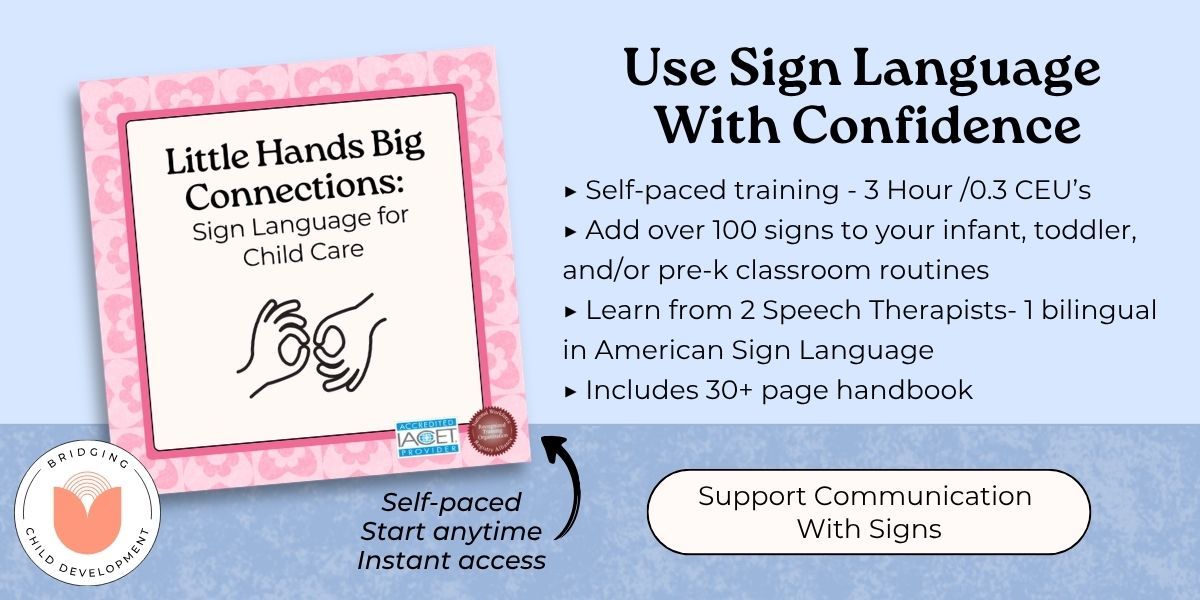
If you'd love a step-by-step way to start signing with the babies in your care, including which signs to use, how to model them, and how to weave them into your day, check out this training.
Frequently Asked Questions
Should all the teachers and families use the same signs?
They can, yes. When every teacher in your room and the baby's family at home use the same signs the same way, babies make connections much more quickly.
Prefer to learn these tips in a training?
Find a format that works for you.
Get your state-approved hours and CEUs, a comprehensive handbook you'll reference forever, and strategies that’ll make a difference in the children you’re caring for.
Live Virtual Trainings
Real-time interaction, community with other providers, and the energy of learning together.
Self-Paced Trainings
Flexibility to learn on your own schedule, pause and rewatch as needed, with opportunities to learn and engage with others.
Private Trainings
A customized training for your entire staff, in-person or virtual, with hands-on activities built around your center's needs.
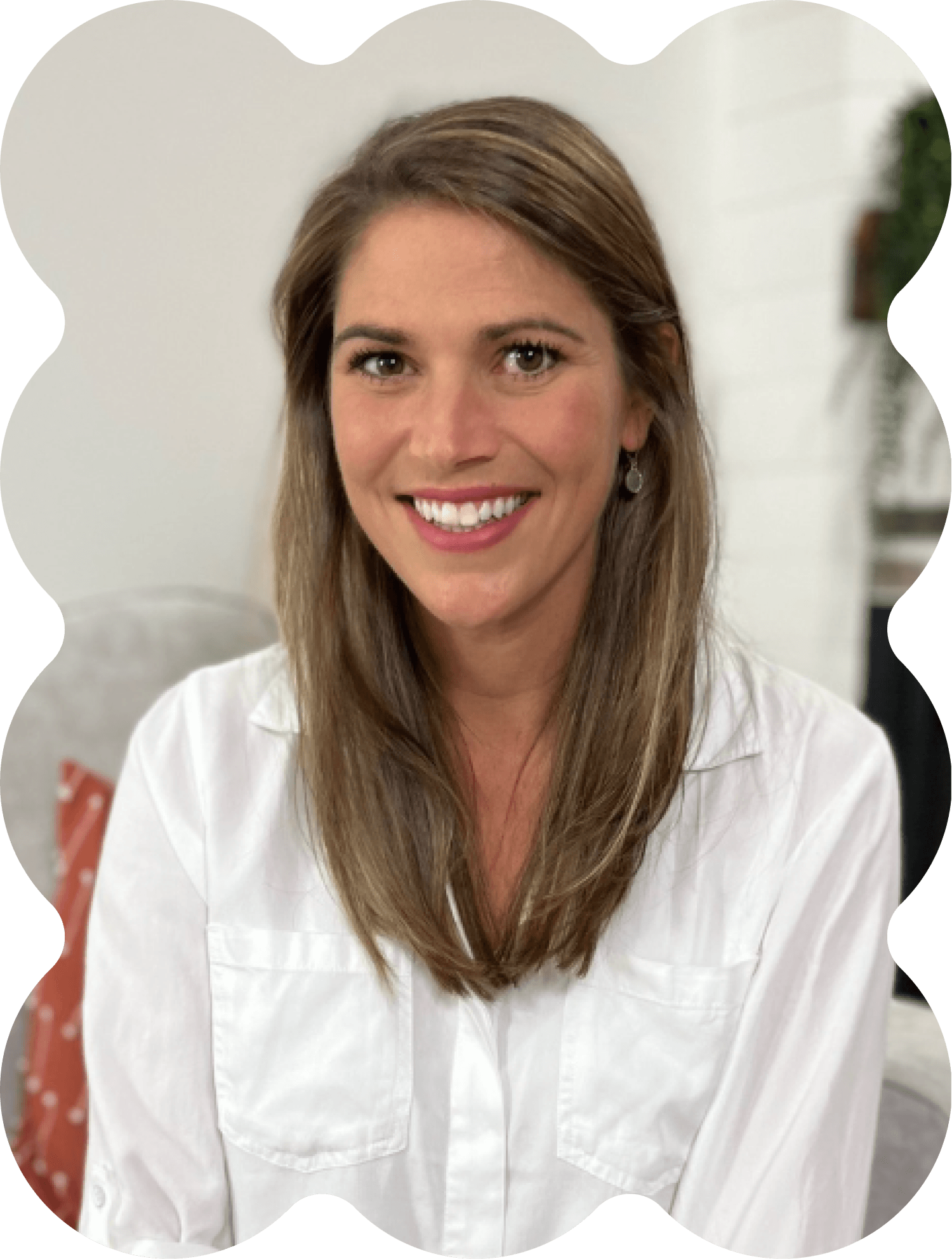
Hey, I’m kelly
Speech Language Pathologist, Early Intervention Specialist, Child Care Trainer, and Former Family Child Care Owner
I work alongside early childhood educators caring for children with a variety of needs. But these needs look very different than they did twenty years ago and you deserve trainings, resources, and tools that reflect that.
Trainings that are high quality, affordable, and worth coming back to.
That's why I built Bridging Child Development. Every training hour you earn here gives you strategies you can use the very next day in your classroom.
Login or sign up to start learningLogin to start learning