Fall is full of hands-on activities including fall crafts! Not only are crafts fun but they're also one of the best language building opportunities in your classroom. Before we get to the fall craft ideas, let's look at why crafts matter for communication and how you can get the most language out of every craft activity with your toddlers and preschoolers.
Language is divided into 2 areas, receptive language and expressive language.
Receptive language is what a child understands. It includes following directions, pointing to objects, pictures, or body parts, looking for named items, and answering questions.
Expressive language is what a child communicates with words, gestures, signs, or pictures. It's a child's ability to share their wants, needs, and ideas.
Both develop together and children need opportunities to work on both skills all throughout their day. Crafts naturally lend themselves to working on both.
During a craft, children are practicing:
- Following directions: "Put the glue on the leaf," "First paint the pumpkin, then add the eyes." Give one direction at a time for younger toddlers ("Glue on."), and build up to two-step directions for older toddlers and preschoolers ("Get a leaf and put it on your paper").
- Understanding concept words: On, under, next to, big, little, top, bottom
- Learning new vocabulary: Acorn, crinkly, stem, rough, smooth, crumple. Pair your words with a gesture or sign language to support word learning. Tier 2 vocabulary words are also important to teach.
- Understanding sequence words: First, next, last, all done
Crafts give children something to talk about! During a craft, children have chances to:
Request materials: "More glue!" "Red, please" You can practice giving them choices too by holding up various materials they can choose from.
Ask for help: "Help me"
Comment on what they're doing: "I glued it on!" Make sure you that you don't fall victim to the quizzing trap. Instead of "What color is that?", try narrating: "You picked brown. Brown leaf." Children need to hear words to say words and if we ask questions they don't actually hear the words we want them to say.
Describe colors, shapes, and textures: Expand by one word. If a child says "Leaf," you say, "Bumpy leaf!" If they say "Big leaf," you say, "Big crunchy leaf!"
Retell the steps when they show a friend or family member.
The crafts below are intentionally simple, require minimal prep, and let children explore their creativity while teachers support language. You can also use crafts to support
3 year old fine motor development and
4 year old fine motor development.
If you are looking for more ideas, make sure to scroll to end for our 15 crafts in 15 minutes with 15 or less materials resource! And if you prefer a
fall sensory bin, you can do those along with the craft!
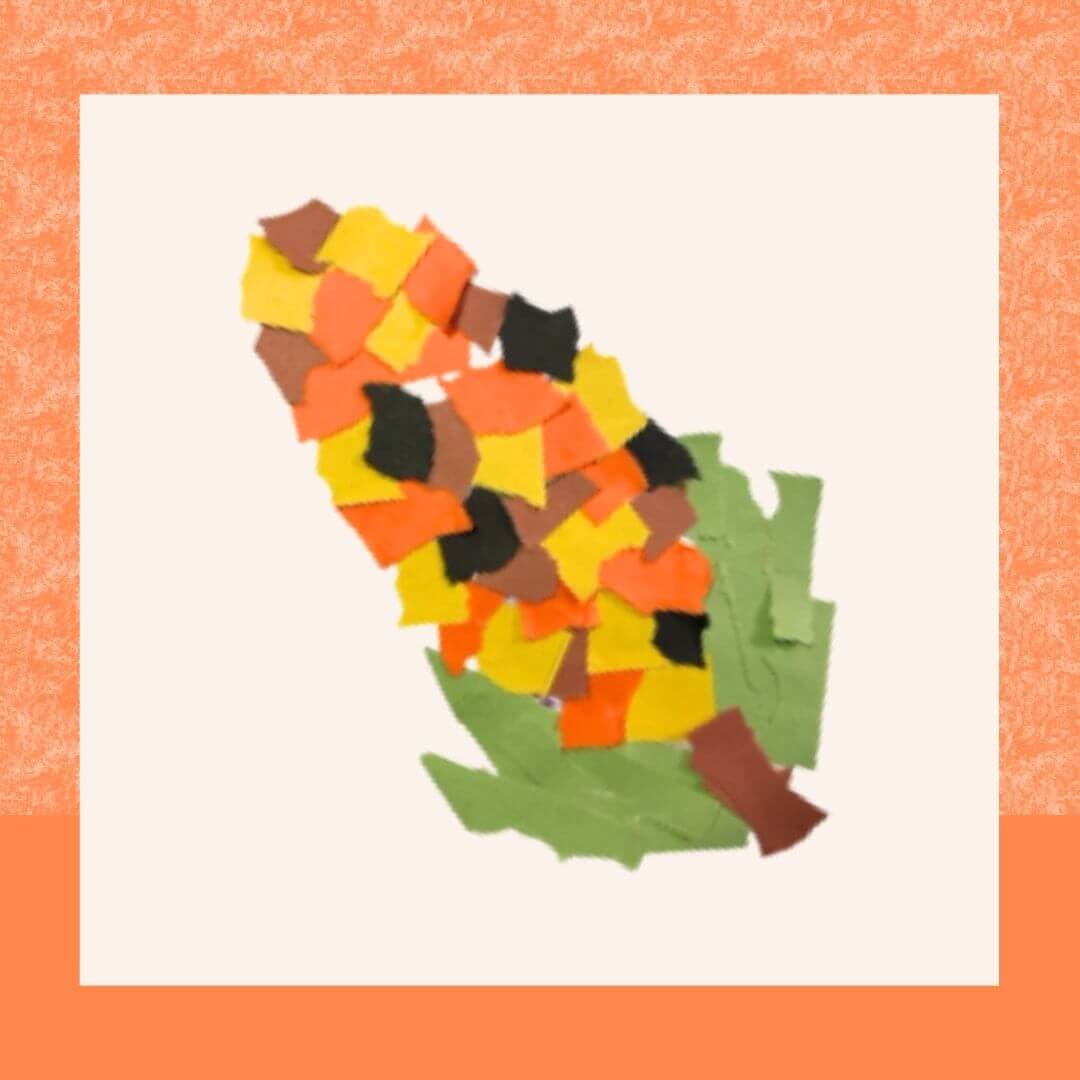
Materials
- Corn template
- Yellow, orange, black, and brown construction paper cut into strips for tearing
- Green Construction paper
How to Set It Up (Preschool/Pre-K)
- Give children strips of orange, yellow, brown, and black construction paper. Young toddler can rip the strips of paper and young preschoolers can practice cutting across the strip of paper to make the corn kernels.
- Have children tear the green construction paper into strips.
- Children will glue the small color pieces onto the paper and glue the green strips onto the leaf outline.
Language Benefits- Practice following 1 & 2 step directions
- Model spatial concepts: On, next to, middle, top, bottom
- Model quantity concepts like "more" and "less" (e.g., You have more yellow kernels and less brown kernels.")
Infant/Young Toddler Adaptations- Pre-glue some corn kernels so they only have to do a few. This will meet the needs of their short attention span.
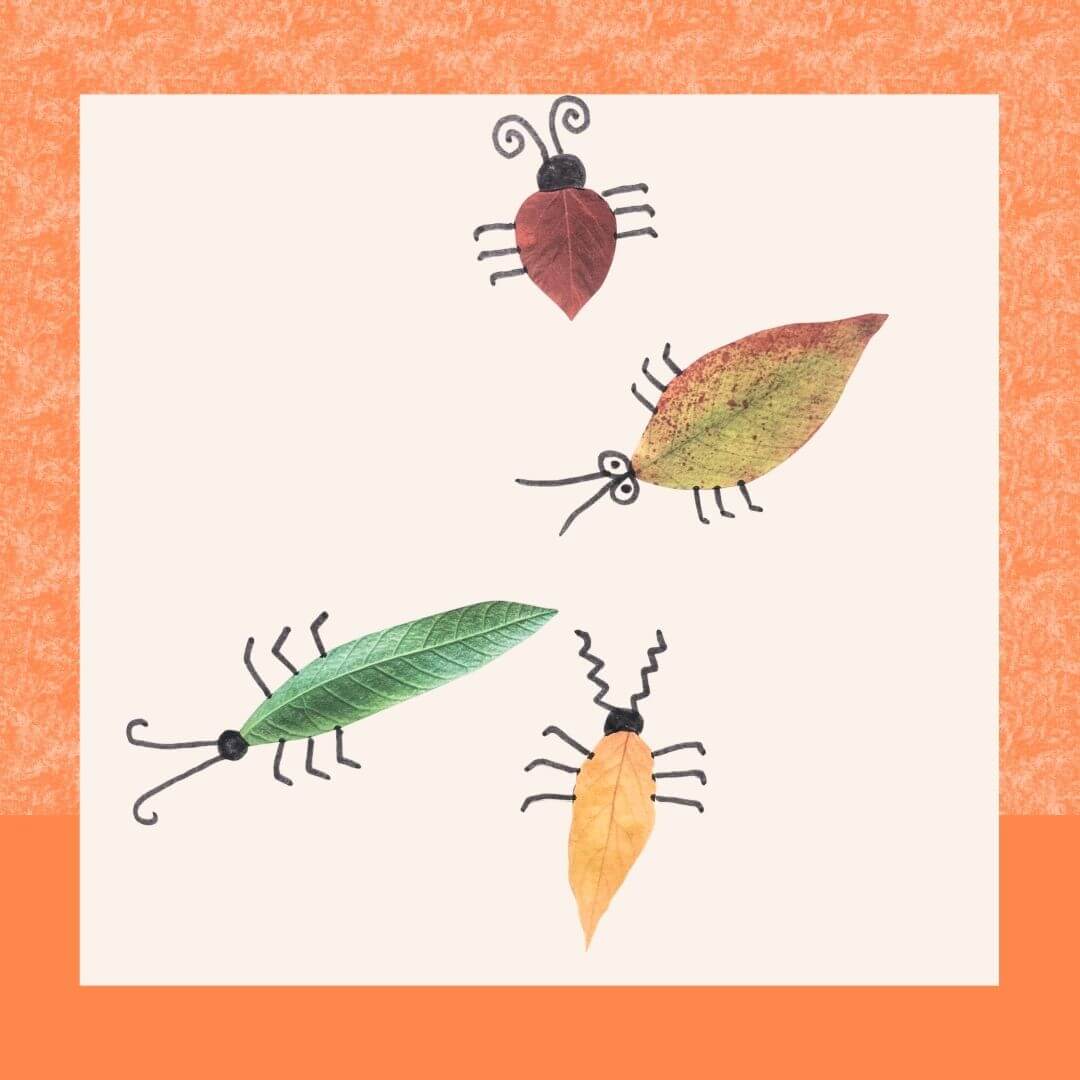
Materials
- White or colored cardstock/construction paper
- Leaves (printed or real)
- Glue
- Black marker
How to Set It Up (Preschool/Pre-K)
- Have children collect leaves (I recommend removing the stems for this project). You can also print/cut out the leaves if you do not have fallen leaves in your area.
- Have the children glue 3-5 leaves on background paper of their choice.
- Give each child a black marker to draw a circle for the head (where you removed the stem) or two circles for large bug eyes.
- Encourage children to draw fun lines for the antennae.
- Practice counting while you add 6 legs to each leaf/insect.
Language Benefits- Practice following 1 & 2 step directions
- Model spatial concepts: front, back, on, next to, middle
- Model size concepts like big/small, long/short
Infant/Toddler AdaptationsHelp them glue the leaves onto the paper and model different writing strokes starting with horizontal and vertical lines to make legs and antennae. They may not be ready for circles so you can skip those or model them!
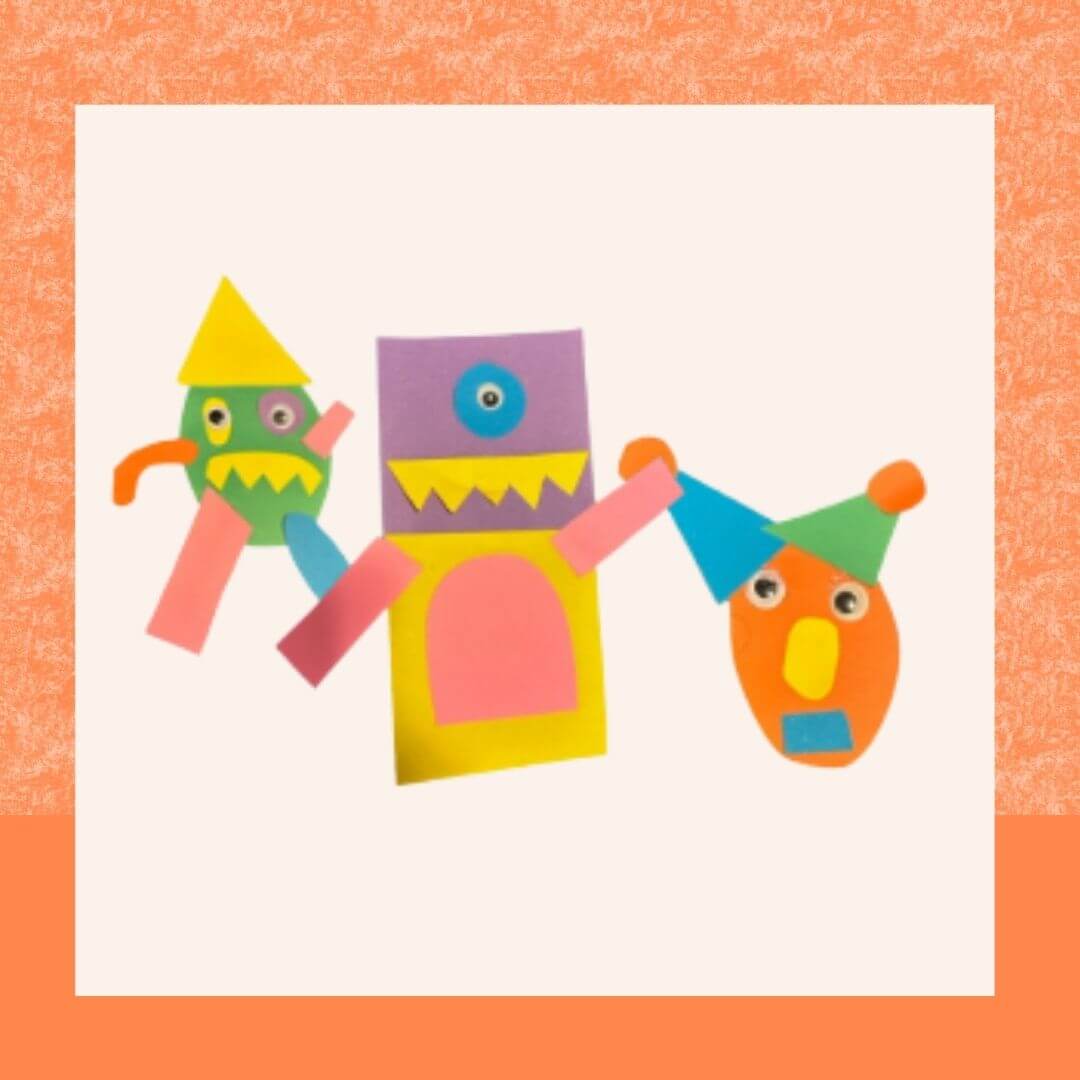
Materials
- Shapes printed on different color paper (see below) and pre-cut
- Glue
- Googly eyes or marker
How to Set It Up (Preschool/Pre-K)
- Have children pick a big shape for the monster head.
- Then have them pick a small shape for the eye(s). You can help them add googly eyes or use a marker to add eye details.
- Next build the mouth by having children pick a shape and glue onto the monster.
- Continue giving the children 1 step directions to build the monster (arms/hat/body/ears/etc).
Language Benefits
- Practice following 1 & 2 step directions
- Model spatial concepts: front, back, on, next to, middle
- Model comparative language like "long, longer, longest" and "big, bigger, biggest"
Infant/Toddler AdaptationsIf you are working on following directions you can give directions in a structured was like above but for your younger learners or even your preschoolers, you can make this open ended and they can freely create by gluing on the different monster body parts however they want. Don't be afraid to release the glitter with your older toddlers and preschoolers!
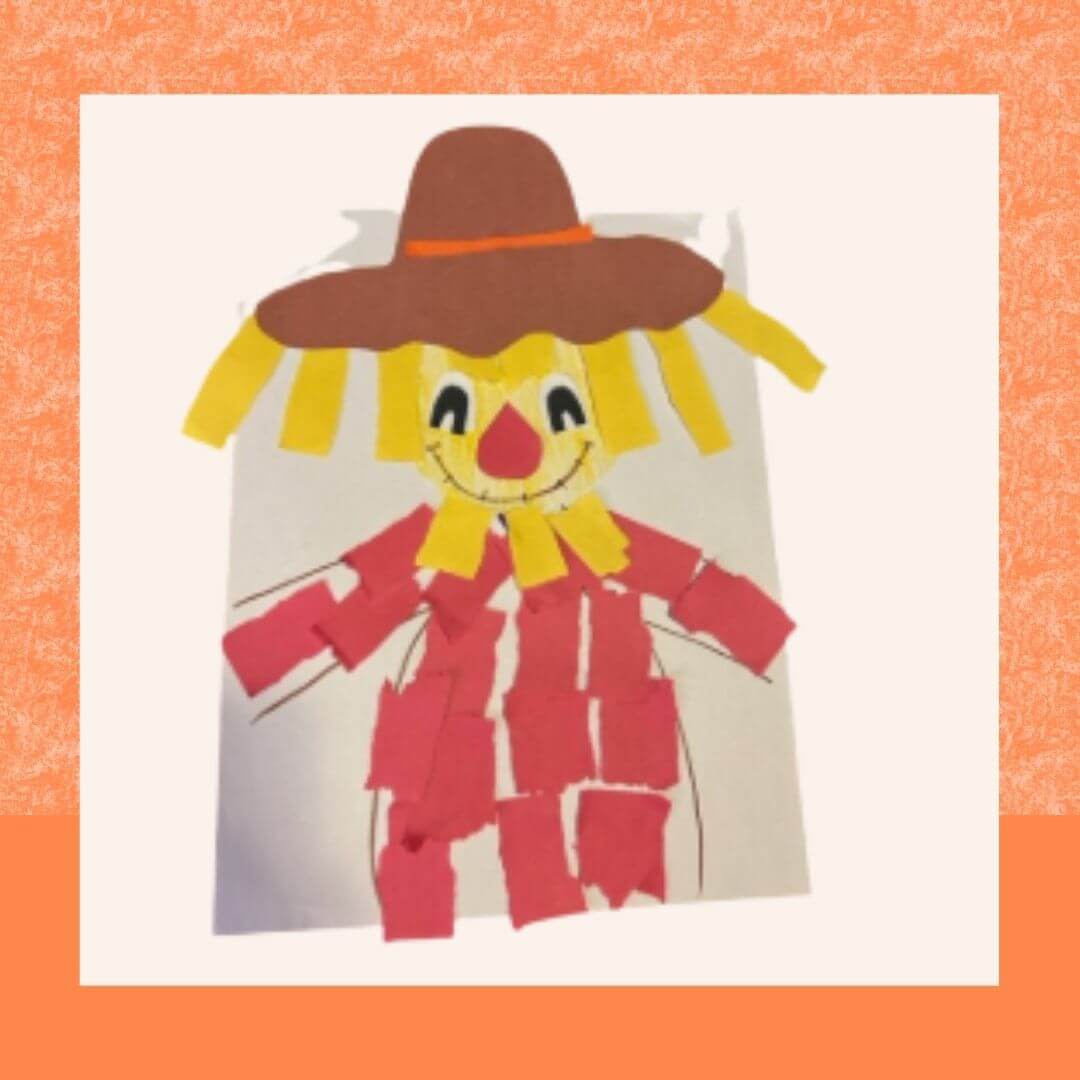
Materials
- Use the template to cut a hat out of brown construction paper
- Use the template to cut a face out of tan construction paper
- Red and yellow construction paper
- Use template for eyes
- White full sheet paper
- Glue
- Brown and black marker/crayon
How to Set It Up (Preschool/Pre-K)
- Precut complex shapes. Have children glue the face onto white paper.
- Have them glue the eyes and nose onto the face. Use the black marker to draw inside the eyes.
- With the brown marker, encourage children to draw the mouth and then draw a body (You will likely have to model this or help)
- Have children tear strips of yellow construction paper (about 6-10) and a single orange strip of paper. Have the children glue the yellow paper to the back of the hat and the orange strip onto the hat.
- Tell the children to glue the hat to the top of the head.
- Have children tear red construction paper (about 15-20) and glue onto the body of the scarecrow.
- Last have children tear 3 strips of yellow construction paper and glue around the neck.
Language Benefits
- Practice following 1 & 2 step directions
- Model spatial concepts: front, back, on, next to, middle, under
- Model facial expressions and talk about emotions when adding the mouth
Infant/Toddler AdaptationsAllow babies to rip the construction paper and you do the gluing. You can also have your toddlers and preschoolers use scissors to snip the construction paper or cut across a strip. You can skip the construction paper all together on the body and use finger paints!
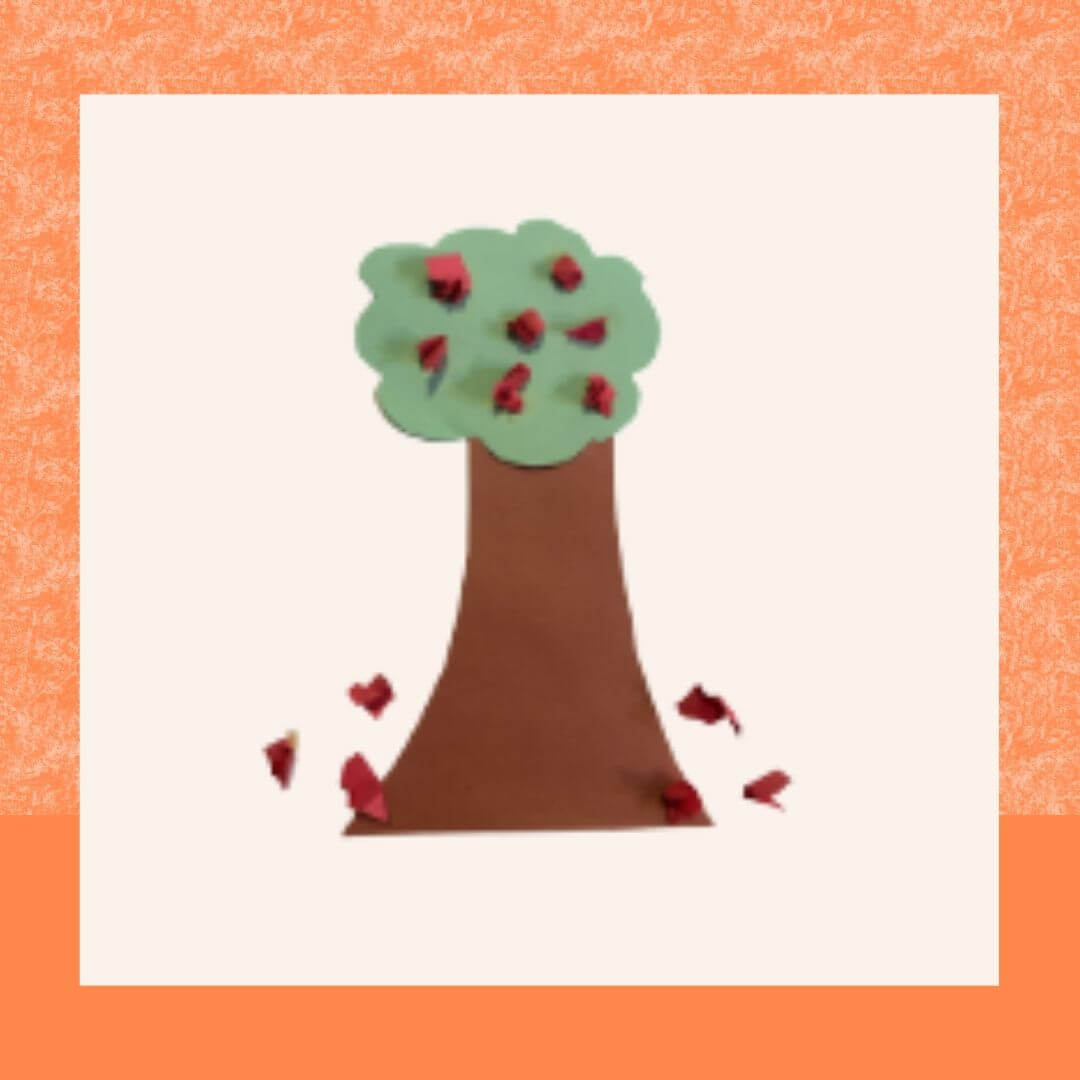
Materials
- White paper
- Cut out a tree top with green construction paper
- Cut out a tree trunk with brown construction paper
- Small pieces of red tissue paper or construction paper
- Glue
How to Set It Up (Preschool/Pre-K)
- Cut out any complex shapes as we do not expect this skill until K. Have children glue tree trunk to the white paper background.
- Then have them glue the green tree top to the top of the trunk. Model proper placement of "top" to support spatial concepts.
- Have children tear small pieces of red paper- either construction paper or tissue paper. Crumple each piece into a small ball to create apples.
- Have children apply glue and press the red "apples" to the tree top and at the bottom of the trunk.
- Use location words such as on top, next to, under, and beside as you talk about each child's tree!
Language Benefits
- Practice following 1 & 2 step directions
- Model spatial concepts: Top, bottom, on, next to
Infant/Toddler AdaptationsAllow babies to rip the paper and you do the gluing. You can skip the red paper all together and use red finger pants and make the child's thumb print the apple.
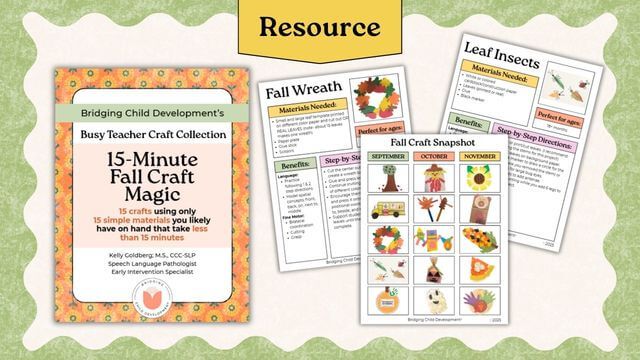
If prepping crafts still feels like one more thing on your plate, I've done the planning for you. 15 Minute Spring Craft Magic is a ready-to-go resource of simple, low-prep spring crafts you can pull together fast.
Themes are not bad. There seems to be a push to make themes a bad thing in early childhood education but there are benefits to themes, language and vocabulary development being one of them!
Simple materials, few steps, and room for children to create on their own. Avoid multi-step projects that need constant teacher help, the best low-prep crafts let kids explore while the teacher supports with conversation and open-ended questions.
Adjust the level of independence. Pre-cut and pre-assemble more for infants and toddlers, and let preschoolers do their own cutting, gluing, and placing. The same craft can support a whole range of ages just by changing how much the child does versus the teacher.