Sometimes you enroll a family and it turns out, it is just not a good fit. It happens. Not because your center is bad or your teacher did anything wrong, but because there were some gray areas for one or both parties (you and families) going into the situation.
Here's what happens: A family tours, feels good, enrolls, and then two weeks in, they're frustrated or you're frustrated because expectations didn't match reality.
These conflicts are preventable and can typically be addressed during the tour, not after enrollment. This blog gives you some potential questions and suggested answers to more "difficult topics" to address on a tour.
If you are looking for what to highlight on a tour, start here and if you want just some
general topics to cover with sample questions parents will ask and suggested answers,
read this blog.Families touring with young children are often anxious about very specific things.
Get ahead of them:- Feeding challenges: How do your teachers handle picky eaters, slow eaters, or bottle refusal? This is a massive pain point. Show them how you support feeding with patience and without pressure.
- Separation anxiety and transitions: What does the settling-in process look like? How long until children are truly comfortable? What's the parent's role, and how will you communicate during hard transitions?
- Developmental expectations: Help parents understand what "typical development" actually looks like. Many arrive with unrealistic timelines, and your reassurance that children develop on their own timeline is powerful. Scroll to end for the developmental checklist freebie!
- Behavioral concerns: If a child struggles with sharing, attention, or behavior, how does your center respond? Do you partner with parents or go it alone?
Director tip: Frame these as, "Here's what we know families worry about, and here's how we handle it." You don't even have to wait for the parent to ask, just preemptively answer. That positions you as informed and experienced, not defensive.
Early withdrawal happens when expectations don't match reality, so
set clear expectations up front:- Explain the typical settling-in timeline (often 2–4 weeks, sometimes longer)
- What's normal (crying, clinginess, changes in eating and sleeping) versus what signals a deeper adjustment issue
- The parent's role in supporting the transition (consistency, reassurance without hovering)
- How you'll communicate and adjust if things aren't getting better
Director tip: Honesty builds trust. Parents respect a director who says, "The first month can be tough, and here's exactly what that looks like and how we'll support you through it together."
This one's uncomfortable but essential. Directors often feel guilty about what they charge.
But you're not selling a service, you're offering a partnership with trained professionals.
Frame it that way:- "Our teacher-to-child ratios exceed state requirements because responsive care builds secure attachment."
- "Our teachers receive ongoing training in [development, communication, behavior support], and that investment is reflected in tuition."
- "Staff longevity matters. When your child's primary caregiver stays three-plus years, they truly know your child. That stability costs more, but it's worth it." (Read this blog on how to build culture that keeps teachers.)
- "Here's exactly what tuition covers: [teacher salaries, professional development, materials, meals, facilities]."
Director tip: Give families a handout breaking down costs. This makes it easier to talk about and the transparency helps families see the value.
Not every family is a fit, and
it's okay to surface potential conflicts early:Listen for expectations: Are they realistic about what you can and can't do?
Watch for red flags: Parents who dismiss your approach, constantly compare you to competitors, or have demands that don't align with your philosophy.
Be clear about your non-negotiables: "We believe in this approach. If that doesn't resonate with your family, that's okay, there are other centers that may be a better fit."
It's far better to say "I'm not sure we're the right match" after the tour than after enrollment.
Director tip: A good fit protects both families and your team. Enrolling the wrong family creates ongoing conflict and staff stress.
Before families leave, they should know exactly what makes you different.
Is it:- A specific curriculum approach (Montessori, Reggio-inspired, play-based)?
- Teacher expertise in language development, infant play, or outdoor activities?
- A commitment to transparent, frequent parent partnership?
- A focus on children's emotional wellbeing and social skills?
- Smaller class sizes or longer teacher tenure?
Parents need a reason to choose you over other centers.
Director tip: Your unique value isn't about being the cheapest or fanciest. It's about being the best fit for their family and their values.
Honesty doesn't mean doom and gloom. The trick is pairing every hard truth with how you'll support the family through it:
"The first weeks can be hard, and here's our plan."
"Tuition is an investment, and here's the value behind it."
Delivered with calm confidence, these conversations make you more trustworthy, not less.
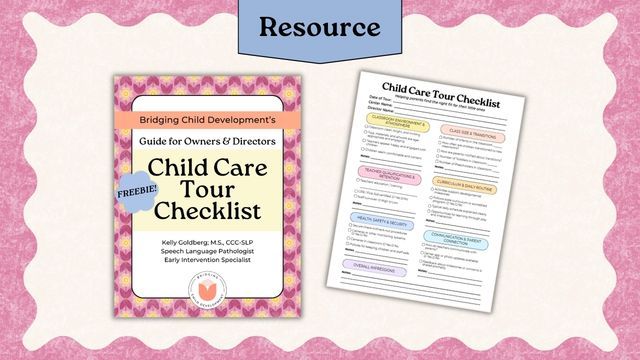
Before or at the start of your tour, hand families our FREE Child Care Tour Checklist. It sends a powerful message: "We want you to feel supported, informed, and confident, not overwhelmed."
It shows families that you're organized, transparent, and truly invested in helping them make the best decision for their child, and it keeps your center top of mind long after they've walked out the door.
Directors who win on tours are the ones willing to have honest conversations. You're not trying to convince families to enroll, you're helping them make the right decision for their family. Sometimes that means they choose another center, and that's okay. But the families who do choose you will be the right families, with aligned expectations and genuine confidence in your program.